 Pin
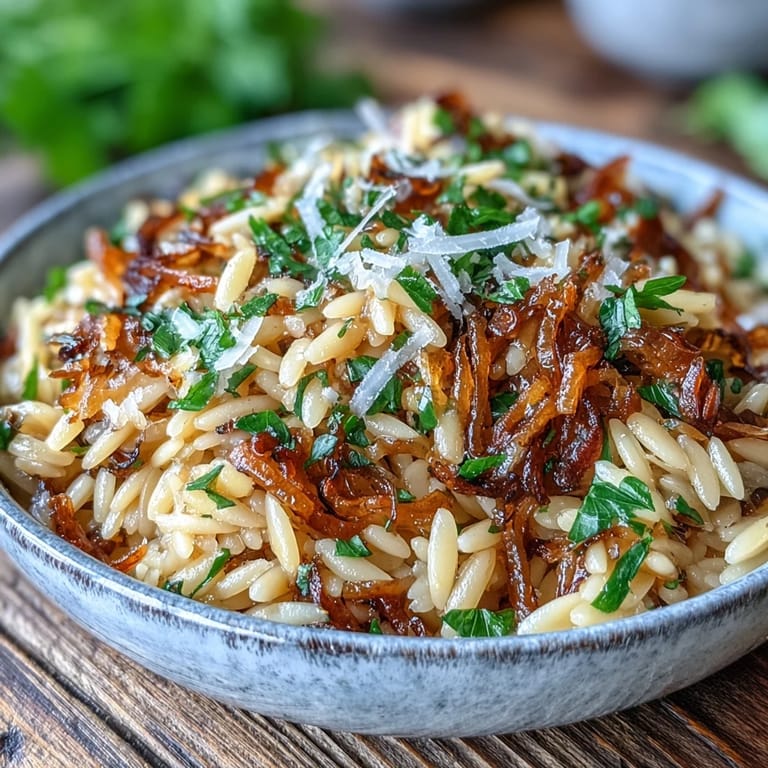
Pin The first thing that hits you is the scent: sweet, mellow onions slowly surrendering to the heat as the kitchen grows cozy. There was nothing fancy about that night—I just wanted something deeply satisfying with minimal fuss. Tinkering with orzo and some leftover produce turned from idle curiosity into my go-to comfort dish. There’s a kind of peace that comes from watching onions go from sharp and raw to dark gold, releasing a buttery, savory aroma. When orzo meets those caramelized onions and a handful of fresh parsley, the result is unexpectedly magical.
I remember making this for a friend after a long day, when neither of us felt like going out but still wanted something special. We ended up sitting on the kitchen floor, sharing forkfuls straight from the pan, laughing about how we’d unintentionally made a new ritual.
Ingredients
- Yellow onions: Use plenty and slice them evenly—slowly caramelizing brings out their natural sugars and profound depth.
- Garlic: Stirring garlic in at the end keeps its flavor fresh and punchy, without turning bitter.
- Fresh parsley: This gives a lively finish that wakes up the whole dish—sprinkle extra on top after serving.
- Orzo pasta: Little rice-shaped pasta soaks up all the flavors; I sometimes toast it in a dry pan for a nuttier edge.
- Grated parmesan cheese: Adds a creamy saltiness and helps tie everything together; don’t be shy, but watch for saltiness if you swap cheeses.
- Unsalted butter: It merges with olive oil to make the onions glossy and extra silky—don’t skip it.
- Olive oil: A fruity, quality oil enhances the onions’ flavor as they cook down, so use one you like the taste of.
- Salt: Add in stages—a little for the onions, a little for the pasta—so nothing turns out flat.
- Freshly ground black pepper: A finishing touch that lifts everything; grind generously just before serving.
- Sugar: Just half a teaspoon jumps-starts the caramelization without making things sweet.
- Low-sodium vegetable broth (or water): Simmering the orzo in broth amps up the savoriness—you’ll notice a difference if you try both methods.
Tired of Takeout? 🥡
Get 10 meals you can make faster than delivery arrives. Seriously.
One email. No spam. Unsubscribe anytime.
Instructions
- Start the onions slow:
- Add olive oil and butter to a heavy skillet and feel it sizzle as you slide in the onions; sprinkle salt and sugar, then stir gently as the kitchen fills with warm, sweet aroma for about 25–30 minutes until they turn gorgeously golden and jammy.
- Bring in the garlic:
- Once the onions melt into softness, add garlic and let its fragrance unfold for just about a minute—it shifts the flavor from delicate to complete.
- Boil orzo to perfect bite:
- While onions are working, cook orzo in salted boiling water (or broth) until just al dente, tasting as you go; reserve some starchy cooking liquid just in case you need to loosen things up later.
- Combine and finish:
- Stir drained orzo into the pan of luscious onions, adding a splash of cooking liquid if it seems sticky; fold in parmesan and parsley until it looks glossy and irresistible, seasoning with pepper and the rest of the salt.
- Plate and garnish:
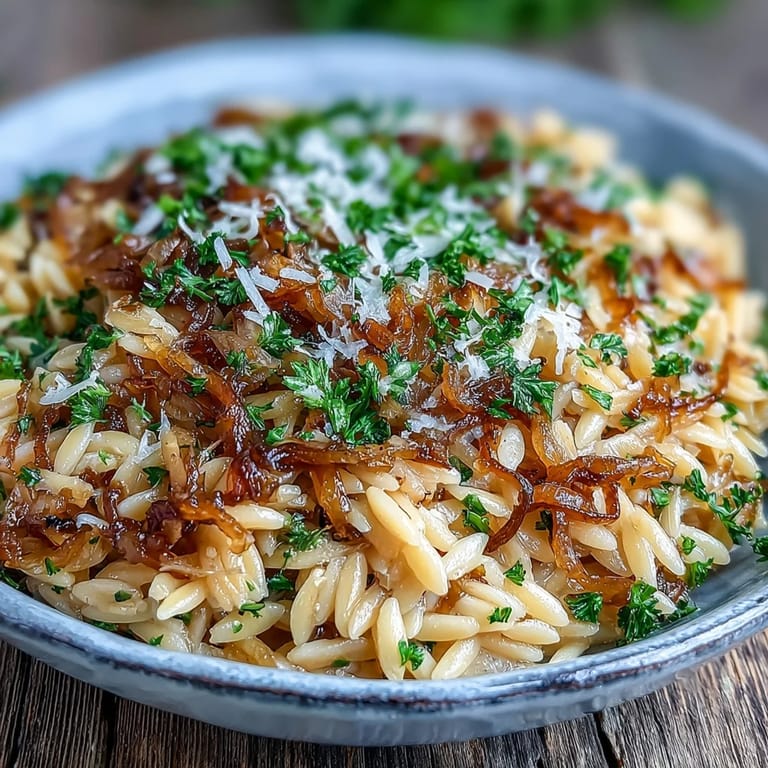
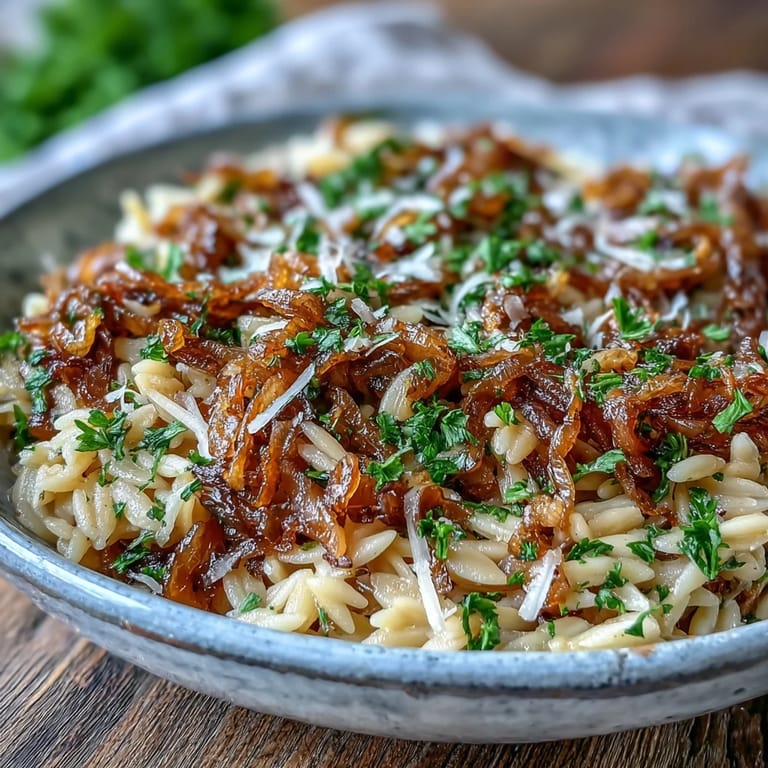
- Scoop into bowls and crown with more parsley and a flurry of parmesan—serve immediately while it’s warm and fragrant.
 Pin
Pin One evening, as the sun was setting and music from the next apartment drifted in, I realized this dish isn’t just about satiating hunger—it’s about slowing down and sharing whatever happens to be on your mind around the table.
Easy Pairings That Work Every Time
This orzo is a blank canvas: I’ve tossed in sautéed mushrooms for an earthy twist or finished it with a squeeze of lemon for brightness. On brisk days, pairing it with roasted chicken or a peppery arugula salad transforms it into a little feast.
Quick Variations If You Crave Change
Don’t hesitate to swap or add ingredients based on what’s in your fridge. Pecorino, vegan cheese, or even toasted pine nuts offer new personalities to the dish without any complicated steps.
Mistakes, Fixes, and Final Touches
I once foolishly skipped the reserved pasta water—don’t make that error; it’s a lifesaver for creaminess. Caramelizing takes longer than you expect, but trust me, it’s worth every minute. A last shower of fresh parsley just before serving makes all the difference.
- If your onions threaten to stick, a splash of broth releases all their flavor off the pan.
- Prepping all ingredients before you start makes the process smooth and relaxing.
- Sneak in spinach or peas for a boost of greens—they blend in beautifully.
 Pin
Pin This dish is proof that a handful of basics, and a little patience, can create something you’ll truly look forward to sharing. Next time you’re hungry for comfort and ease, reach for these simple ingredients and treat yourself.
Recipe Q&A
- → What type of onions work best?
Yellow onions offer the right balance of sweetness and depth when caramelized slowly, but white onions also work well.
- → Can I make this dairy-free?
Yes, simply substitute vegan butter and a plant-based cheese alternative for a dairy-free finish.
- → Is it possible to use another pasta shape?
Orzo gives a unique texture, but you can use other small pasta shapes like pearl couscous or small macaroni.
- → How can I add more flavor?
Try mixing in toasted pine nuts, a squeeze of lemon juice, or swapping parmesan for pecorino cheese.
- → Can this dish be made gluten-free?
Yes, use gluten-free orzo to create a gluten-free version—check labels on all other ingredients.