 Pin
Pin My neighbor handed me a container of homemade hummus through the fence one Saturday morning, and I stood there wondering what on earth I'd pair it with besides pita chips. That afternoon, I emptied my fridge onto the counter: half a bag of quinoa, some wilting zucchini, a jar of olives I kept forgetting about. What started as salvage cooking turned into one of those meals where every bite felt bright and intentional. I've been building versions of this bowl ever since, tweaking the vegetables with the seasons but always keeping that creamy hummus at the center.
The first time I served this to friends, I worried it looked too deconstructed, like I'd given up halfway through cooking. But watching them build their own bites, mixing feta with yogurt, dragging roasted peppers through hummus, I realized the beauty was in the assembly. One friend who claimed she hated quinoa went back for seconds. Another asked if I'd teach her how to roast vegetables without burning them, a question that launched a whole side conversation about oven temperatures and patience.
Ingredients
- Quinoa: Rinse it well under cold water or it can taste bitter and soapy, a mistake I made exactly once before learning my lesson.
- Zucchini: Cut into chunks rather than thin slices so they hold their shape and develop caramelized edges instead of turning to mush.
- Red bell pepper: Sweeter than green and roasts beautifully, adding pockets of soft, slightly charred flavor throughout the bowl.
- Red onion: Mellows completely in the oven, losing its sharp bite and turning jammy at the edges.
- Cherry tomatoes: Halve them so they burst and release their juices, creating little pools of tangy sweetness on the baking sheet.
- Olive oil: Don't skimp here, it helps the vegetables caramelize and carries the spices into every crevice.
- Dried oregano: A whisper of the Mediterranean that ties the whole bowl together without overpowering the fresh ingredients.
- Ground cumin: Adds an earthy warmth that makes the roasted vegetables taste deeper and more complex.
- Chickpeas: Pat them dry before warming or they'll steam instead of getting slightly crispy on the outside.
- Kalamata olives: Their briny punch cuts through the richness of the hummus and yogurt, waking up your palate between bites.
- Hummus: Store-bought works perfectly, but if you have homemade, this is the moment to show it off.
- Greek yogurt: Full-fat is creamier and more luxurious, but even low-fat works if that's what you have on hand.
- Feta cheese: Crumble it yourself from a block rather than buying pre-crumbled for better texture and fresher flavor.
- Fresh parsley: Brightens everything at the last second, adding a pop of color and a hint of grassy freshness.
- Lemon wedges: A squeeze just before eating makes the whole bowl come alive, tying every element together with acidity.
Tired of Takeout? 🥡
Get 10 meals you can make faster than delivery arrives. Seriously.
One email. No spam. Unsubscribe anytime.
Instructions
- Heat the oven:
- Crank it up to 425°F so the vegetables get a good sear and caramelize instead of steaming. Give it a full ten minutes to preheat, I promise it makes a difference.
- Prep the vegetables:
- Spread everything in a single layer on your baking sheet, making sure pieces aren't crowded or they'll steam instead of roast. Drizzle generously with olive oil, then toss with oregano, cumin, salt, and pepper until every piece is lightly coated.
- Roast until golden:
- Slide the pan into the oven and set a timer for 20 minutes, then give everything a quick stir and roast another 5 minutes. You're looking for tender vegetables with crispy, caramelized edges.
- Cook the quinoa:
- Bring water and rinsed quinoa to a boil, then drop the heat to low, cover, and let it simmer undisturbed for 15 minutes. After it's done, let it sit covered for 5 more minutes, then fluff it with a fork so it's light and fluffy.
- Warm the chickpeas:
- Heat them in a dry skillet over medium heat just until they're warmed through and maybe a little golden on the edges. A pinch of salt here doesn't hurt.
- Build your bowls:
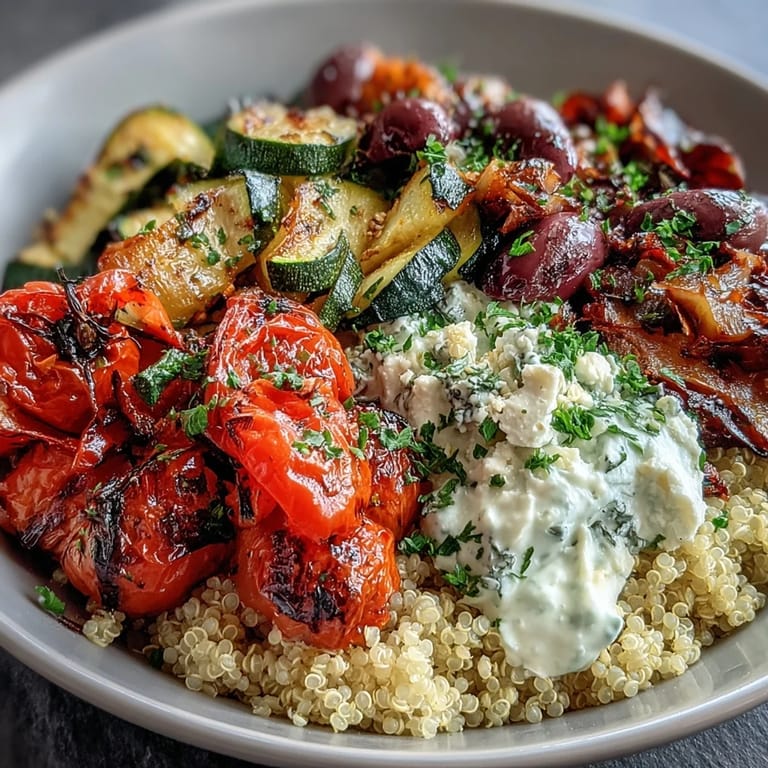
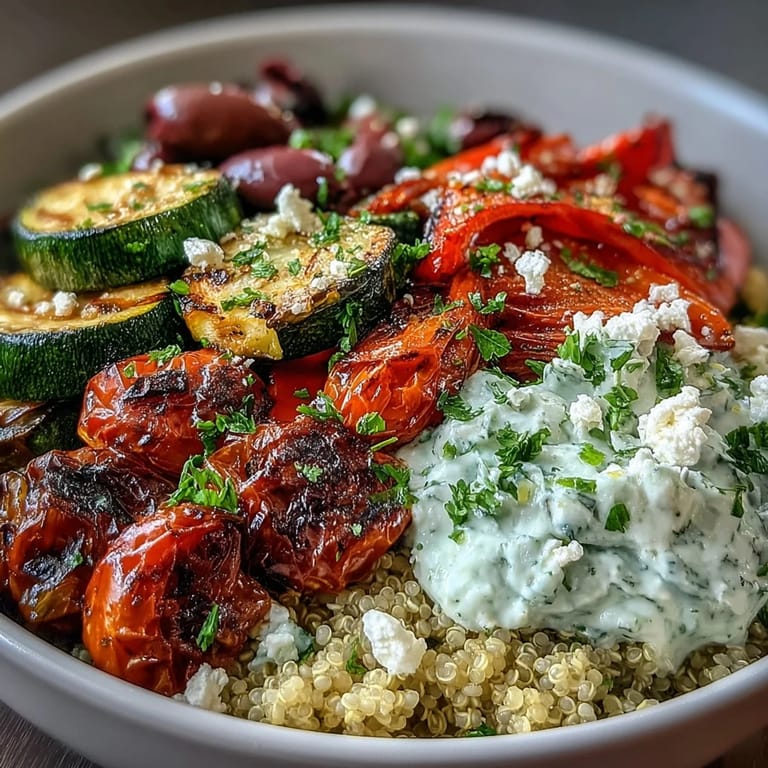
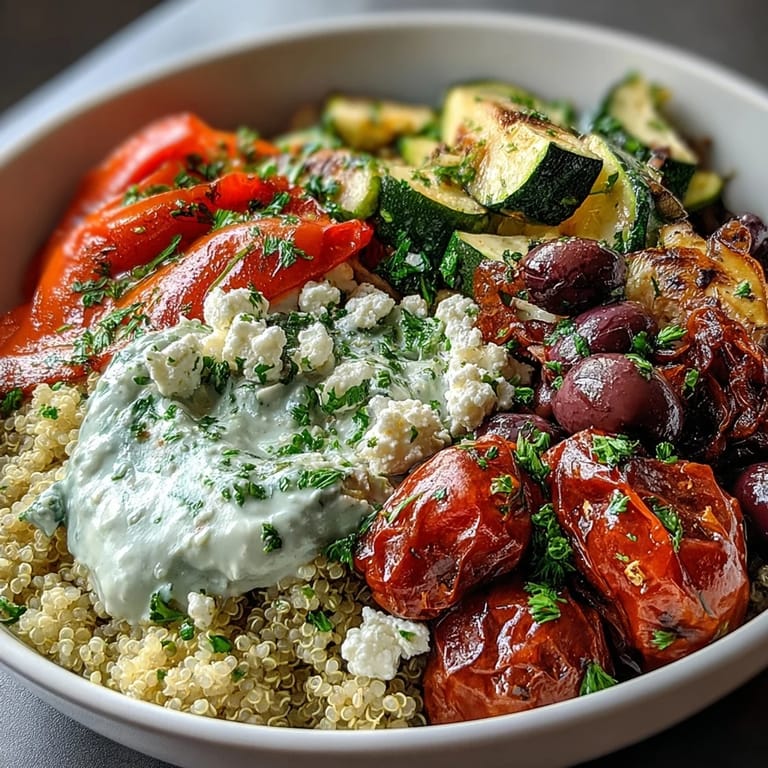
- Divide the quinoa among four bowls, then arrange the roasted vegetables, chickpeas, olives, a generous scoop of hummus, a dollop of yogurt, and crumbled feta on top. Let everyone see the layers before they dive in.
- Finish and serve:
- Scatter fresh parsley over everything and tuck a lemon wedge on the side of each bowl. Encourage everyone to squeeze the lemon over their bowl just before eating.
 Pin
Pin One evening, I made this bowl after a long, frustrating day when nothing had gone right. The simple act of chopping vegetables, watching them transform in the oven, and arranging everything into neat sections felt meditative. By the time I sat down with my bowl, squeezing lemon over the top, the day's tension had softened. It wasn't just dinner, it was a quiet reset, proof that sometimes the best therapy is a cutting board and a hot oven.
How to Store and Reheat
Keep each component separate in airtight containers and everything stays fresh for up to four days in the fridge. The quinoa and roasted vegetables reheat beautifully in the microwave or a skillet, but add the hummus, yogurt, feta, and parsley fresh when you assemble each bowl. Cold components on warm grains is actually lovely, so don't stress about heating everything perfectly. I often eat these bowls at room temperature, especially in warmer months when turning on the stove feels like too much effort.
Swaps and Variations
Farro or brown rice can replace quinoa if you want something chewier, just adjust your cooking time accordingly. Roasted sweet potato, eggplant, or cauliflower work beautifully in place of zucchini when you need a change. For a vegan version, skip the feta and use cashew or almond-based yogurt, it's just as creamy and tangy. I've added grilled chicken, seared shrimp, and even leftover lamb to these bowls when I wanted extra protein, and it always felt natural, never forced.
Serving Suggestions
These bowls shine on their own, but a side of warm pita or flatbread makes them feel more like a complete meal if you're feeding a crowd. A simple cucumber and tomato salad with red wine vinegar on the side adds even more freshness and crunch. I sometimes drizzle a little tahini thinned with lemon juice over the top for extra richness and nuttiness.
- Serve with a chilled glass of white wine or sparkling water with mint for a light, refreshing pairing
- Let everyone customize their bowls at the table by setting out extra toppings like pine nuts, sun-dried tomatoes, or hot sauce
- Pack individual portions in mason jars for grab-and-go lunches, layering quinoa on the bottom and delicate toppings on top
 Pin
Pin This bowl has become my answer to the question of what to make when I want something nourishing but not heavy, colorful but not complicated. It's the kind of meal that makes you feel good long after the dishes are done.
Recipe Q&A
- → Can I make this bowl ahead of time?
Yes, prepare components up to 3 days in advance. Store quinoa, roasted vegetables, and chickpeas separately in airtight containers. Assemble bowls just before serving for best texture and freshness.
- → What other grains work well in this bowl?
Farro, brown rice, bulgur, or couscous make excellent substitutes for quinoa. Cook according to package instructions and adjust seasoning as needed. Each grain brings a slightly different texture and nuttiness.
- → How can I add more protein?
Grilled chicken, shrimp, or lamb pairs beautifully with Mediterranean flavors. For plant-based options, add extra chickpeas, lentils, or tofu. You could also incorporate a hard-boiled egg or increase the feta and yogurt portions.
- → What vegetables can I substitute?
Eggplant, artichoke hearts, cucumber, or roasted red peppers work wonderfully. Try adding fresh spinach or arugano for greens. Seasonal vegetables like asparagus in spring or butternut squash in autumn keep this bowl exciting year-round.
- → Is this suitable for meal prep?
Absolutely. Portion components into separate containers for up to 4 days. Keep roasted vegetables and quinoa refrigerated. Add fresh toppings like parsley and olives when assembling. Reheat quinoa and vegetables slightly or enjoy at room temperature.