 Pin
Pin The first time I made this salad, my kitchen windows were completely fogged up from the roasting vegetables. That sweet, caramelized smell of squash and sweet potatoes filled every corner of the apartment. My roommate wandered in, asking what smelled so incredible, and ended up staying for dinner. Now it is our go-to when we want something that feels like comfort food but still leaves us feeling light and energized.
Last February, when winter felt endless, I invited three friends over for what I called a sunshine dinner. We sat around the table with these colorful bowls, talking for hours about everything and nothing. One friend said she forgot she was eating vegetables at all. That is the thing about this dish, it turns winter produce into something you actually crave.
Ingredients
- Butternut squash: Pick one that feels heavy for its size, the denser the flesh the sweeter the roast
- Sweet potatoes: These balance the squash with their earthy sweetness and hold their shape beautifully
- Red bell peppers: They add a bright almost tangy sweetness that cuts through the rich hummus
- Butter beans: Creamier than chickpeas and they blend into the silkiest hummus you have ever tasted
- Tahini: The nutty foundation that makes the hummus taste restaurant quality
- Cumin: Just a half teaspoon adds warmth without overpowering the vegetables
- Mixed seeds: Toasting them is non negotiable, they turn a soft salad into something with real texture
- Smoked paprika: The optional dusting on top adds this incredible smoky depth
Tired of Takeout? 🥡
Get 10 meals you can make faster than delivery arrives. Seriously.
One email. No spam. Unsubscribe anytime.
Instructions
- Get your oven hot and ready:
- Preheat to 200°C (400°F) and grab your largest baking sheet, you want those vegetables to have room to roast not steam
- Prep your vegetables:
- Peel and cube the squash and sweet potatoes into roughly even pieces, slice the bell peppers into strips, then pile everything onto that baking sheet
- Season and toss:
- Drizzle with two tablespoons olive oil, sprinkle generously with salt and pepper, then use your hands to toss until every piece is coated
- Roast until golden:
- Slide the tray into the oven for 30 to 35 minutes, flipping everything halfway through, until you see caramelized edges and tender centers
- Make the hummus:
- While vegetables roast, blend the butter beans, tahini, lemon juice, garlic, three tablespoons olive oil, cumin, salt, and pepper until completely smooth
- Adjust the consistency:
- Add water two tablespoons at a time until the hummus reaches the texture of thick Greek yogurt, taste and tweak the seasoning
- Toast your seeds:
- In a dry skillet over medium heat, cook the mixed seeds for two to three minutes, shaking the pan frequently until they smell fragrant and turn golden
- Assemble the bowls:
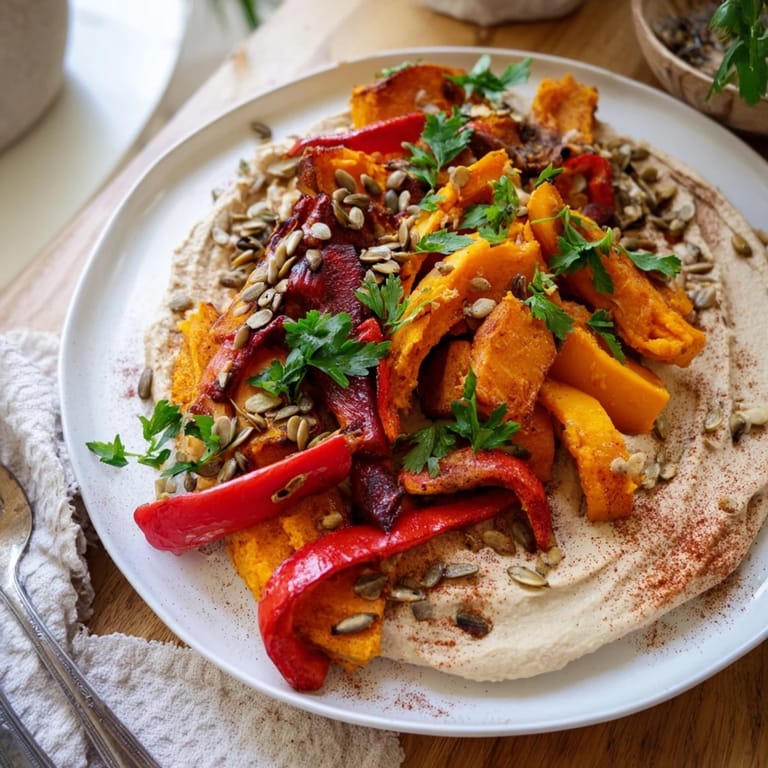
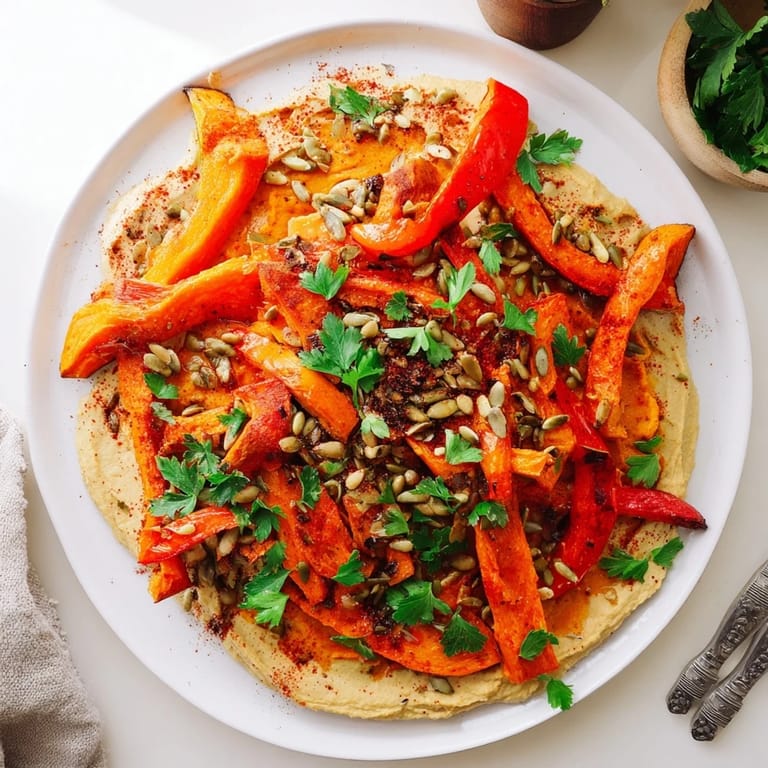
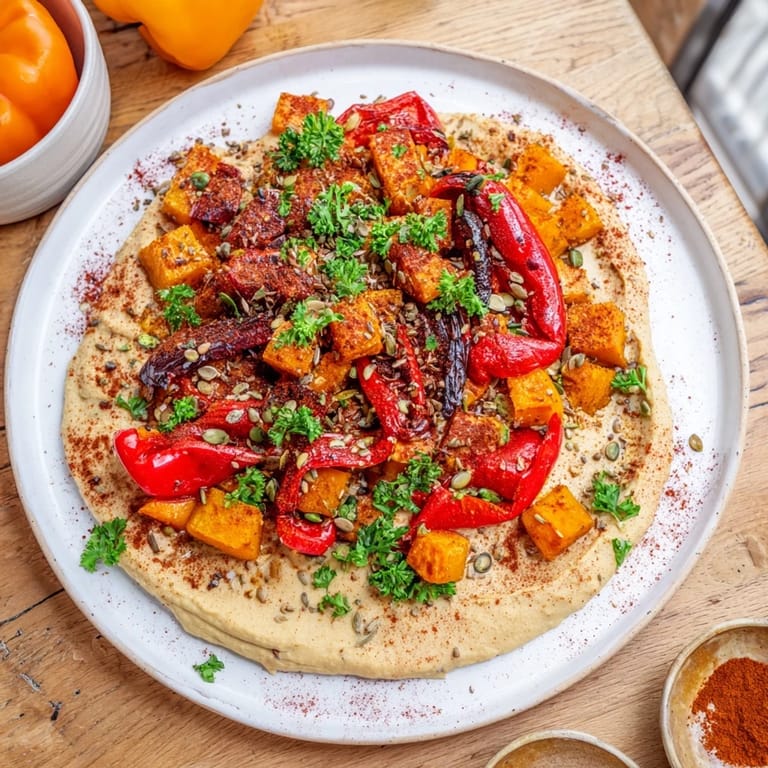
- Spread a generous swoosh of hummus on each plate, pile on the roasted vegetables, then finish with toasted seeds, fresh parsley, and that dusting of smoked paprika if you are feeling fancy
 Pin
Pin My mother now asks for this salad every time she visits. She watches me assemble it, taking notes on her phone, but I tell her the real secret is not in the measurements. It is in how you listen to the vegetables roasting, when they start to smell caramelized and sweet, that is when they are done.
Making It Your Own
Sometimes I throw red onion wedges onto the roasting pan, they become sweet and jammy. Other times I add carrots if the squash feels lonely. The hummus base is endlessly forgiving, try swapping cumin for smoked paprika or adding fresh herbs like cilantro or basil.
What To Serve Alongside
On nights when we want something more substantial, I warm naan bread or pita in the oven while the vegetables finish. A crisp white wine cuts through the creamy hummus beautifully. In summer, I serve this cold with grilled chicken or fish on top.
Storage And Meal Prep
The roasted vegetables keep for four days in the fridge and actually develop deeper flavor. Store the hummus separately and assemble just before eating. The seeds can be toasted in bulk and kept in a jar for quick weeknight crunch.
- Package the components separately in glass containers for the freshest results
- The hummus thickens in the fridge, thin with a splash of water or olive oil
- Reheat vegetables at 180°C (350°F) for 10 minutes if you prefer them warm
 Pin
Pin This salad started as a way to use up winter vegetables but became something I make year round. Hope it brings as much warmth to your table as it has to mine.
Recipe Q&A
- → Can I make this ahead of time?
Yes, you can roast the vegetables and prepare the hummus up to 2 days in advance. Store them separately in airtight containers in the refrigerator. Reheat the vegetables gently before serving and toast the seeds fresh for optimal crunch.
- → What vegetables work best for roasting?
Butternut squash and sweet potatoes are ideal for their natural sweetness and creamy texture when roasted. You can also add red onions, carrots, parsnips, or Brussels sprouts. Cut vegetables into evenly sized cubes so they cook at the same rate.
- → How do I achieve the smoothest hummus consistency?
Blend the butter beans thoroughly, adding the water gradually while the food processor runs. The liquid helps break down the beans and creates a silky texture. Don't rush this step—let the machine run for 2-3 minutes for the creamiest results.
- → Can I substitute butter beans?
Absolutely. Chickpeas make an excellent alternative and create a more traditional hummus. Cannellini beans also work well and offer a similarly creamy texture. The cooking time remains the same regardless of your bean choice.
- → What seeds work best for the topping?
Pumpkin seeds (pepitas) and sunflower seeds provide the most substantial crunch. Sesame seeds add nutty flavor, while flax or hemp seeds boost nutrition. Toast them in a dry skillet until fragrant and golden—about 2-3 minutes—watching carefully to prevent burning.
- → How can I add more protein?
Consider adding crumbled feta, grilled chicken, or baked tofu. A sprinkle of chopped walnuts or pecans also boosts protein while enhancing the nutty flavor profile. For a plant-based complete protein, serve over quinoa instead of hummus.