 Pin
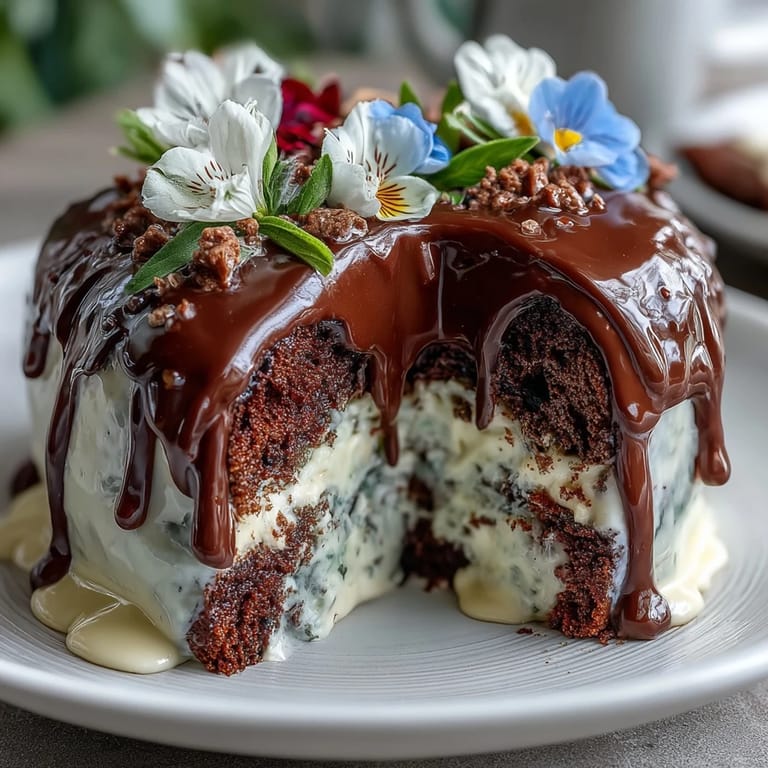
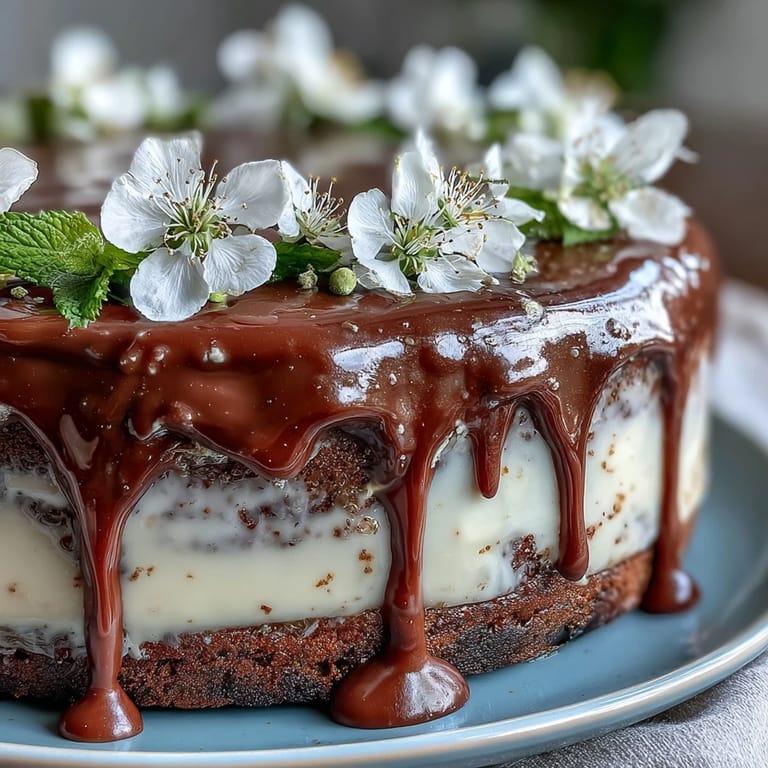
Pin My sister texted me a photo of a cake she'd seen at a spring garden party—all soft pastels and cascading white chocolate with tiny purple flowers dotting the top. She asked if I could recreate it for her engagement brunch, and honestly, I was nervous about the flowers at first. But standing in my kitchen that early April morning, watching the lemon frosting come together and smelling that bright citrus, I realized this cake was exactly what I needed to make for her. It's become my go-to when I want to impress without stress.
I made this cake for my coworker's birthday last spring, and watching her face when she saw the drip and flowers was worth every minute of prep. Her daughter asked for the recipe immediately, which meant I had to admit most of the magic is just patience and fresh lemon juice. That's when I knew it belonged here.
Ingredients
- All-purpose flour: The foundation needs to be measured by weight if you have a scale, because scooping and leveling can pack it down and throw off your cake's structure.
- Baking powder: Don't skip the sifting step for the dry ingredients—it aerates everything and prevents dense pockets in your layers.
- Unsalted butter: Room temperature is non-negotiable; cold butter won't cream properly and your cake will be heavy instead of light and tender.
- Granulated sugar: The creaming step with butter should take a full 3-4 minutes—stop too early and you'll trap air bubbles that collapse during baking.
- Eggs: Room temperature eggs incorporate smoothly and create a silkier crumb; cold eggs can cause the batter to break and separate.
- Vanilla extract: Use the real stuff here—it's a small investment that makes a noticeable difference in flavor depth.
- Whole milk: The alternating method with flour keeps the batter from becoming too thin or too stiff, which is how you avoid a dense cake.
- Powdered sugar for frosting: Sift it even if it looks fine in the bag; any lumps will show up in your frosting and make it grainy.
- Fresh lemon juice and zest: Fresh citrus is essential—bottled juice tastes flat by comparison and won't give you that bright, sharp flavor that defines this frosting.
- White chocolate chips: These melt beautifully into a ganache, but buy them from a reputable source since quality varies wildly.
- Heavy cream: It needs to be hot enough to melt the chocolate but not boiling, or you'll end up with a broken, greasy mess.
- Edible flowers: Source these from specialty grocery stores or online suppliers that specifically grow them for eating—never use grocery store bouquets, which are treated with pesticides.
Tired of Takeout? 🥡
Get 10 meals you can make faster than delivery arrives. Seriously.
One email. No spam. Unsubscribe anytime.
Instructions
- Prepare your pans and heat:
- Set your oven to 350°F and line three 8-inch pans with parchment paper, greasing the bottoms so the paper stays put. This setup takes five minutes but saves you from stuck cake disasters.
- Build the dry mixture:
- Whisk flour, baking powder, and salt together in a medium bowl, making sure everything is evenly distributed. This is where aeration happens, so don't skip the whisking even though it seems tedious.
- Cream your base:
- Beat softened butter and sugar together until it looks pale and fluffy, about 3-4 minutes—you'll actually see the mixture transform from dense to cloud-like. This step is doing the heavy lifting for your cake's texture.
- Add eggs carefully:
- Drop in one egg at a time, beating well after each addition so everything stays emulsified and smooth. If your mixture looks broken or separated, you've gone too fast or your eggs were too cold.
- Incorporate vanilla:
- Mix in your vanilla extract, then pause and smell it—this is the moment the whole cake starts smelling like it belongs in a bakery.
- Alternate wet and dry:
- Add a third of your flour mixture, mix until just combined, then half the milk, then another third of flour, then the remaining milk, then the last flour. Start and end with flour to keep the batter stable, and don't overmix or you'll activate the gluten and toughen everything.
- Divide and bake:
- Pour batter evenly into your prepared pans and bake for 25-30 minutes until a toothpick comes out clean with maybe a crumb or two still clinging to it. Let them cool in the pans for 10 minutes so they set, then turn them out onto racks to cool completely—rushing this step will cause them to break apart.
- Make the lemon frosting:
- Beat softened butter until it's pale and creamy, then gradually add sifted powdered sugar so you don't create a cloud of sugar in your kitchen. Once it's smooth, add your lemon juice and zest, then just enough milk to make it spreadable—you want it thick enough to hold ridges but soft enough to spread without fighting.
- Layer and frost:
- Place one cooled cake layer on your serving plate and spread a generous layer of frosting on top, then repeat until all three layers are stacked and frosted. Frost the entire outside smoothly with an offset spatula, working quickly since the frosting softens as you handle it.
- Create the white chocolate drip:
- Heat cream until it's just starting to steam, pour it over chopped white chocolate in a heatproof bowl, and let it sit for two minutes before stirring until glossy and smooth. If you want pastels, add gel coloring now, then let it cool until it's thick enough to drip slowly but still pourable—about the consistency of warm honey.
- Drip and decorate:
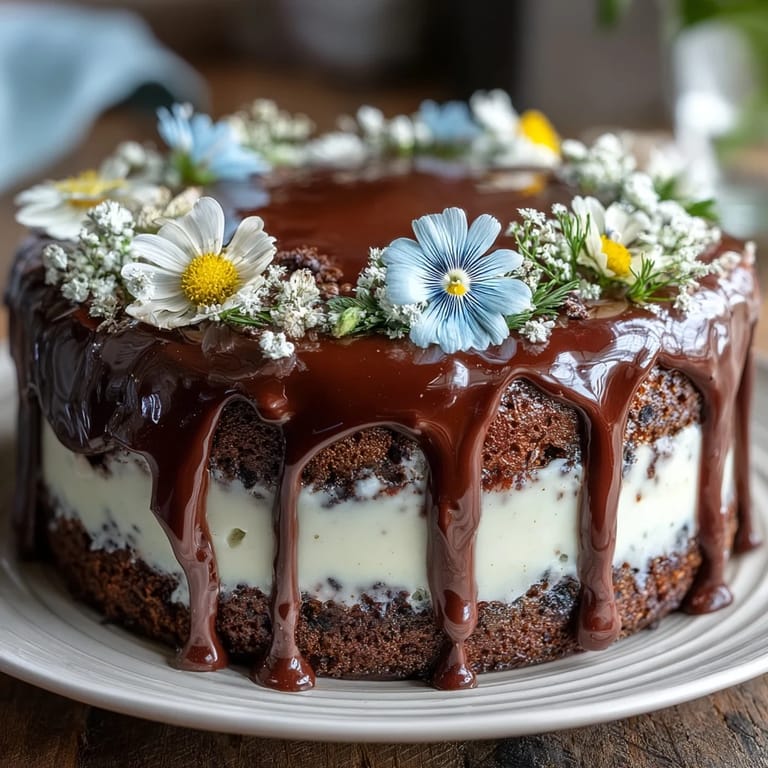
- Using a spoon or squeeze bottle, let the ganache run down the cake's sides naturally, then spread the remainder across the top. Press your edible flowers and any sprinkles onto the frosting while it's still slightly tacky so they stick.
 Pin
Pin There's something about watching someone's eyes light up when they see a cake this beautiful sitting on the table—suddenly it's not just dessert, it's a moment. My neighbor actually teared up when I brought her one after her surgery, which taught me that sometimes the most delicious thing about baking is how it makes people feel cared for.
The Lemon Frosting Magic
The secret to this frosting is the balance between the tartness of fresh lemon and the sweetness of powdered sugar, and I learned this by experimentation after my first batch tasted one-note. The zest matters just as much as the juice because it carries essential oils that punch up the flavor in a way juice alone can't. If you're nervous, make it taste slightly more lemony than you think is right—it mellows beautifully once it's on the cake and sits for an hour.
Working with Edible Flowers
The first time I bought edible flowers, I bought regular florist flowers and almost served them before realizing my mistake. Now I order them specifically labeled for eating, or I pick pansies and violets from my own garden where I know nothing's been sprayed. The flowers stay fresher longer if you add them right before serving, and honestly, a light dusting of lemon zest between them bridges the gap between decoration and flavor.
Timing and Storage Wisdom
This cake can be made in stages, which takes the pressure off if you're entertaining—bake the layers a day ahead, frost the next day, and add the drip and flowers just before guests arrive. The whole cake keeps beautifully in the refrigerator for up to three days, and bringing it to room temperature for about 30 minutes before serving softens the frosting just enough to taste creamy and smooth.
- If you need to transport the cake, skip the flowers until you arrive at your destination so they don't get bruised or shed petals in the car.
- A rotating cake stand makes frosting infinitely easier because you can spin the cake toward you instead of reaching around it awkwardly.
- White chocolate ganache thickens as it cools, so if it gets too stiff before you finish dripping, gently reheat it for 10 seconds in the microwave and try again.
 Pin
Pin This cake never feels like an obligation to make, which is how I know it's become a real favorite. Every time I frost one, I'm proud of how it turns out, and everyone who eats it asks for the recipe.
Recipe Q&A
- → How do I achieve a smooth lemon frosting?
Beat softened butter until creamy, then gradually add sifted powdered sugar. Mix in fresh lemon juice and zest, adding milk to reach the desired spreadable consistency.
- → What is the best way to create the white chocolate drip?
Heat heavy cream until just simmering, pour over white chocolate and let sit for 2 minutes. Stir until smooth and pourable, then gently drizzle over the cake edges.
- → Can I use gluten-free flour for the sponge layers?
Yes, substitute all-purpose flour with a 1:1 gluten-free blend to accommodate dietary needs without compromising texture.
- → How should I store the cake to maintain freshness?
Refrigerate the cake for up to 3 days and bring to room temperature before serving to preserve flavor and texture.
- → Are the flowers used for decoration safe to eat?
Use only pesticide-free, edible flowers such as violets, pansies, or rose petals to ensure safety and add natural beauty.