 Pin
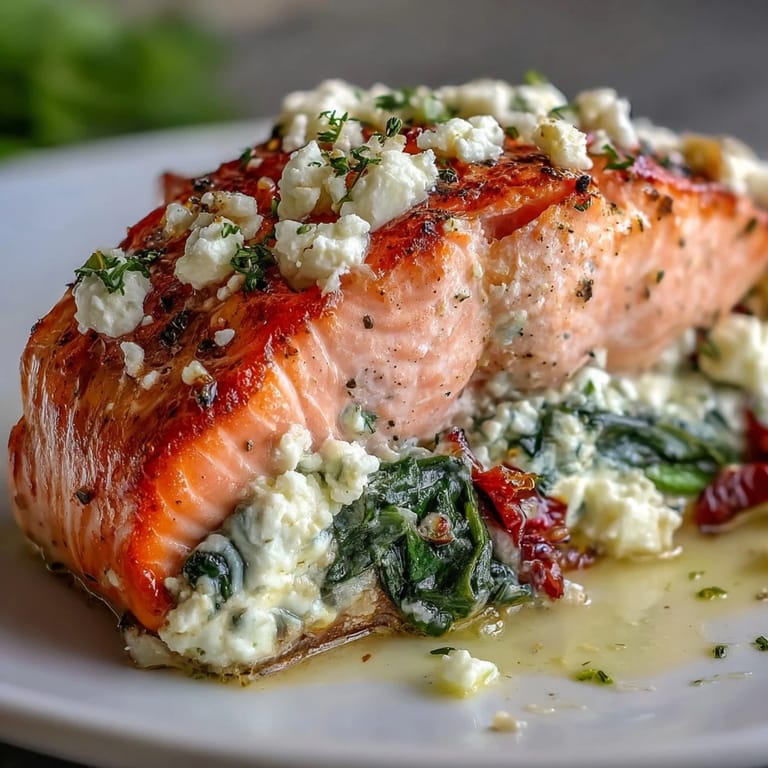
Pin My kitchen smelled like a Mediterranean coast the first time I stuffed salmon with spinach and feta, though I was standing in my apartment on a Tuesday night with the radiator clanking. What struck me wasn't just how quickly the dish came together, but how the moment I opened the oven, this unmistakable aroma of warm cheese and roasted peppers filled every corner. My partner wandered in from the other room asking what smelled so good, and I realized I'd stumbled onto something that tastes like you spent hours cooking but actually respects your weeknight schedule. That balance between impressive and easy became the whole reason I keep making it.
I made this for my sister during one of those spring dinners when everyone's tired of heavy food and wants something that feels bright. She's not someone who gets excited about cooking, but she sat at my kitchen counter watching me stuff the fillets and asked if I'd learned this somewhere fancy. When she tasted it, the way her eyes widened made me laugh, and suddenly it wasn't just dinner—it was evidence that home cooking doesn't need to be complicated to matter.
Ingredients
- Salmon fillets (4, about 6 oz each): The star of the show deserves quality, so pick fillets that smell oceanic and look firm; skin-on helps them hold their shape, but skinless works beautifully too.
- Olive oil (1.5 tbsp for salmon, plus 1 tbsp for filling): This is what carries flavor into every layer and keeps everything from sticking; good olive oil makes you taste the difference.
- Fresh spinach (4 cups): Frozen spinach works just as well if you squeeze out every drop of water—wet spinach is the enemy of a good filling.
- Feta cheese (6 oz, crumbled): The salty, tangy backbone that makes this filling sing; don't skip it or use a substitute unless you have to.
- Parmesan cheese (1/3 cup, grated): Adds depth and helps bind the filling together while bringing extra umami.
- Roasted red peppers (1/4 cup, chopped): These bring sweetness and color; jarred peppers save time without sacrificing flavor.
- Italian seasoning (1 tsp): A shortcut that ties the Mediterranean flavors together without fussing with individual herbs.
- Paprika and cayenne (1/2 tsp and 1 pinch): Just enough warmth and smokiness to make the filling memorable.
- Garlic powder (1/2 tsp): Distributed evenly through the filling, unlike fresh garlic which can clump.
- Salt and freshly ground black pepper: Season as you go rather than all at the end; your filling and salmon deserve individual attention.
Tired of Takeout? 🥡
Get 10 meals you can make faster than delivery arrives. Seriously.
One email. No spam. Unsubscribe anytime.
Instructions
- Get your oven ready and prep the pan:
- Preheat to 400°F and line your baking sheet with parchment paper or a light coating of oil. This step takes two minutes but saves you from scraped pan disasters later.
- Dry your salmon like you mean it:
- Pat each fillet down with paper towels until they stop being wet; moisture is the enemy of proper searing and even cooking. Arrange them skin-side down on your prepared sheet.
- Cut pockets with precision:
- Using a sharp knife, slice lengthwise into each fillet about three-quarters of the way through—think of it like opening a book, not cutting it in half. The knife should glide through the flesh but stop just before reaching the skin.
- Make the filling that's actually the star:
- Heat olive oil in your skillet over medium heat and add the spinach with all the seasonings. Watch it wilt down—if you're using frozen spinach, just warm it through and make sure it's completely dry before moving on, which usually takes 2 to 3 minutes.
- Build the filling's personality:
- Pull the pan off the heat and fold in the crumbled feta, grated Parmesan, chopped roasted peppers, and garlic powder. Stir until everything gets cozy together, then let it sit for a minute so it cools enough to handle.
- Oil and season the salmon generously:
- Brush each fillet inside and out with the remaining olive oil, then hit them with salt and black pepper. Don't be shy; the salmon's about to bake, so seasoning now is your only chance.
- Stuff like you're tucking in a friend:
- Spoon the filling into each pocket, dividing it evenly among the four fillets. Resist the urge to overstuff—leave a little space at the edges so the filling stays inside where it belongs.
- Bake until it's perfect:
- Slide into the oven for 12 to 17 minutes depending on how thick your fillets are. The salmon is done when it flakes easily with a fork and hits 145°F internally; thicker fillets need the longer time, thinner ones the shorter.
- Let it rest before you plate:
- Two minutes off the heat lets the residual warmth finish what the oven started and keeps the fish from drying out. This tiny step is the difference between good salmon and perfect salmon.
 Pin
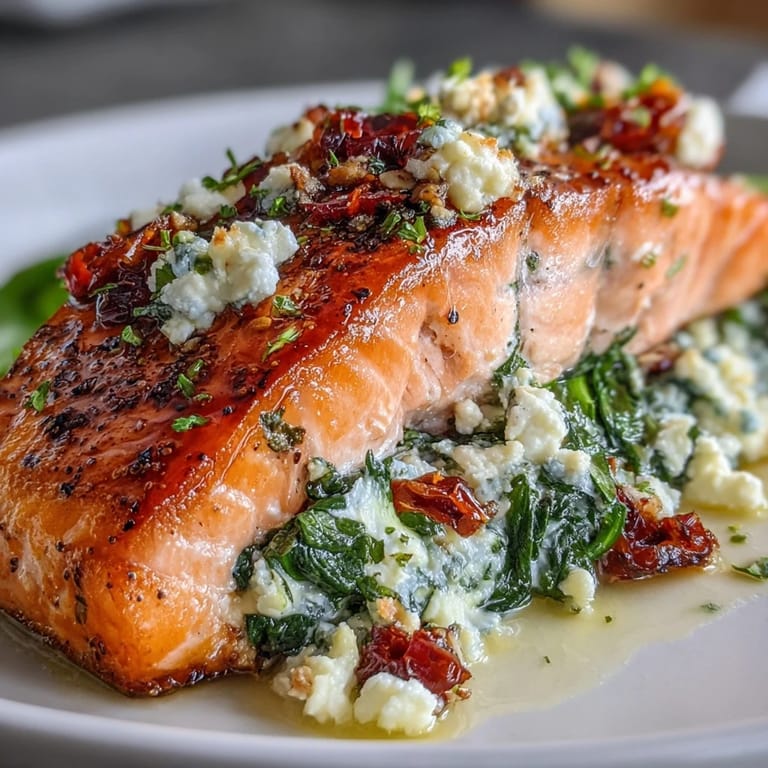
Pin There was this moment last fall when I made this for someone who'd just moved into the neighborhood and came over shy and uncertain about whether we'd have anything in common. By the time we were eating, surrounded by lemon wedges and conversation that finally felt easy, I realized food does this thing where it suddenly makes strangers feel like they belong. That's what this salmon does for me every time.
Building Your Perfect Filling
The spinach-feta filling is where you really make this dish your own, and the beauty is that it's forgiving enough to work with what you have. I've learned that the order matters less than making sure the spinach is completely dry—wet spinach creates soggy pockets and dilutes the flavors you're working so hard to layer in. The cheese is what locks everything together, so don't skimp there, but everything else invites creative swaps and personal tweaks.
Timing and Temperature
The whole reason this works as a weeknight dinner is that it respects your schedule without cutting corners on flavor or technique. I used to obsess over baking times until I realized that every oven runs a little differently and every salmon fillet has its own thickness, so checking at 12 minutes and then every minute after that actually gives you better results than blindly following the recipe. A meat thermometer becomes your best friend here because it removes all the second-guessing and anxiety.
Serving and Variations That Work
Plated simply with a wedge of fresh lemon, this salmon speaks for itself, but it also pairs beautifully with crisp salads, roasted potatoes, or even just bitter greens dressed in vinaigrette. I've served it at casual dinners and slightly fancier occasions, and it reads as special in both contexts without requiring a completely different approach. The leftovers keep for two days refrigerated, and cold salmon with the cheese filling is actually a fantastic lunch the next day if you have any left to begin with.
- Swap goat cheese for feta if you want something tangier and slightly more delicate.
- Fresh dill or lemon zest scattered over the top before serving adds brightness without extra cooking.
- Roasted asparagus or green beans on the side rounds out the meal without stealing focus from the star.
 Pin
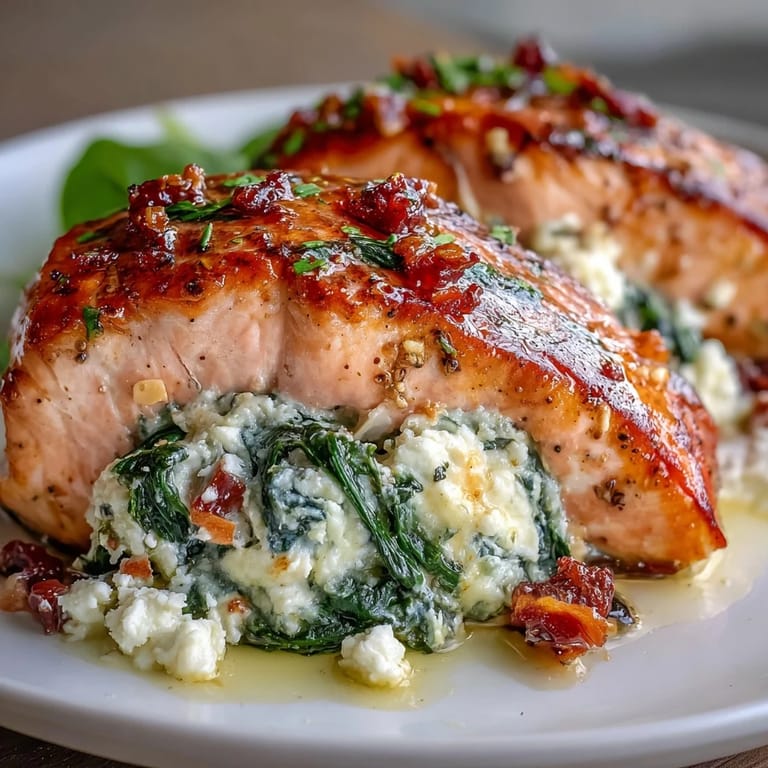
Pin This salmon has become my answer to wanting something that tastes like you took time when you really just wanted dinner ready before 7 PM. It's proof that good food and realistic weeknight cooking aren't mutually exclusive.
Recipe Q&A
- → How do I prepare the spinach-feta filling?
Sauté fresh or thawed spinach with Italian seasoning, paprika, and cayenne. Once wilted, mix in crumbled feta, Parmesan, roasted red peppers, and garlic powder, then cool before stuffing.
- → What is the best way to cut the salmon for stuffing?
Use a sharp knife to create a lengthwise pocket in each fillet, cutting about three-quarters through without slicing entirely to maintain the integrity of the fillet.
- → At what temperature and time should the salmon be baked?
Bake the stuffed salmon at 400°F (200°C) for 12–17 minutes, depending on fillet thickness, until it flakes easily with a fork and reaches 145°F internally.
- → Can I substitute feta cheese with another cheese?
Yes, goat cheese is a good alternative that complements the spinach and roasted peppers nicely while maintaining a creamy texture.
- → What sides pair well with this salmon dish?
Serve with lemon wedges, a crisp salad, or roasted potatoes to enhance the Mediterranean flavors and balance the meal.
- → How should leftovers be stored?
Place any leftovers in an airtight container and refrigerate for up to two days to retain freshness and flavor.