 Pin
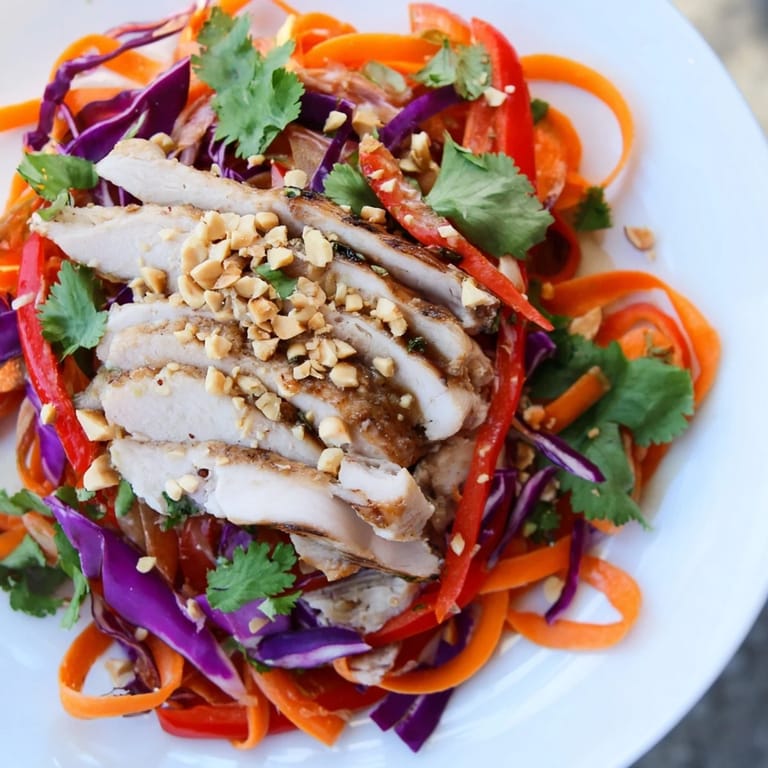
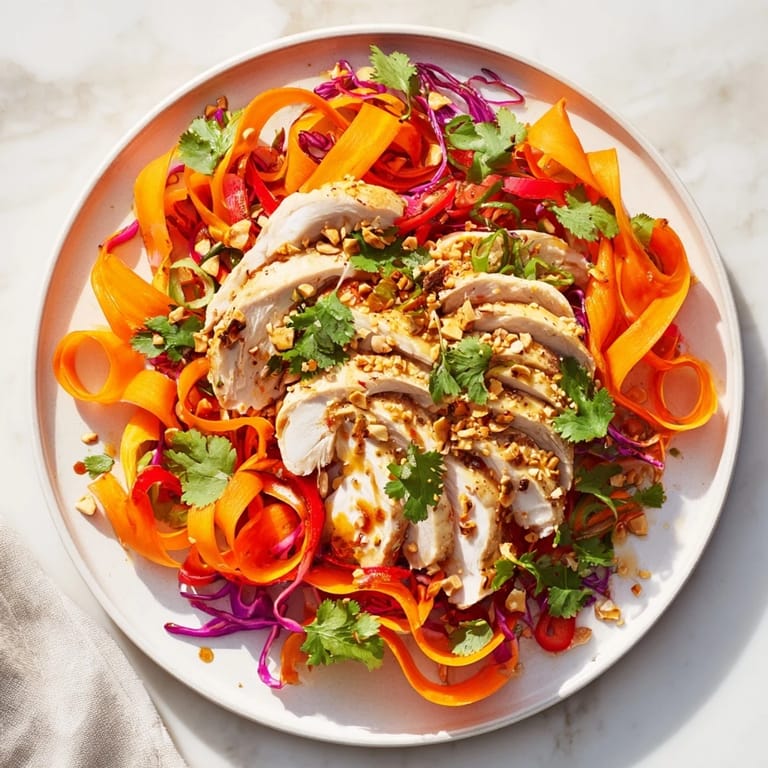
Pin There's something about the simplicity of a good slaw that catches you off guard. I was watching a cooking show one lazy afternoon when the chef tossed carrots with a vegetable peeler like it was the easiest thing in the world, and suddenly I understood why people get so excited about ribbons. That moment led me to this dish, a vibrant collision of tender chicken, crisp vegetables, and a ginger-miso dressing that tastes bright enough to wake you up mid-week.
I made this for friends who were skeptical about salad as a main course, and watching them go back for seconds while barely talking told me everything. The ginger-miso dressing is what converts people, honestly, because it tastes like it came from somewhere more interesting than your kitchen.
Ingredients
- Boneless, skinless chicken breasts (2, about 400g): Pound them slightly thinner if they're extra thick, and don't skip the marinating step because that 10 minutes makes a real difference in flavor and tenderness.
- Soy sauce: Use tamari if you need gluten-free, and remember it's salty so taste before adding extra salt.
- Sesame oil: The toasted kind, because the regular stuff is a different animal entirely and won't give you that warm, nutty flavor.
- Fresh ginger: Freshly grated, not from a jar, because the jar version gets mealy and won't deliver the same brightness.
- Carrots (4 large): Peeling them into ribbons is easier than you think with a vegetable peeler, and the ribbons cook slightly with the heat of the warm chicken.
- Red cabbage (2 cups, shredded): The color is non-negotiable for this dish, and it holds its crunch better than green cabbage.
- Red bell pepper (1, thinly sliced): Sweet and crisp, it balances the umami of the dressing beautifully.
- Scallions (3, thinly sliced): Add them right before serving so they stay fresh and oniony, not wilted.
- Fresh cilantro (1/2 cup): Don't hold back here, it's the final bright note that makes everything sing.
- Roasted peanuts (1/4 cup, optional): Roughly chopped because uniform pieces feel fussy and lose texture.
- Toasted sesame seeds (1 tbsp): Toast them yourself if you have time, the flavor difference is worth those two minutes.
- White miso paste (2 tbsp): This is the secret ingredient that makes the dressing taste complex and a little mysterious.
- Rice vinegar (2 tbsp): Gentler than regular vinegar and lets the other flavors breathe.
- Honey or maple syrup (1 tbsp): Rounds out the dressing with a touch of warmth without being sweet.
- Neutral oil (3 tbsp): Canola or grapeseed so you're not competing with the sesame oil already in there.
- Fresh lime juice (1 tbsp): Fresh squeezed, because bottled changes the entire flavor profile.
- Garlic clove (1, minced): One is enough, more and it overpowers everything else in the dressing.
Tired of Takeout? 🥡
Get 10 meals you can make faster than delivery arrives. Seriously.
One email. No spam. Unsubscribe anytime.
Instructions
- Marinate the chicken:
- Mix soy sauce, sesame oil, ginger, salt, and pepper in a small bowl, then turn the chicken breasts to coat them completely. Let it sit for 10 minutes while you gather the rest of your ingredients, and you'll notice the chicken already smells more interesting.
- Cook the chicken:
- Heat your grill pan or skillet over medium heat until a drop of water sizzles on contact. Cook each side for 5-7 minutes until the chicken is cooked through but still tender, then let it rest for 5 minutes before slicing so the juices stay inside where they belong.
- Prepare the vegetables:
- While the chicken cooks, use a vegetable peeler to shave the carrots into ribbons, moving the peeler lengthwise down the carrot and rotating as you go. Toss them into a large bowl with the shredded cabbage, sliced pepper, scallions, and cilantro so everything is ready to go.
- Make the dressing:
- Whisk together the miso, rice vinegar, soy sauce, honey, ginger, sesame oil, neutral oil, lime juice, and garlic until the miso breaks down completely and the dressing turns smooth and creamy. It should taste balanced, not too salty and not too sharp, so taste it straight from the spoon.
- Assemble the slaw:
- Slice the rested chicken thinly, add it to the vegetables, then pour the dressing over everything and toss gently so the ribbon vegetables stay intact. The warmth of the chicken will soften the vegetables just slightly without making them mushy.
- Garnish and serve:
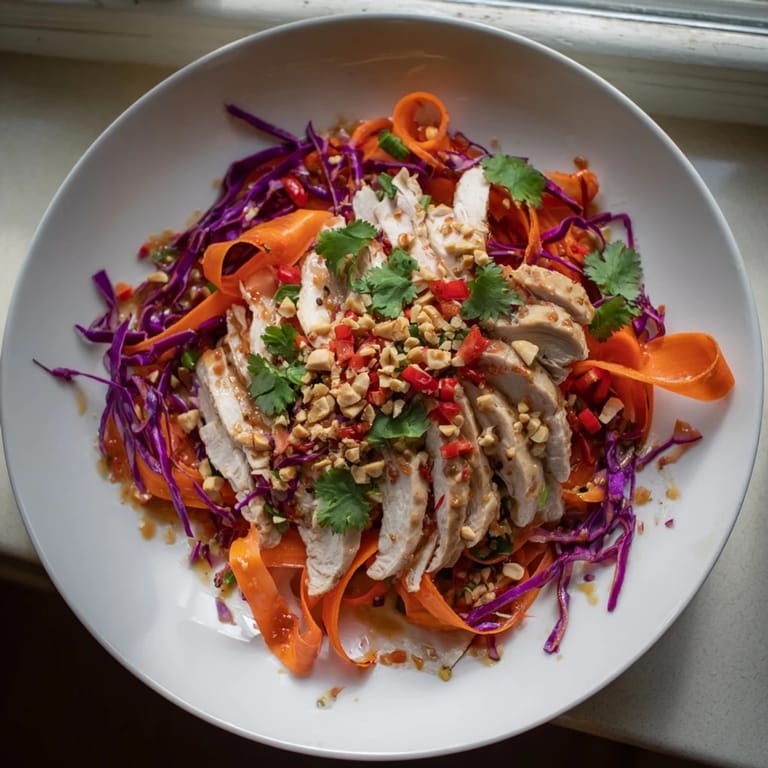
- Top with roasted peanuts and toasted sesame seeds right before serving so they stay crispy and don't get lost in the dressing. Serve immediately while the chicken is still warm and the vegetables are still at their crunchiest.
 Pin
Pin The first time I made this, someone asked if I'd gotten the dressing from a restaurant, and I realized that's when you know a recipe is working. It became the thing I made when I wanted to impress people without spending hours in the kitchen.
The Story Behind Carrot Ribbons
Vegetable ribbons used to intimidate me until I realized a peeler is just a knife with a smaller blade and better angle. Now I can't stop using them because they cook differently than chunked vegetables, they hold dressing better, and they feel a little bit fancier without requiring any actual extra skill. There's something satisfying about watching a long ribbon curl off the carrot, and your guests will notice that detail even if they can't say exactly why.
Why This Dressing Works
Miso paste is umami, which means it makes everything taste like a richer version of itself, and when you combine it with ginger, lime, and sesame oil, you're creating layers instead of a one-note dressing. The white miso is milder than red, so it doesn't overpower the vegetables, and the balance of salty, sour, and slightly sweet means you don't need to add more salt halfway through eating. This is the dressing I make when I want the salad to be the star of the meal instead of just a side dish.
Making It Your Own
This recipe is flexible enough that you can play with it without breaking anything. Tofu or tempeh work beautifully if you're vegetarian, edamame adds extra protein if you want it, and cucumber slices bring more crunch if that's what you're after. The dressing is also forgiving, so if you like things spicier, add a pinch of red pepper flakes, or if you want it richer, add a teaspoon more sesame oil.
- Make the dressing ahead of time and keep it separate so the vegetables don't get soggy if you're not eating right away.
- If you want warm salad instead of cool, serve the vegetables and dressing at room temperature after cooking the chicken instead of chilling anything.
- Leftovers stay good for a day if you store the chicken separate from the vegetables and dressing.
 Pin
Pin This slaw has become my go-to when I need something that tastes thoughtful but comes together quickly. It's the kind of meal that reminds you why fresh ingredients and a good dressing matter so much.
Recipe Q&A
- → How do I create carrot ribbons?
Use a vegetable peeler to shave peeled carrots into thin, delicate ribbons resembling wide noodles or strips, adding texture without shredding.
- → What is the best way to cook chicken for this salad?
Marinate the chicken briefly, then grill or pan-sear it on medium heat for 5–7 minutes per side until fully cooked but still juicy, then slice thinly.
- → Can I substitute ingredients for dietary needs?
Yes, grilled tofu or tempeh work well instead of chicken, and adding cucumber or edamame increases crunch and protein for a vegetarian-friendly dish.
- → How should the ginger-miso dressing be prepared?
Whisk white miso paste, rice vinegar, soy sauce, honey, freshly grated ginger, sesame oil, neutral oil, lime juice, and minced garlic until smooth and creamy.
- → What garnishes enhance flavor and texture?
Roasted peanuts and toasted sesame seeds offer a crunchy finish and nutty aroma complementing the fresh vegetables and chicken.
- → How to ensure the dish is gluten-free?
Use tamari instead of regular soy sauce to avoid gluten, and verify ingredient labels for hidden gluten-containing additives.