 Pin
Pin Tuesday nights used to mean takeout containers stacked on the counter, but then my neighbor mentioned she'd stopped ordering out entirely with a single weeknight trick: a wok and whatever was in her crisper drawer. That conversation changed how I thought about dinner. This chicken cabbage stir-fry became my answer to those evenings when I wanted restaurant-quality flavors without the guilt of the delivery app, and honestly, it tastes better when you've made it yourself.
I made this for my sister on a random Wednesday, and she ate it straight from the pan while standing at my counter, asking if I'd learned to cook better or if she'd just been eating too much pizza. That moment stuck with me because it wasn't fancy or Instagram-worthy, just genuinely delicious food that made someone stop and actually pay attention. Now whenever she visits, she requests it before she even takes her coat off.
Ingredients
- Chicken breast or thighs (500 g): Thighs stay juicier if you're worried about drying things out, but breast works beautifully if you slice it thin and don't overcook it.
- Green cabbage (1 small head): The backbone of this dish, and it should be sliced thin enough to wilt slightly but still hold its crunch.
- Carrot (1 medium): Julienne it so it cooks evenly and adds bursts of sweetness throughout.
- Red bell pepper (1): Adds color and a gentle sweetness that balances the umami sauce.
- Green onions (3): Stir these in at the very end so they stay bright and don't turn sad and wilted.
- Soy sauce (3 tbsp): Use tamari if you need gluten-free, and quality matters here since it's the backbone of your sauce.
- Oyster sauce (1 tbsp): This is the secret to that restaurant-style depth, the thing that makes people ask what you did differently.
- Hoisin sauce (1 tbsp): Brings sweetness and body, but don't skip the balance of the other ingredients or it overpowers.
- Rice vinegar (1 tbsp): Cuts through the richness and brightens everything up beautifully.
- Sesame oil (2 tsp): A little goes a long way, so don't be tempted to pour, just measure it out.
- Cornstarch (2 tsp): This thickens your sauce so it coats instead of pooling at the bottom.
- Water (2 tbsp): Helps the cornstarch do its job and keeps the sauce from getting too thick.
- Sugar (1 tsp): Just enough to round out the flavors without making it dessert.
- Vegetable oil (2 tbsp): Split between cooking the chicken and the vegetables for maximum flavor.
- Garlic (3 cloves): Minced fine so it distributes throughout the whole dish and doesn't leave large chunks.
- Fresh ginger (1-inch piece): Grate it yourself if you can, it's fresher and more fragrant than pre-grated.
Tired of Takeout? 🥡
Get 10 meals you can make faster than delivery arrives. Seriously.
One email. No spam. Unsubscribe anytime.
Instructions
- Make your sauce first:
- Whisk together soy sauce, oyster sauce, hoisin, rice vinegar, sesame oil, cornstarch, water, and sugar in a small bowl. This step means you won't be scrambling for bottles while everything's hot and demanding your attention in the pan.
- Get your chicken golden:
- Heat 1 tablespoon oil in your skillet or wok over medium-high heat until it shimmers, then add your chicken slices. Let them sit for a minute before stirring so they develop that gorgeous golden crust, about 4 to 5 minutes total until cooked through.
- Build your aromatic base:
- Once the chicken's done, push it to the side and add the remaining oil, then immediately follow with minced garlic and ginger. You'll smell it within seconds, that sharp peppery ginger perfume filling your kitchen, which is exactly what you want.
- Let the vegetables soften just right:
- Toss in cabbage, carrot, and bell pepper and stir constantly for 3 to 4 minutes until they soften but still have a slight snap to them. This is where timing matters, so stay close and keep your eyes on it.
- Bring it all together:
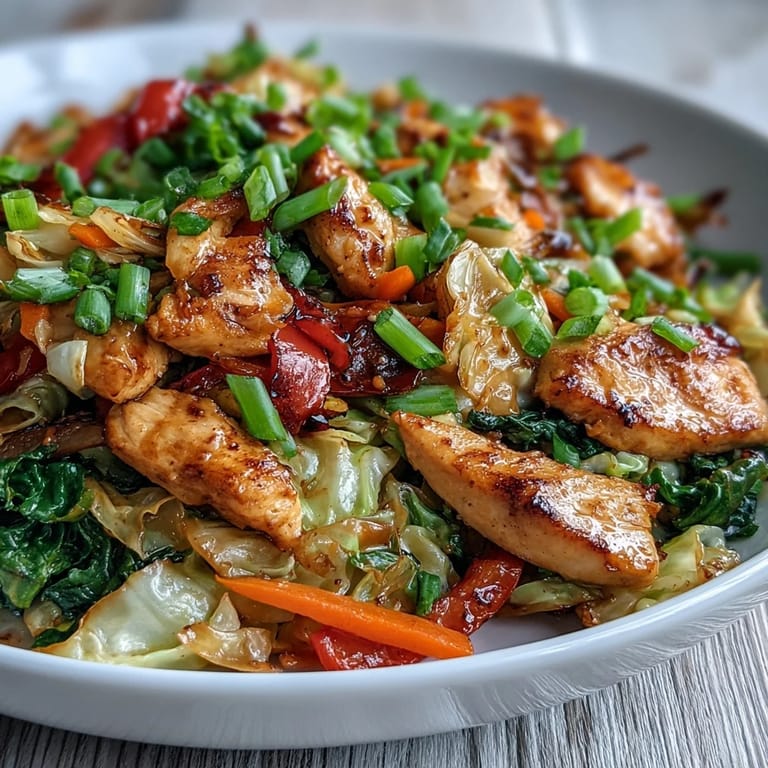
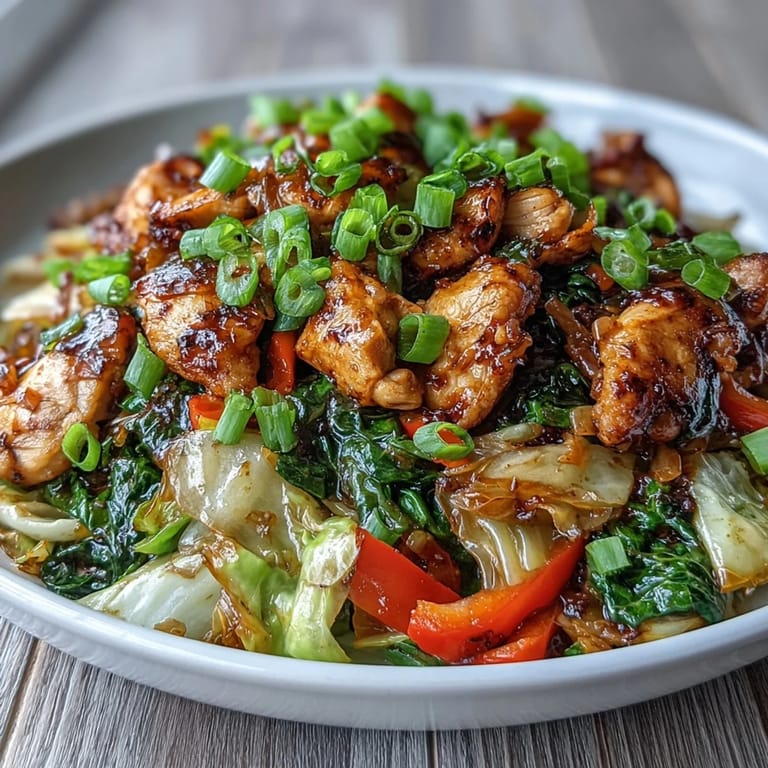
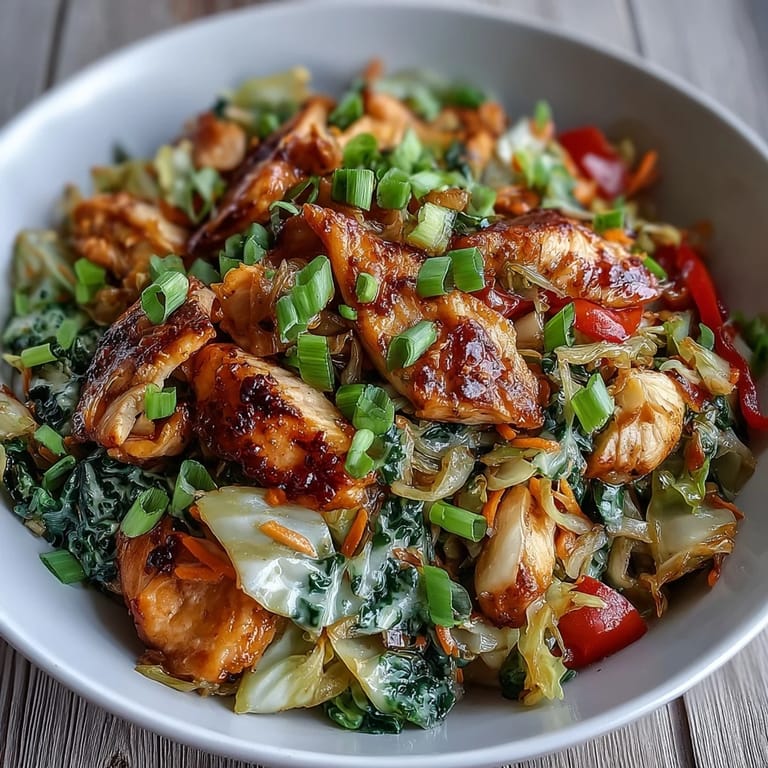
- Return the chicken to the pan, pour in your sauce, and toss everything until it's evenly coated and the sauce thickens slightly over 2 to 3 minutes. You'll see it go from glossy liquid to a light glaze clinging to every piece.
- Finish with fresh green onions:
- Stir them in at the very last second so they stay bright and add a fresh bite to each forkful.
 Pin
Pin My teenage nephew came home from school and actually stayed in the kitchen instead of disappearing upstairs, just because the smell of that ginger and garlic was too good to ignore. He sat at the counter while I cooked and we talked about nothing important, and somehow that ordinary moment felt significant. That's when I realized this dish does more than feed you, it brings people to where the warmth is.
Why Cabbage Is Your Secret Weapon
Cabbage gets overlooked so often, treated like budget filler instead of the actual star it can be. When you slice it thin and stir-fry it, something magical happens: it softens into these tender ribbons while keeping just enough crunch to make every bite interesting. I used to think texture didn't matter much in stir-fries, but once I noticed how it transforms under heat, I started appreciating cabbage in a completely different way.
The Sauce Chemistry That Makes It Work
The first time I made this, I used regular soy sauce and wondered why it tasted flat compared to takeout. Then I added the oyster and hoisin sauces together and suddenly understood why restaurants taste so good: they layer flavors instead of relying on one thing to carry the whole dish. That moment taught me that cooking isn't about having some secret skill, it's about understanding how different ingredients talk to each other.
Making It Your Own
The beauty of this recipe is that it doesn't require you to follow it exactly, even though I've written it that way. I've made it with whatever proteins I had, swapped in bok choy when I was out of cabbage, and added chili flakes when I wanted heat. The framework stays solid while the details flex to fit your mood and your kitchen.
- If you like it spicy, add a pinch of red chili flakes or fresh sliced chili to the garlic and ginger step.
- Tofu and shrimp work beautifully as substitutes for the chicken without changing cook time much.
- Serve it however feels right, whether that's over rice, noodles, or just in a bowl on its own.
 Pin
Pin This dish has become the one I make when I want to feel like I've got my life together, or when I want to remind someone that they matter. That's more than just dinner.
Recipe Q&A
- → Can I use chicken thighs instead of chicken breast?
Yes, boneless skinless chicken thighs work wonderfully and will add extra juiciness and flavor to the stir-fry. Cook them the same way as directed for the breast.
- → How do I keep the cabbage crisp-tender and not soggy?
Cook the cabbage over high heat for only 3-4 minutes, stirring frequently. Avoid overcrowding the pan, and don't cover it during cooking to prevent steaming.
- → Can I make this stir-fry ahead of time?
The stir-fry is best served fresh, but you can prep ingredients in advance. Store cooked stir-fry in an airtight container for up to 3 days and reheat in a skillet over medium heat.
- → What can I substitute for oyster sauce?
Use additional hoisin sauce or a mixture of soy sauce with a touch of sugar. For a vegetarian option, look for mushroom-based oyster sauce substitutes available at Asian markets.
- → How can I add more vegetables to this dish?
Snap peas, broccoli florets, mushrooms, or bok choy are excellent additions. Add heartier vegetables with the cabbage and quicker-cooking ones toward the end.
- → Is this dish spicy?
No, this stir-fry is savory and umami-rich but not spicy. Add red chili flakes, sriracha, or fresh sliced chilies during cooking if you prefer heat.