 Pin
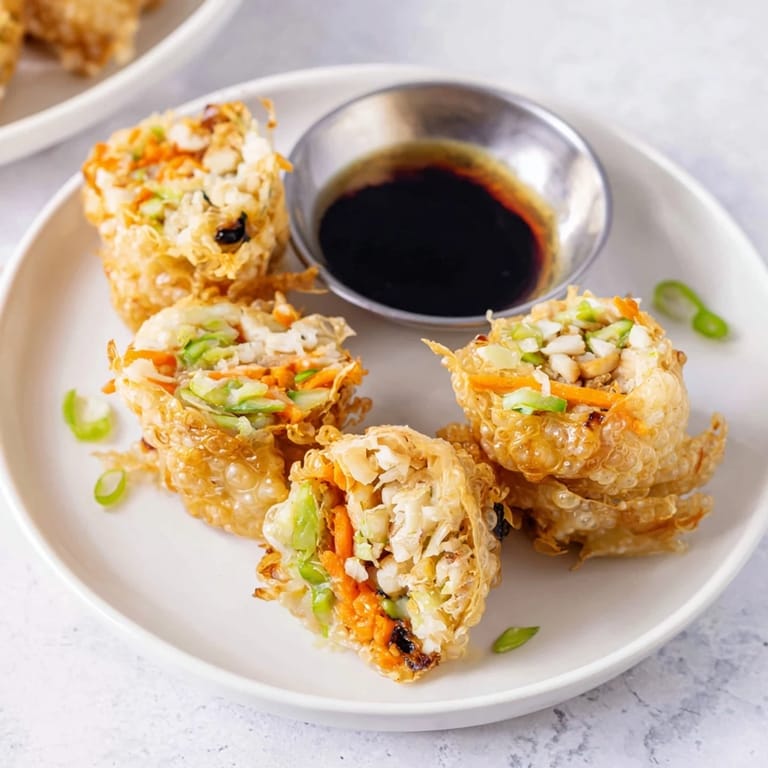
Pin There's a particular magic to that first bite when you break through the shatteringly crisp exterior of a rice paper dumpling and discover the warm, fragrant filling inside. I learned to make these during a chaotic weeknight when I had half a rotisserie chicken left over and an impending dinner party, and somehow these humble little parcels became the dish everyone asked about. The beauty of rice paper dumplings is how forgiving they are—they don't demand restaurant-level skill, just a bit of confidence and warm water. Since then, they've become my go-to appetizer, the kind that disappears from the plate before anyone's even sat down.
I'll never forget the first time I served these at a dinner party and watched someone's face light up when they picked one up and felt how delicately crisp the wrapper was. My neighbor, who'd worked in restaurants for years, leaned over and asked for the recipe—not the complimentary kind of thing people usually say, but genuinely impressed. That moment taught me that simple, well-executed food speaks louder than anything complicated, and these dumplings have been proving that point ever since.
Ingredients
- Ground chicken or pork (200 g): This is your protein anchor—it holds the filling together and absorbs all those savory flavors, though tofu works equally well if you're feeding vegetarians.
- Carrot, julienned (1 small): The brightness here matters; it adds a subtle sweetness and keeps things from feeling too heavy.
- Cabbage, finely shredded (1 cup): Don't skip the shredding step—thin pieces mean every bite gets texture and flavor, and they soften just enough when cooked without turning mushy.
- Spring onions, thinly sliced (2): These add a sharp freshness that cuts through the richness of the sesame oil.
- Garlic, minced (2 cloves): Fresh garlic is non-negotiable here; it becomes fragrant and mellow as the dumplings cook.
- Ginger, grated (1 tbsp): Use fresh ginger if possible—it brings warmth and complexity that ground ginger can't quite match.
- Soy sauce (2 tbsp): This is your seasoning spine; use tamari if anyone's avoiding gluten.
- Sesame oil (1 tbsp): The nutty flavor is what makes people ask if you added something special.
- Sugar (1 tsp): Just a pinch to balance the salty and savory notes.
- Black pepper (1/2 tsp): Fresh-cracked pepper makes a real difference in the final taste.
- Rice paper wrappers (16 pieces, 22 cm): Buy the ones labeled for spring rolls—they're the right thickness for crisping up beautifully.
- Vegetable oil (2 tbsp): Use whatever neutral oil you have; it's just there to get the pan hot enough for that perfect golden sear.
- Warm water: This softens the wrappers just enough to fold without cracking.
- Soy sauce (3 tbsp for sauce): The dipping sauce's foundation.
- Rice vinegar (1 tbsp): Adds tang and brightness to cut through the richness of fried dumplings.
- Sesame oil (1 tsp for sauce): A little drizzle brings everything together.
- Honey or maple syrup (1 tsp): Just enough sweetness to round out the sauce.
- Garlic clove, finely grated (1 small): Raw garlic in the sauce adds punch without overpowering.
- Chili flakes (1/2 tsp, optional): Skip this if you prefer mild, or double it if you like heat.
Tired of Takeout? 🥡
Get 10 meals you can make faster than delivery arrives. Seriously.
One email. No spam. Unsubscribe anytime.
Instructions
- Make the filling:
- Combine your meat or crumbled tofu with the carrot, cabbage, spring onions, garlic, and ginger in a large bowl. Add the soy sauce, sesame oil, sugar, and black pepper, then mix everything together until it feels evenly distributed—you want the seasonings throughout, not pooled at the bottom. Taste a small piece if you're using cooked meat; adjust salt and pepper to your preference.
- Prep your workspace:
- Fill a large shallow dish with warm water and lay out a clean kitchen towel near your workspace. Have your rice paper wrappers, filling bowl, and a small plate ready for your finished dumplings.
- Soften and fill each wrapper:
- Quickly dip one rice paper into the warm water for about 6-8 seconds—it should soften but still have a slight resistance when you touch it. Lay it flat on the damp towel and place 2 tablespoons of filling in the center, leaving about an inch of space around the edges.
- Fold with intention:
- Fold the bottom edge of the wrapper up and over the filling, tucking it snugly underneath. Then fold in the left and right sides, making sure they overlap slightly, and roll the whole thing away from you as tightly as you can without tearing the wrapper. The seam should end up on the underside.
- Pan-fry to golden:
- Heat your oil in a non-stick skillet over medium heat until it's shimmering—this usually takes about a minute. Place the dumplings seam-side down and cook undisturbed for 2-3 minutes until the bottom is golden and crispy. Flip carefully and cook the other side for another 2-3 minutes, working in batches so the pan doesn't get crowded.
- Make the dipping sauce:
- Whisk together the soy sauce, rice vinegar, sesame oil, honey, grated garlic, and chili flakes in a small bowl. Let it sit for a minute so the flavors meld together, then taste and adjust—add a touch more vinegar if it needs brightness, or a drizzle more honey if it's too sharp.
- Serve immediately:
- Transfer the dumplings to a plate and serve right away while they're still warm and the wrapper is at its crispiest. The sauce should be ready in a small bowl alongside.
 Pin
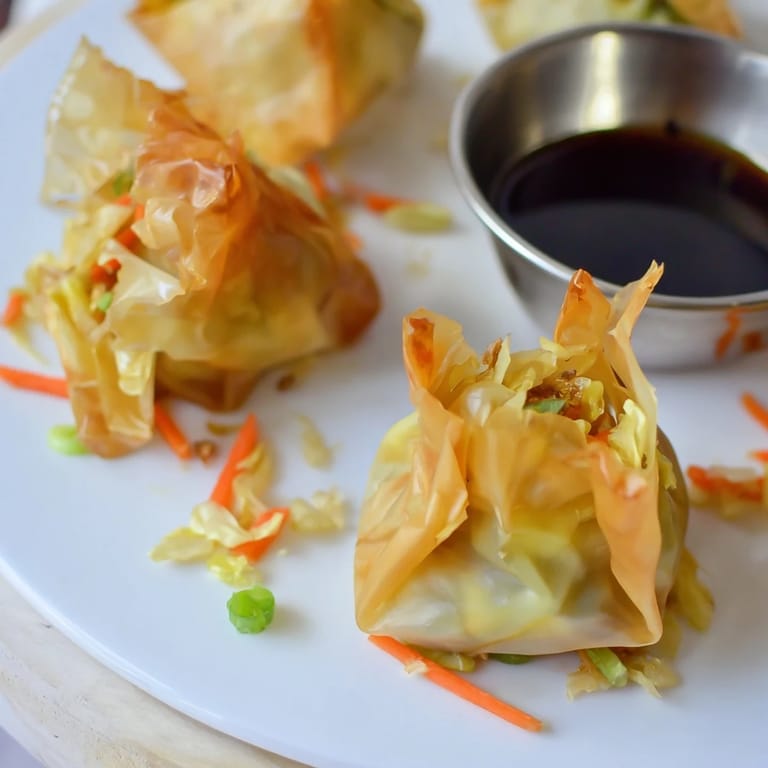
Pin I once made these for a potluck where I had no idea what others were bringing, and I watched my dumplings disappear first—not because they were fancy, but because people recognized something genuine in them. That's when I understood these aren't complicated restaurant food; they're the kind of thing that brings people together because they're approachable and delicious and feel a little bit special.
The Science of Crispiness
Rice paper dumplings get their shatter when two things happen: the wrapper dries out slightly from the heat, and the moisture in the filling steams inside creating contrast. Medium heat is your friend here because it gives the wrapper time to crisp without burning while the inside gets hot. High heat will char the outside before the filling cooks through, and low heat just makes them greasy and sad.
Filling Flexibility
The basic framework here—protein, shredded vegetables, aromatics, soy and sesame—is so forgiving that you can swap almost anything in and out. I've used ground shrimp, crumbled leftover roast chicken, sautéed mushrooms and spinach, even finely diced bell peppers. The only rule is keeping the vegetables small and the filling not too wet, so the dumplings stay crisp on the outside.
Make Ahead and Storage
These dumplings can be assembled hours ahead and kept in the fridge on a parchment-lined tray, covered loosely so they don't stick together. When you're ready to eat, fry them straight from the fridge—they might take an extra minute or so to cook through, but the wrapper still crisps up beautifully. Leftovers can be reheated in a low oven for a few minutes to restore some crispiness, though they're honestly best eaten fresh.
- You can also freeze assembled dumplings for up to three weeks and cook them straight from frozen without thawing.
- Once fried, they're best eaten within a few hours, but they'll keep in an airtight container for a day if you need them to.
- The dipping sauce is even better the next day after the flavors have melded together.
 Pin
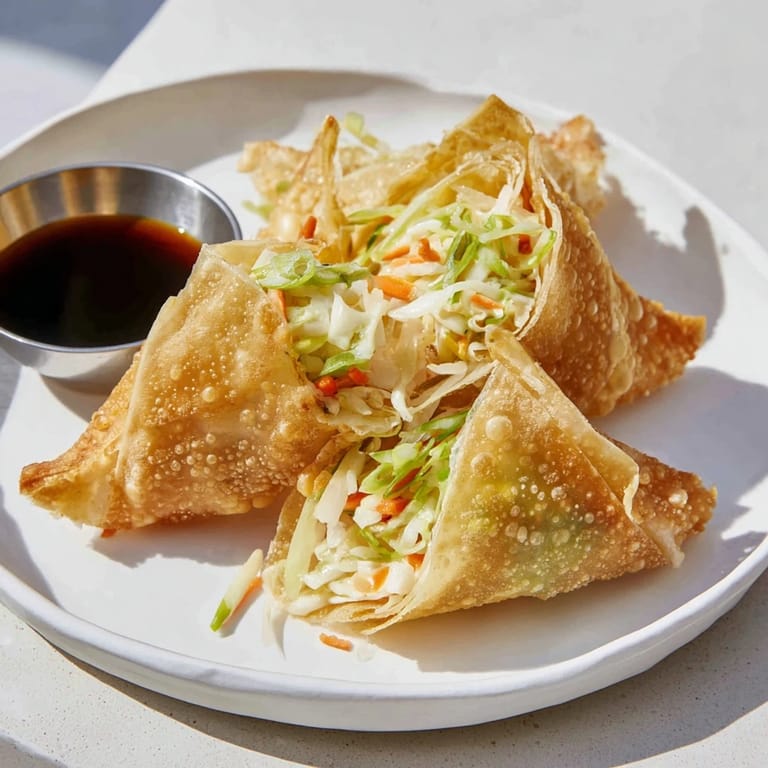
Pin These dumplings have taught me that some of the best food isn't about technique or rare ingredients—it's about taking a little time to do something thoughtfully and sharing it with people who appreciate it. I hope you get to experience that moment too.
Recipe Q&A
- → How do I make the dumpling wrappers crispy?
Pan-sear the filled rice paper wrappers in hot vegetable oil over medium heat until golden on both sides, about 2-3 minutes per side.
- → Can I substitute the meat filling with a vegetarian option?
Yes, firm tofu crumbled and seasoned the same way works perfectly as a plant-based alternative.
- → What is the best way to soften the rice paper before filling?
Dip each wrapper into warm water for 6-8 seconds, just until pliable but not overly soft to avoid tearing.
- → How should I store leftovers to keep them crispy?
Store leftovers in an airtight container and reheat in a pan or oven to restore crispiness rather than microwaving.
- → Is the dipping sauce adjustable for dietary needs?
Yes, using tamari instead of soy sauce can make the sauce gluten-free, and maple syrup can substitute honey for a vegan option.
- → Can I add extra vegetables to the filling?
Definitely! Chopped mushrooms or bell peppers can be mixed in for added flavor and texture.