 Pin
Pin There's something about the moment when rice hits hot oil that makes you feel like you're actually doing something in the kitchen. I discovered this dish quite by accident one evening when I had leftover sushi rice and decided to see what would happen if I treated it like a crispy cake instead of the expected soft bed for toppings. The result was so unexpectedly good—golden, shatteringly crisp, yet still holding that subtle vinegared flavor—that I've been building on it ever since. It's become my answer to the question, what do you make when you want something that feels fancy but comes together in under an hour?
I made this for my sister's birthday dinner last spring, and I'll never forget how she laughed when she tried to bite into one of these and heard the rice actually crunch. She said it was like eating edible architecture, which made everyone at the table want to taste it immediately. That night reminded me that food doesn't have to be complicated to feel special—sometimes the best moments happen when you take a simple ingredient and do something unexpected with it.
Ingredients
- Sushi rice: The foundation of everything—rinse it thoroughly or you'll end up with a gluey mess that won't crisp properly, and use the vinegar mixture to keep it from tasting bland.
- Rice vinegar, sugar, and salt: These three create that subtle tang that makes the rice taste like actual sushi rice, not just plain starch.
- Sushi-grade salmon: Dicing it yourself from a quality piece is worth the extra effort; the texture and flavor are noticeably better than pre-diced versions.
- Sesame oil: Just a teaspoon goes a long way—it's the secret that makes the salmon taste rich and intentional.
- Sriracha: Optional but genuinely recommended if you like heat; it adds personality without overwhelming the delicate salmon.
- Ripe avocado: Pick one that yields just slightly to pressure, not mushy; you want it to be creamy but still hold its shape.
- Vegetable oil: Keep the temperature medium-high or the rice will absorb oil instead of crisping up.
- Sesame seeds and nori: These finishes feel small but make the whole thing look intentional and restaurant-quality.
Tired of Takeout? 🥡
Get 10 meals you can make faster than delivery arrives. Seriously.
One email. No spam. Unsubscribe anytime.
Instructions
- Prepare your rice foundation:
- Rinse the sushi rice under cold running water, stirring gently with your fingers until the water runs completely clear—this removes excess starch and prevents mushiness. Cook it with the measured water, let it steam off the heat for ten minutes to finish cooking gently, then fold in the vinegar mixture while the rice is still warm so it actually absorbs the flavoring.
- Shape and chill:
- Press your cooled rice into a parchment-lined square pan until it's an even half-inch thick, then refrigerate for at least twenty minutes so it firms up enough to cut cleanly without crumbling. This waiting period is actually a gift—it gives you time to prep everything else without feeling rushed.
- Season your salmon:
- Combine diced salmon with soy sauce, sesame oil, sriracha, lime juice, and green onion in a bowl, mixing very gently so you don't break down the salmon's delicate texture. Let it sit in the fridge while you work on the rice so the flavors actually meld together.
- Make spicy mayo:
- Whisk mayonnaise and sriracha together in a small bowl—that's honestly it, but the combination becomes this creamy, slightly funky, just-spicy-enough sauce that ties everything together.
- Cut and fry the rice squares:
- Remove the chilled rice from the pan and cut it into two-inch squares, then heat your vegetable oil until it shimmers before adding the rice. Fry each square for about two to three minutes per side until it's golden brown and crispy, then drain on paper towels immediately so they don't absorb excess oil.
- Assemble with intention:
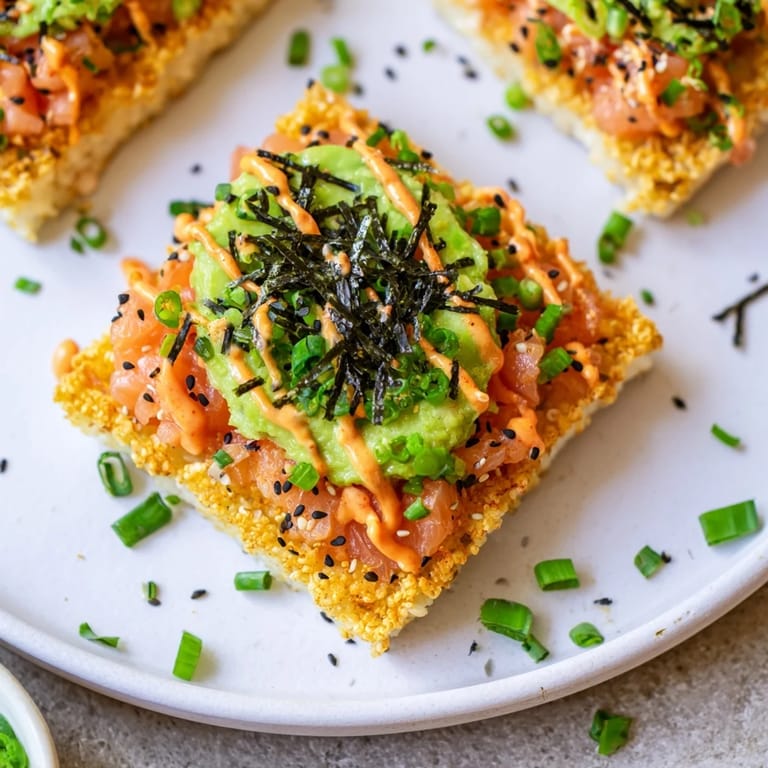
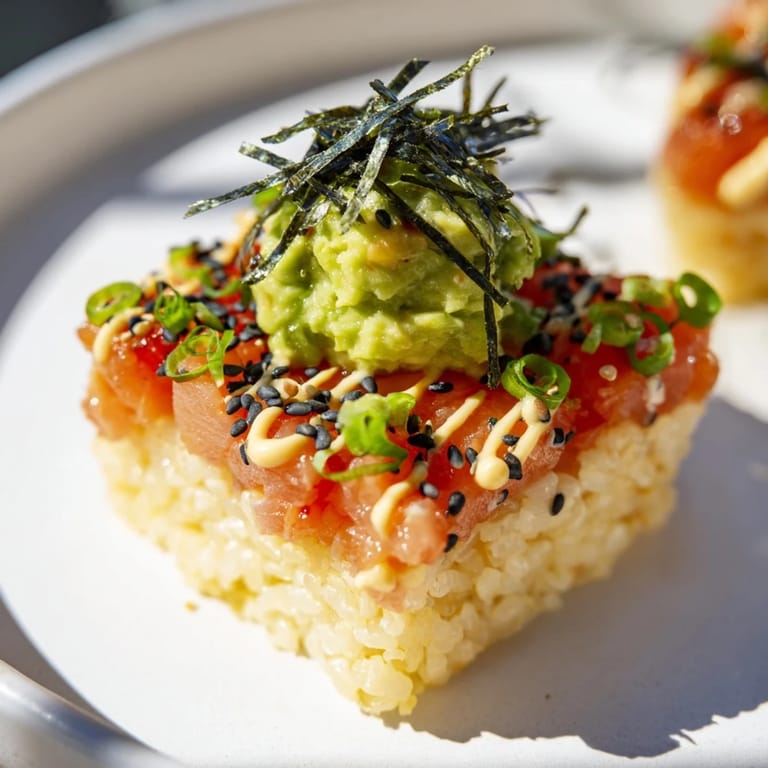
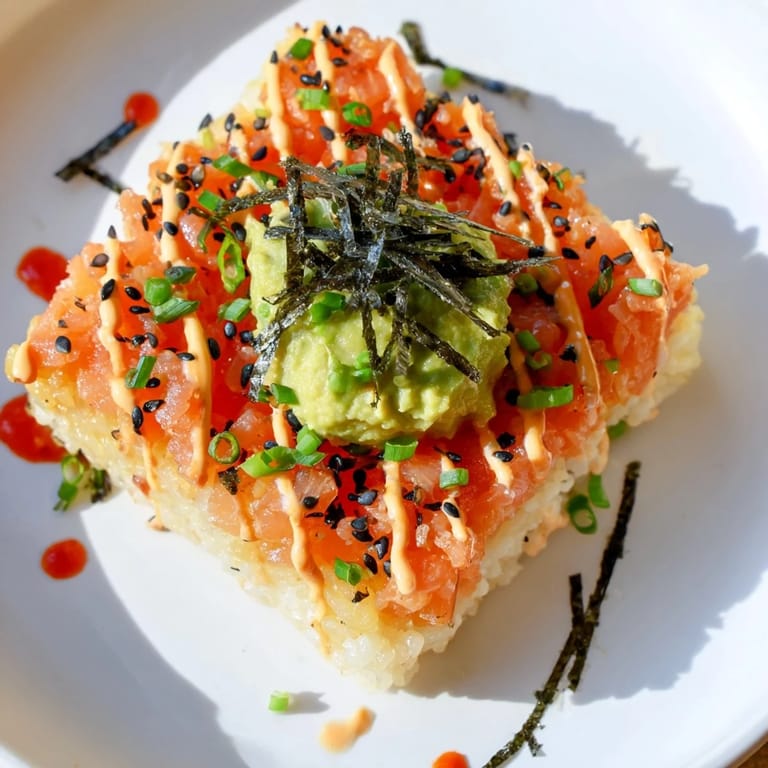
- Top each warm crispy rice square with a thin slice of avocado, a spoonful of your seasoned salmon, a small drizzle of spicy mayo, and then sprinkle everything with sesame seeds, chives, and nori strips. Serve while the rice is still warm because that contrast between the crispy rice and cool toppings is honestly the whole magic of this dish.
 Pin
Pin What I love most about this recipe is how it lives in this interesting space between casual appetizer and something elegant enough to serve at a dinner party. It proved to me that you don't need complicated techniques or obscure ingredients to make food feel like a moment worth remembering.
Why the Rice Gets So Crispy
The secret is in how sushi rice is prepared—the vinegar and sugar mixture creates a slightly drier grain compared to regular cooked rice, which means there's less moisture to turn to steam when you fry it. I've tried this with regular jasmine rice out of curiosity, and it never achieves the same golden, shattering quality because the starch behaves differently. The moment you hear that crunch when you bite into one of these squares is genuinely the payoff for using the right rice and taking the time to prepare it properly.
Building Flavor Layers
Each component brings something different to the plate, and that's what keeps your palate interested from bite to bite. The salmon gets its subtle umami from the soy sauce and sesame oil, the avocado adds creamy richness and mild flavor, the spicy mayo ties it all together with heat and creaminess, and the crispy rice is honestly just there to give you something to hold onto and to provide that textural surprise. I've learned that when you're serving something like this, the assembly matters because people eat with their eyes first, and a thoughtful presentation makes each component feel intentional.
Make-Ahead Strategy and Flexibility
The beauty of this recipe is how far ahead you can prepare it—cook the rice the morning of, fry the squares a few hours before, and then everything waits in the fridge until you're ready. The salmon mixture actually gets better as it sits, the spicy mayo holds up perfectly, and the avocado is the only thing you need to time carefully because it browns quickly. Here are a few ways I've adapted this based on what I had on hand:
- Use cooked or canned salmon if you're not comfortable with raw fish, and honestly nobody will know the difference because the seasoning is doing the heavy lifting.
- Add pickled ginger for brightness or thin cucumber slices if you want something fresher and lighter.
- Drizzle a touch of furikake seasoning over the top if you want more umami and a hint of nori flavor throughout.
 Pin
Pin This dish has become my go-to when I want to cook something that feels special without turning into an all-day project. There's something deeply satisfying about serving something this beautiful to people you care about.
Recipe Q&A
- → How is the crispy texture of the rice achieved?
The rice is cooked, pressed into a pan to chill, then cut into squares and fried in vegetable oil until golden and crunchy on all sides.
- → What type of salmon is used for the topping?
Sushi-grade salmon is finely diced and mixed with soy sauce, toasted sesame oil, sriracha, lime juice, and green onion to enhance flavor.
- → Can this dish be served warm or cold?
It is best served immediately while the crispy rice is still warm, maintaining the contrast between the crunchy base and the fresh toppings.
- → Are there alternative ingredients for those avoiding raw fish?
Canned or cooked salmon can be used as substitutes without compromising the flavor balance of the dish.
- → What garnishes complement the salmon stack?
Sprinkling sesame seeds, chopped chives, and thin nori strips add texture and umami depth to the dish.