 Pin
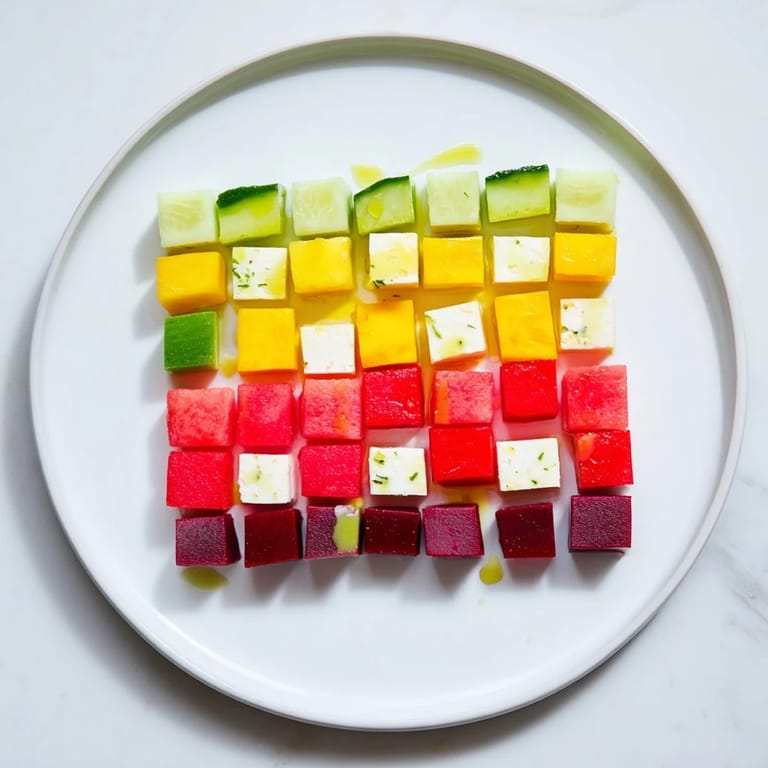
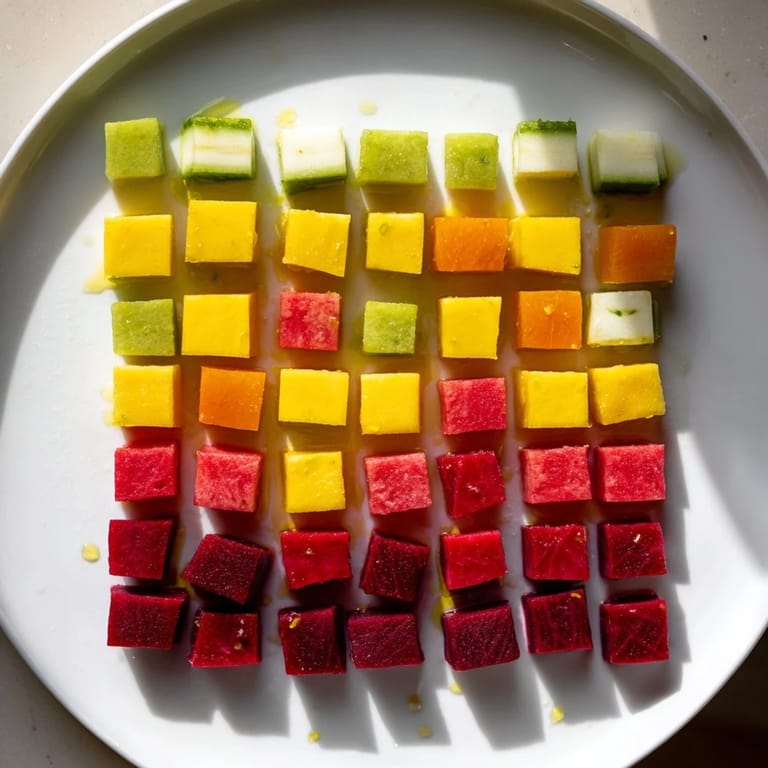
Pin I discovered this salad on a summer afternoon when I was reorganizing my kitchen and came across a ruler I'd used for a childhood geometry project. It sparked something playful in me—what if I approached cooking with that same precision and intentionality? I started cutting vegetables into perfect cubes, and as I arranged them on a white platter, something magical happened. The colors began to tell a story: deep purple beets next to golden mango, cool green cucumber against creamy avocado. It wasn't just food anymore—it was edible art, and I realized I'd created something that made people slow down and look before they ate.
I'll never forget serving this to my friend Maya, who's usually skeptical about salads. She walked into my kitchen, stopped mid-sentence, and just stared at the platter for a full minute. Then she smiled and said, 'This is too pretty to eat.' Of course, she ate three servings. That's when I knew this wasn't just a recipe—it was a conversation starter, a moment of connection disguised as vegetables.
Ingredients
- Cucumber (1 small, peeled): Choose a firm, unwaxed cucumber for the best texture. The cooling crunch of raw cucumber is the salad's backbone—it keeps everything fresh and crisp even as other ingredients soften slightly. Peel it completely for a clean, uniform look.
- Ripe mango (1): The sweetness here is your flavor anchor. Let it sit on the counter for a day if it's rock-hard—a perfectly ripe mango cuts like butter and adds a tropical brightness that makes people taste it before anything else.
- Ripe avocado (1): This is your creamy moment. Wait until it yields ever-so-slightly to pressure, and cut it just before assembling. The cubes will oxidize if exposed to air for too long, so work quickly and strategically.
- Red beet (1 small, cooked): I always cook beets in advance—boiling for about 25 minutes until a fork slides through easily. The earthy sweetness and jewel-like color are non-negotiable. Its staining power means handle it last, or wear gloves.
- Yellow bell pepper (1 small): The gentle, slightly sweet crunch of raw yellow pepper adds brightness without being aggressive. Remove all seeds and white pith meticulously for perfect cubes.
- Watermelon (1 small wedge): The surprise ingredient. Its delicate sweetness and high water content refresh the palate and add an unexpected element that makes people pause and say, 'Is that...watermelon?' Yes. Yes it is.
- Feta cheese (120 g): The salty, crumbly counterpoint that ties everything together. Buy a block and cube it yourself—pre-crumbled feta loses its structural integrity and won't hold its geometric shape.
- Extra-virgin olive oil (2 tbsp): Don't skimp here. A good oil carries flavor and creates a silky coating that respects the simplicity of each ingredient. Taste it before you use it.
- Lemon juice (1 tbsp): Fresh is essential. Bottled lemon juice will taste like regret. The acidity brightens everything and prevents the avocado from browning if you're making this slightly ahead.
- Sea salt (1/2 tsp) and black pepper (1/4 tsp): Season generously but with intention. These are the only flavors you're adding, so they must be exact. Grind the pepper fresh—it matters.
- Honey (1/2 tsp, optional): A whisper of honey softens the acidity and adds a subtle floral note. I use it when the lemon is particularly sharp, but taste as you go.
Tired of Takeout? 🥡
Get 10 meals you can make faster than delivery arrives. Seriously.
One email. No spam. Unsubscribe anytime.
Instructions
- Gather and prep your station:
- Clear a large cutting board and have all your ingredients within arm's reach. Sharp knives are your friend here—a dull knife will mash the vegetables instead of cutting them cleanly. If you have a ruler, great; if not, your eye will eventually calibrate to roughly 1 cm. This isn't about perfection—it's about intention.
- Cut the beet first:
- If you're using a fresh beet, boil it until fork-tender (about 25 minutes), let it cool, then peel under running water. The beet stains everything, so get this done before moving to lighter vegetables. Cut into precise cubes and set aside on a paper towel to drain any excess moisture.
- Move through the vegetables by color:
- Start with the yellow pepper and watermelon, then the cucumber, then the mango and avocado. This order prevents cross-contamination of flavors and colors. As you cut each ingredient, place it on a separate plate or section of your board. Let your hands settle into a rhythm—there's something meditative about this work.
- Cube the feta last:
- The cheese is delicate, so save it for the end. It won't oxidize like the avocado, and you want it firm and perfectly shaped. Cut it into clean cubes, not crumbles.
- Whisk the dressing:
- In a small bowl, combine olive oil, lemon juice, salt, pepper, and honey if using. Whisk it until it's slightly emulsified and the flavors have introduced themselves to each other. Taste a tiny sip on your finger—it should taste bright and alive, not acidic or flat.
- Arrange with intention:
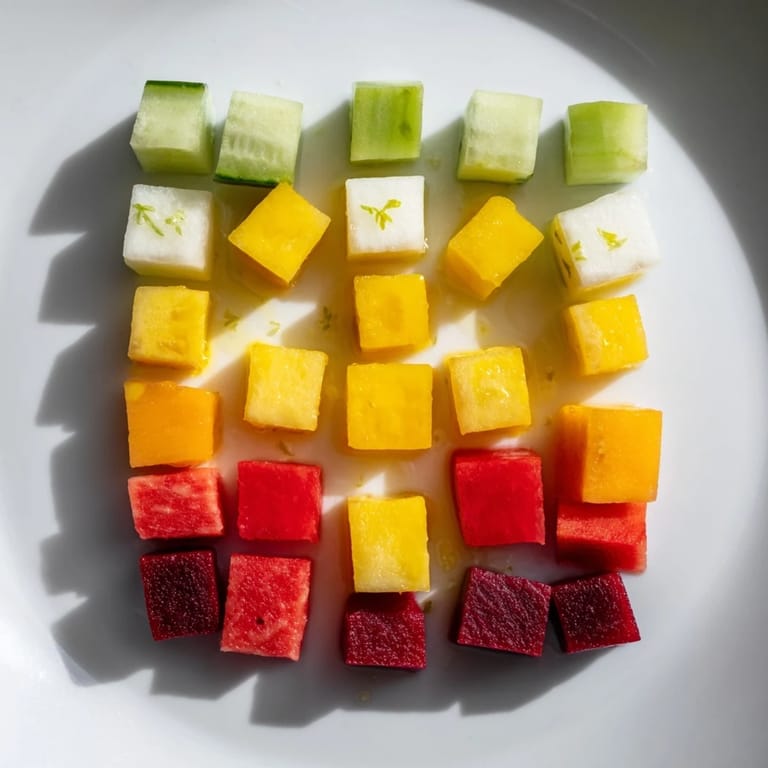
- On a large, flat platter or board, create your grid. You can be strict and geometric, alternating colors in rows, or you can let your eye guide you toward a pattern that feels right. The goal is visual impact—imagine you're creating a color field painting, and each cube is a brushstroke. Step back and look at it from above. Does it make you happy? Does the balance feel right?
- Dress and serve:
- Just before serving, drizzle the dressing lightly over the arranged cubes. Don't oversaturate—you want people to taste the vegetables, not swim in oil. Serve immediately, while everything is still crisp and cool and the colors haven't begun to blur together.
 Pin
Pin What I love most about this salad is watching people encounter it for the first time. They hesitate, taking in the colors and the geometry, then they eat a forkful and their whole face changes. They get it. They understand that food is about more than sustenance—it's about joy, intention, and the simple pleasure of seeing something beautiful before you consume it.
The Art of the Cube
There's something deeply satisfying about cutting with precision. I used to think cooking was about intuition and feeling, and it is, but it's also about discipline. When you commit to uniform cubes, you're making a promise to yourself and your guests that you care about the details. This salad taught me that precision can be creative, that rules can be liberating. The act of cutting becomes meditative, almost ritualistic. Your knife becomes an extension of your intention.
Variations and Substitutions
The skeleton of this salad is flexible. Swap the mango for papaya or pineapple if you want earthier tropical notes, or replace it with diced stone fruits like peaches or plums for something more delicate. For a vegan version, firm tofu cubes are your friend—press them well to remove moisture, and they'll hold their shape beautifully. The watermelon can become jicama for a different crunch, or you can add diced pear for a softer sweetness. The point is to maintain the grid, the colors, and the balance of flavors.
Plating and Presentation Magic
The platter you choose becomes part of the dish. White or pale wood creates the most dramatic color contrast, making each cube pop like a jewel. If you want to elevate this for a dinner party, serve it with edible flowers or microgreens scattered over the top—they add whimsy without disrupting the geometry. Pour the dressing tableside if you're feeling fancy, letting each guest control the ratio of oil to vegetables. This small gesture transforms the salad from something plated to something collaborative, something shared.
- A ceramic platter or wooden board is your canvas—choose something that lets the colors sing
- Chill your serving platter in the refrigerator for 15 minutes before assembling to keep everything as cold as possible
- If you're making this ahead, arrange the cubes without the dressing, cover with plastic wrap, and dress just before serving
 Pin
Pin This salad is a reminder that sometimes the most beautiful things are the simplest, and that cooking is as much about patience and intentionality as it is about flavor. Serve it with intention, eat it with gratitude, and watch it become a moment people remember.