 Pin
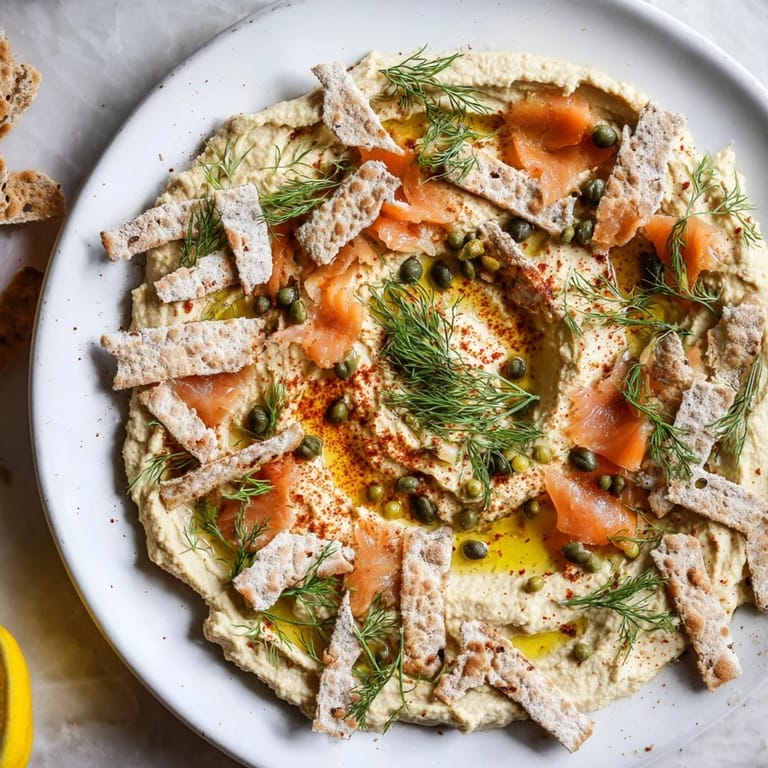
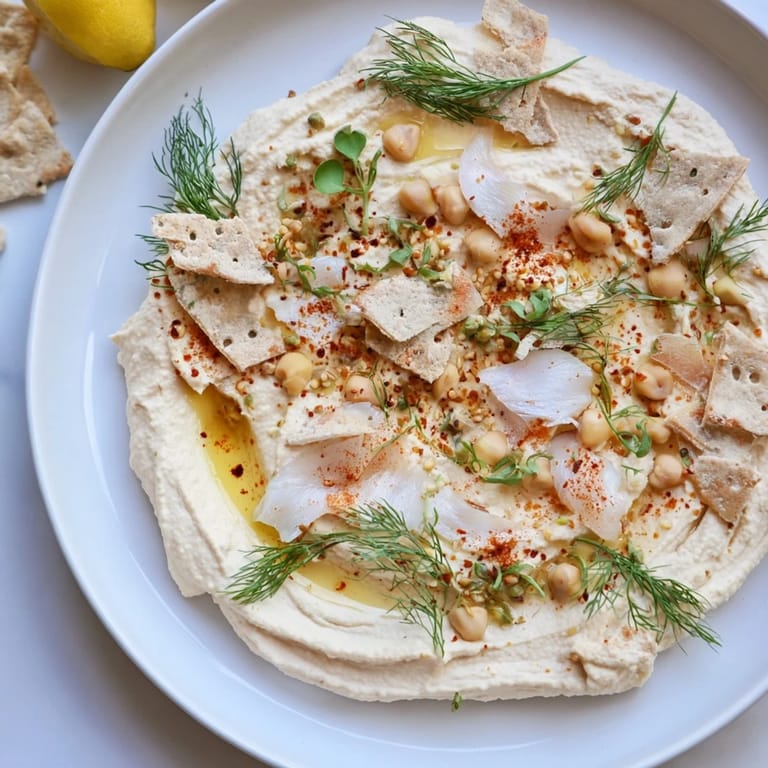
Pin I discovered this dish on a misty afternoon at a tiny harborside restaurant, watching the chef arrange delicate pieces of smoked fish on hummus like they were painting a miniature landscape. There was something almost meditative about it—the way the pale crackers caught the light, the careful scatter of capers like little stones along a shore. I went home determined to recreate that moment, and after a few attempts at getting the arrangement just right, I realized the magic wasn't in perfection but in letting the ingredients suggest their own natural placement.
The first time I served this to friends, I was nervous about whether they'd actually enjoy it or just appreciate how it looked. Someone broke a cracker, loaded it with hummus and fish, and closed their eyes like they were tasting something transported straight from the coast. That's when I understood—this dish works because it tastes like what it looks like, with that briny, smoky, creamy combination that feels both comforting and a little bit special.
Ingredients
- Pale, rustic-style crackers (100 g): Water crackers, matzo, or lavash work beautifully because they're sturdy enough to hold toppings without being too thick or chewy. Break them into uneven pieces so they genuinely resemble driftwood instead of looking deliberately arranged.
- Smoked white fish (120 g): Smoked trout, mackerel, or haddock each bring their own character; trout is delicate and subtle, while mackerel has a bolder, more assertive flavor that stands up beautifully against the hummus.
- Classic hummus (250 g): This is your canvas, so choose something you actually enjoy eating on its own or make it fresh if you're feeling ambitious.
- Olive oil (1 tbsp): A good quality one matters here because it's not hidden in the background; it's part of the visual and flavor story.
- Smoked paprika (1/2 tsp): This dust of color mimics sand and adds a whisper of smokiness that echoes the fish without overpowering anything.
- Toasted sesame seeds (1 tsp): They add both texture and a subtle nutty note that bridges the hummus and fish beautifully.
- Fresh dill fronds (1 tbsp): Dill feels like the natural companion to anything smoked and oceanic; its brightness lifts the whole plate.
- Lemon zest (from 1/2 lemon): This adds a sharp, fresh counterpoint that prevents the dish from feeling heavy or one-dimensional.
- Capers (1 tbsp): Rinse them well so they're not overly salty, then scatter them like little flavor bombs that wake up each bite.
- Microgreens (optional): They're purely visual if you want to add that final restaurant-y touch, but the dish is complete without them.
Tired of Takeout? 🥡
Get 10 meals you can make faster than delivery arrives. Seriously.
One email. No spam. Unsubscribe anytime.
Instructions
- Create your shore:
- Spread the hummus across your platter in a thick, uneven layer, letting your spatula suggest gentle waves and ridges. Think of it as shaping a landscape rather than perfectly smoothing—the character in the imperfection is what makes this feel alive.
- Paint the sand:
- Drizzle olive oil across the hummus in loose threads, then dust with smoked paprika and scatter the sesame seeds. The paprika should look weathered and natural, not like a uniform coating.
- Arrange the driftwood:
- Position the broken crackers along one edge or scattered across the surface, letting them overlap and angle in different directions like they've been tumbled by waves. This is where you can have actual fun—no rules apply here.
- Scatter the catch:
- Break the smoked fish into bite-sized pieces and distribute them around and atop the crackers, varying the sizes and placement. Some pieces perch on crackers, some nestle into the hummus, some sit alone—it should feel naturally varied.
- Finish with brightness:
- Sprinkle dill fronds, lemon zest, and capers across everything, adding microgreens if you're using them. Step back and admire—you've just created something that looks like it came from a fancy restaurant but tastes even better because you made it.
- Serve immediately:
- Let guests build their own bites by scooping hummus and fish onto crackers, discovering new flavor combinations with each bite.
 Pin
Pin I served this at a small dinner party on the night of a full moon, and someone mentioned that it felt like we were eating a edible snapshot of the beach we'd all been missing. That's when it clicked for me—this dish isn't just about looking pretty or tasting good. It's about creating a little moment of escape and wonder right there on the table, something guests remember long after the platter is empty.
Smoked Fish: Choosing Your Center Stage Ingredient
The smoked fish is really the star here, and your choice matters more than you'd think. I've learned that smoked trout brings an almost buttery, delicate quality that lets the hummus shine through, while smoked mackerel brings bold, oceanic confidence that fills the whole palate. Smoked haddock sits somewhere in the middle—milder than mackerel but with more character than trout. Visit your fishmonger if you have one; they'll often have a few options and can tell you exactly what flavor profile each brings. If you can find smoked salmon or gravlax, those work beautifully too, though they shift the dish toward slightly more luxury territory.
The Architecture of Presentation
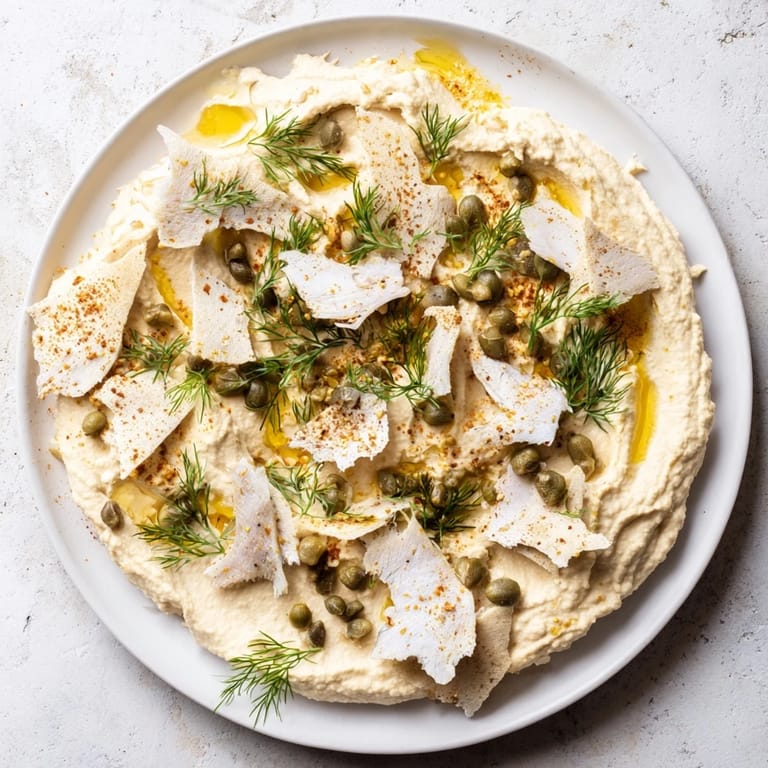
What makes this dish feel like it belongs on a restaurant table is the intentionality of its arrangement, even though the goal is to look effortless. The key is understanding that the hummus is your canvas—everything else is just adding layers and moments of interest across that surface. I usually create little zones: a driftwood section, a fish-heavy area, then maybe a spot where capers and dill create visual density. The unevenness is what tricks the eye into thinking it's natural rather than carefully staged. When I rushed through the arrangement once and just scattered things randomly, it looked sloppy. When I slowed down and actually looked at what I was creating, it transformed into something people wanted to photograph before eating it.
Timing and Temperature Matters More Than You'd Expect
This dish is at its absolute best served cold or at room temperature, and timing is genuinely important. If you assemble it too far in advance, the crackers begin absorbing moisture from the hummus and turn soft and sad within an hour. I learned this by assembling everything two hours early for a fancy dinner, thinking I was being organized—the crackers were basically mush by serving time. Now I treat the assembly like the final act of a performance, happening right before guests arrive. The hummus can be prepared hours ahead, the fish flaked and stored, the garnishes prepped in little bowls, but the actual arrangement happens maybe fifteen minutes before serving.
- Use a large platter so nothing feels cramped or overcrowded, which gives the presentation room to breathe.
- If you must assemble early, keep the crackers separate and let guests add them to each bite rather than building the whole platter at once.
- The cold hummus against room-temperature fish and crisp crackers creates this wonderful textural contrast that's worth protecting.
 Pin
Pin This dish has quietly become my go-to when I want to impress without stress, the kind of recipe that reminds me that sometimes the most elegant meals are the ones that look like you're sharing a piece of something natural and honest. It's theater and comfort all at once, and I think that's exactly why it keeps working.
Recipe Q&A
- → What types of smoked fish work best here?
Lightly smoked white fish such as trout, mackerel, or haddock add delicate smokiness without overpowering the other ingredients.
- → Can I substitute the crackers for something else?
Rustic-style crackers with a pale, crisp texture work best, but lavash or matzo can also create the desired driftwood-like effect.
- → How is the smoky, sandy effect achieved?
Smoked paprika is gently dusted over the hummus to mimic sand, while toasted sesame seeds add a subtle crunch and nutty flavor.
- → What garnish options enhance freshness?
Fresh dill fronds, lemon zest, capers, and optional microgreens offer bright, herbal, and slightly briny notes that balance the smoky fish.
- → Is this dish suitable for dietary restrictions?
This appetizer is pescatarian-friendly but contains gluten and sesame, so gluten-free crackers and allergy-aware hummus are recommended where needed.