 Pin
Pin The first time I assembled one of these boards, it wasn't planned—I'd made three separate pasta dishes for different guests who couldn't agree on a sauce, and instead of starting over, I just spread everything across a wooden platter and shrugged. People loved the chaos of it, the freedom to taste each pasta with each sauce, the chicken strips making it feel substantial without being heavy. That moment taught me something about cooking: sometimes the best meals aren't the ones you obsess over, but the ones that let people play.
I remember my friend Maya watching me plate this and saying it felt like the pasta equivalent of a charcuterie board, except you could actually make it hot and eat it with a real fork. She tried penne with pesto, then penne with Alfredo, then switched to spaghetti, and I watched her face light up each time like she'd discovered something new. That's when I realized this isn't just dinner—it's an edible conversation.
Ingredients
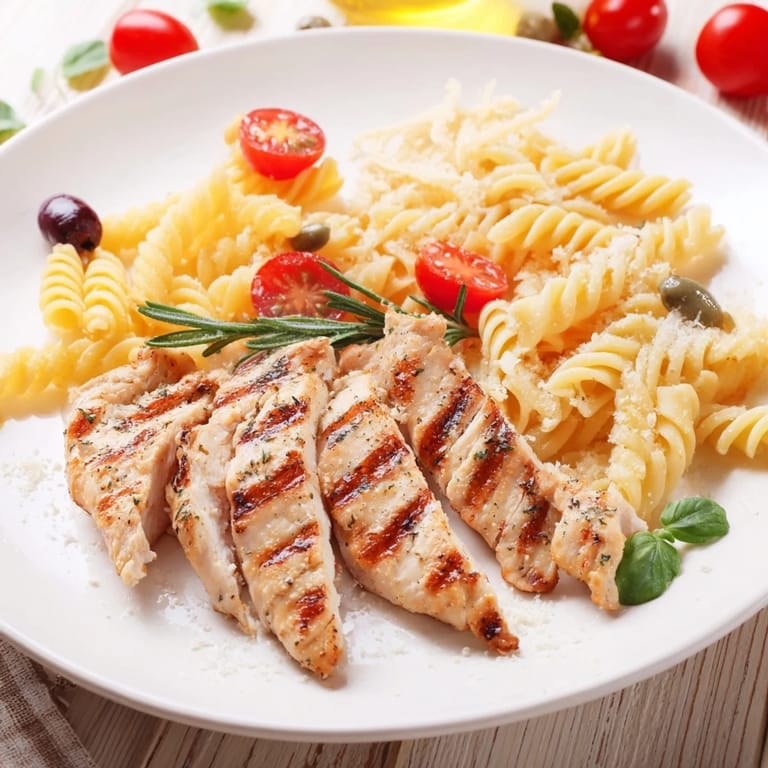
- Spaghetti, penne, and farfalle (100 g each): Three shapes means three different sauce-catching abilities—the ridges on penne grip thick sauces beautifully, spaghetti lets Alfredo cling delicately, and farfalle cups the chunky marinara. Cook each type separately so they stay distinct on the board.
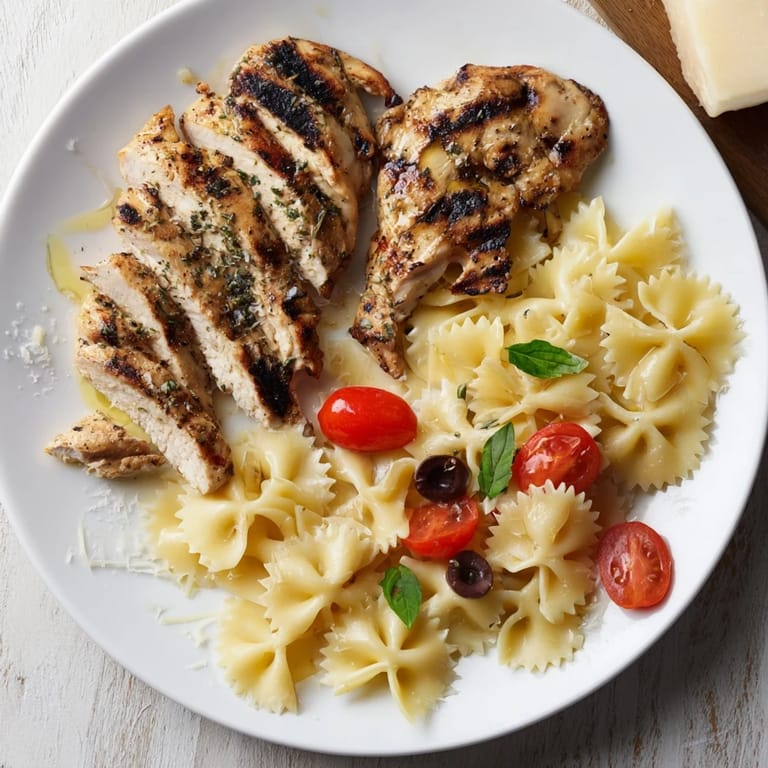
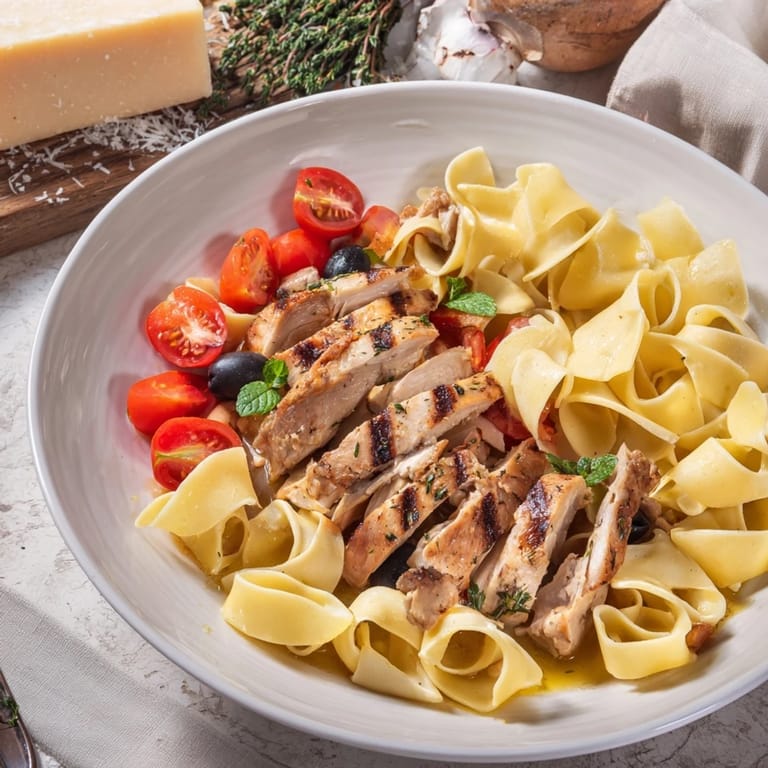
- Boneless, skinless chicken breasts (2): Pound them to even thickness before grilling so they cook at the same rate and stay juicy inside.
- Olive oil and Italian seasoning (1 tbsp plus more for pasta): The seasoning is your shortcut to flavor without fussing, and the oil prevents sticking while adding subtle richness.
- Marinara, Alfredo, and pesto sauces (1 cup each): Use good-quality versions—this is where you taste the difference because nothing is competing with the sauce itself.
- Parmesan cheese, cherry tomatoes, fresh basil, black olives (½ cup, ½ cup, ¼ cup, ¼ cup): These aren't just garnishes; they're flavor bridges that let you build your own perfect bite.
- Extra-virgin olive oil (1 tbsp): The final drizzle matters because it adds a whisper of luxury that elevates everything.
Tired of Takeout? 🥡
Get 10 meals you can make faster than delivery arrives. Seriously.
One email. No spam. Unsubscribe anytime.
Instructions
- Get your pasta water going:
- Salt that water generously—it should taste like the sea. Bring it to a rolling boil before dropping the pasta in, and cook each shape separately so the spaghetti stays delicate and the penne keeps its bite without absorbing flavors from the others.
- Prepare the chicken with intention:
- Pat the breasts dry with paper towels so they'll get a proper sear instead of steaming. The Italian seasoning, salt, and pepper should coat them evenly; I use my fingers to make sure every side knows it's been seasoned.
- Grill until golden and cooked through:
- Medium-high heat, 5 to 7 minutes per side—listen for that satisfying sizzle and watch for the juices to run clear when you poke the thickest part with a knife. Let them rest for 5 minutes before slicing; this keeps the meat tender instead of tough.
- Warm your sauces low and slow:
- Use separate small saucepans so the pesto doesn't bleed into the marinara, and keep the heat gentle so nothing breaks or separates. Stir occasionally and taste for salt; warm sauce is more forgiving for seasoning adjustments than cold.
- Build the board like you're creating a landscape:
- Keep each pasta in its own section—this isn't about fancy plating, it's about clarity. Arrange the chicken strips so they're easy to grab, nestle those sauce bowls so they won't tip, and scatter the toppings so people can reach everything without leaning across others.
- Let it shine before serving:
- That final drizzle of extra-virgin olive oil doesn't just taste good; it catches the light and makes people want to dig in immediately.
 Pin
Pin My cousin brought her finicky toddler to dinner once, and instead of stress, I felt relief watching her build her own plate—a tiny fork of spaghetti, a few pesto-coated pieces, some chicken, a cherry tomato. The kid felt grown-up, she felt like a good parent, and I realized this board format does something unexpected: it invites people to feel agency over what they eat, which somehow makes the food taste better.
The Magic of Mix-and-Match Meals
There's something deeply satisfying about serving a meal that doesn't demand you know everyone's preferences ahead of time. One friend goes straight for the pesto and chicken, building what amounts to a lighter, herbier plate. Another loads up on marinara because it reminds them of childhood. Someone else treats it like a puzzle, trying combinations until they find their favorite three-sauce ratio. The board doesn't judge; it just offers possibilities.
Presentation That Feels Effortless
The key to making this look intentional rather than haphazard is using a board or platter that's large enough to breathe—crowding everything looks rushed, while giving each section space makes even simple ingredients look thoughtful. I use a wood board in warm oak tones because it makes the green of the basil and pesto pop, and the colors feel natural together. The arrangement takes maybe five minutes once everything's cooked, and somehow people always comment on how beautiful it looks, even though you're not doing anything fancy.
Make It Yours
This is one of those recipes that's really more of a template, an invitation to riff on what you love. Vegetarian friends? Grill thick slices of eggplant or zucchini instead of chicken, or roast chickpeas in Italian seasoning for a protein that's still satisfying. Want to add something unexpected? Caramelized onions alongside the pasta, crispy breadcrumbs for texture, or a fourth sauce like a punchy lemon vinaigrette for people who want brightness. The recipe works because it's forgiving, because it's built to be adapted, because it trusts you to know what your guests will actually want to eat.
- If you're making this ahead, cook the pasta and chicken but don't plate until just before guests arrive so everything is at its best temperature.
- Keep those sauce bowls on the board itself rather than passing them separately—people are braver about trying new combinations when they can see and reach everything at once.
- Linger over this meal because it's designed for grazing and conversation, not speed.
 Pin
Pin At the end of the meal, when everyone's relaxed and full and there's sauce smeared on napkins scattered across the table, someone always says this was the least stressful dinner, which somehow feels like the highest compliment. This board is proof that hospitality doesn't have to mean perfect; it just means thinking about what people want and giving them room to decide.