 Pin
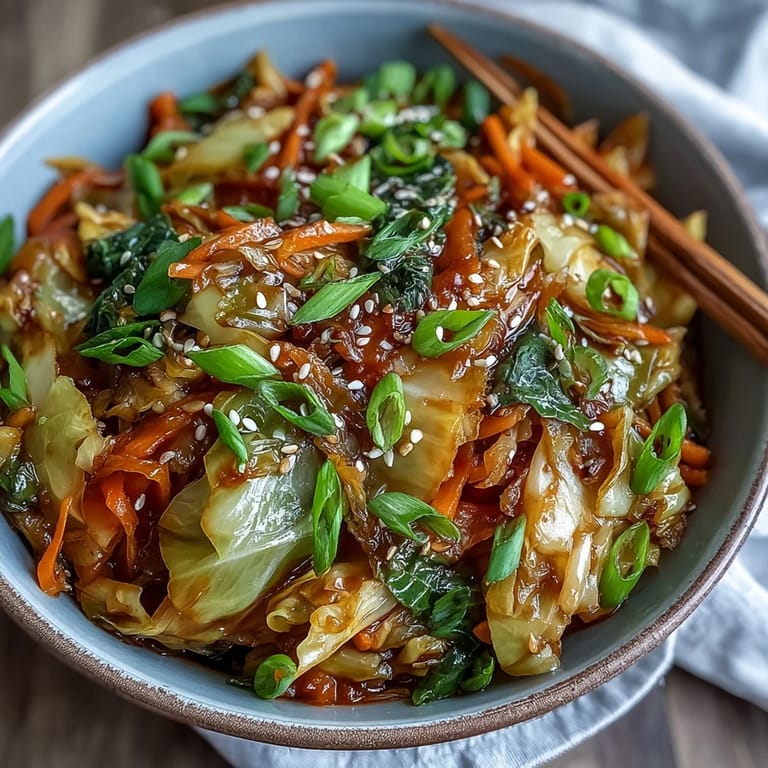
Pin My neighbor once complained that her weeknight dinners had become boring, so I tossed together whatever vegetables were lingering in her crisper drawer and doused them in a ginger-vinegar mixture that made the entire kitchen smell like a bustling dim sum kitchen. She took one bite and asked why I'd been holding out on her, which made me laugh because honestly, I'd invented the whole thing on the spot. That's when I realized hot and sour cabbage wasn't something precious or complicated—it was just bold flavors meeting whatever you had available, cooked fast enough that everything stayed snappy and alive.
I made this for my sister during her first week of trying to eat healthier, and she sat at my kitchen counter with her eyes closed, just savoring each bite like it was something indulgent instead of basically just vegetables and vinegar. The sizzle of the wok seemed to snap her out of some kind of resignation she'd been carrying, and she asked for the recipe immediately—which meant I had to admit I'd kind of made it up.
Ingredients
- Green cabbage (1 medium head, about 800 g): The foundation here—slice it thin enough that it'll soften quickly but thick enough to hold its structure through the high heat, otherwise you'll end up with sad mush instead of tender-crisp ribbons.
- Carrot (1 medium): Cut it into thin matchsticks so it cooks at the same pace as the cabbage and adds a whisper of natural sweetness to balance the sour and heat.
- Scallions (3): Slice them diagonally and hold back half for garnish—they bring a sharp, fresh punch that only works if some stays raw against the hot vegetables.
- Garlic (2 cloves) and fresh ginger (1 tablespoon): Mince these finely because they need to perfume the oil in seconds flat, not simmer for ages.
- Soy sauce (2 tablespoons): Use tamari if you need gluten-free, and taste before you add more salt because soy sauce already carries plenty of saltiness.
- Rice vinegar (2 tablespoons): The backbone of your heat—don't skip it or substitute with regular vinegar, which tastes harsh and one-note by comparison.
- Chili paste or chili garlic sauce (1 tablespoon): This is your spice starting point, but honestly, how much you actually use depends on whether you like your food challenging or dangerous.
- Sugar (1 teaspoon): It tempers the vinegar's edge without making this sweet—it just creates balance so one flavor doesn't scream over the others.
- Toasted sesame oil (1 teaspoon): The secret luxe element that makes this taste restaurant-quality instead of like something you threw together, so use real sesame oil, not the cheap stuff.
- Vegetable oil (2 tablespoons): High heat needs neutral oil that won't burn or add competing flavors, so keep your fancy olive oil out of the wok.
- Black pepper and salt: Taste as you go—these finish the dish and adjust for however salty your soy sauce brand happens to be.
- Toasted sesame seeds and extra scallions (for garnish): These aren't decoration; they add texture and freshness that your fork actually encounters in every bite.
Tired of Takeout? 🥡
Get 10 meals you can make faster than delivery arrives. Seriously.
One email. No spam. Unsubscribe anytime.
Instructions
- Mix your sauce before heat hits the pan:
- Whisk soy sauce, rice vinegar, chili paste, sugar, and sesame oil together in a small bowl and set it beside your stove where you can reach it instantly. Once the wok gets hot, everything moves fast, and you won't have time to stand around measuring.
- Heat your oil until it's shimmering:
- Pour vegetable oil into a large wok or skillet and set the heat to medium-high—you want the oil moving and glistening but not smoking. This is your signal that it's hot enough to cook vegetables fast without them steaming.
- Add garlic and ginger for just 30 seconds:
- Toss the minced garlic and ginger into the hot oil and stir constantly, listening for the sizzle to intensify. You're aiming for fragrant and toasted, not burned, which happens faster than you'd expect.
- Stir-fry cabbage and carrot hard for 3-4 minutes:
- Add your sliced cabbage and julienned carrot to the wok and keep your spatula moving, tossing and pressing the vegetables against the hot surface. You want them to soften slightly but retain that snap when you bite them, so pull them out slightly undercooked if you're unsure.
- Pour in your sauce and toss everything together:
- Pour the sauce you mixed earlier over the vegetables and stir constantly for 2-3 minutes, coating every piece and letting the cabbage soak in that tangy, spicy liquid. The vegetables will continue softening and the sauce will reduce slightly, concentrating the flavors.
- Finish with pepper, salt, and scallions:
- Stir in black pepper, salt to taste, and half your sliced scallions, then cook for 1 more minute just until everything's heated through. The whole wok should smell like ginger, chili, and toasted sesame.
- Garnish and serve immediately:
- Transfer everything to a serving dish and scatter sesame seeds and remaining scallions on top while it's still steaming hot. Serve it right away because stir-fries lose their charm as they sit.
 Pin
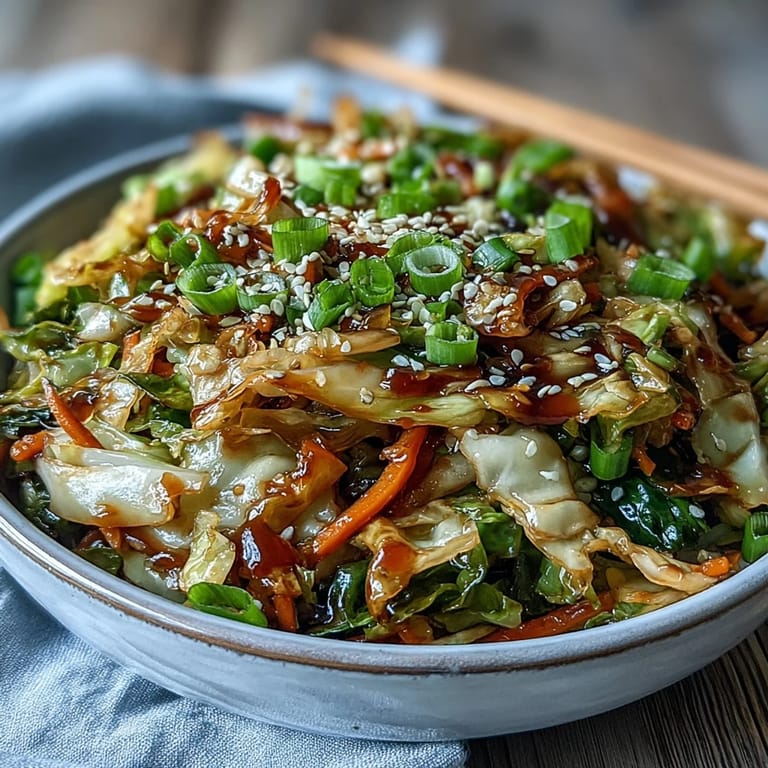
Pin My dad used to say that vegetables only tasted like themselves, which I think was just his way of admitting he'd never tried anything spiced properly. I made him this hot and sour cabbage one afternoon, and he sat there quiet for a moment, then asked what I'd done to make boring cabbage taste like something worth eating. That was the day I stopped apologizing for giving simple things flavor.
The Spice Spectrum
Heat is personal, and this dish lets you control it completely without ruining anything. Start with the tablespoon of chili paste, taste it, and add red pepper flakes or extra paste in small pinches if you want the burn to build toward something fierce. I've made this for friends who eat things so spicy it makes my eyes water, and I've made it for people who treat black pepper like a risky ingredient, and both versions tasted like themselves, not like compromises.
Texture is the Point
This isn't a dish where everything gets soft and saucy—the vegetables should stay distinct enough that you can feel them separately on your tongue. The cabbage should have some give but still resist slightly when you bite, and the carrot should feel bright and slightly firm inside. If you like things mushier, leave it in the wok longer, but know that you're trading crunch for tenderness, and honestly, the crunch is what makes people ask for seconds.
Pairing and Adapting
This works as a side dish next to steamed rice or beside grilled chicken or tofu, but I've also eaten it as a complete meal with nothing else, just the vegetables and sauce and maybe some sesame seeds for texture. The beauty of it is that you can swap things around without the dish falling apart—Napa cabbage instead of green cabbage brings a milder, sweeter note, and sliced mushrooms or bell peppers add volume without changing the core flavor. Just remember that anything you add needs to cook at roughly the same pace, so don't throw in chunks that'll still be raw when the cabbage is done.
- If you want more heat without more chili paste, add a pinch of red pepper flakes at the end so the burn stays bright instead of getting buried.
- Leftovers taste completely different cold the next day—almost like a slaw—so save any extra and eat it straight from the fridge as a snack.
- Double the sauce recipe if you like things wetter and less focused, or cut it back slightly if you prefer the vegetables more pronounced.
 Pin
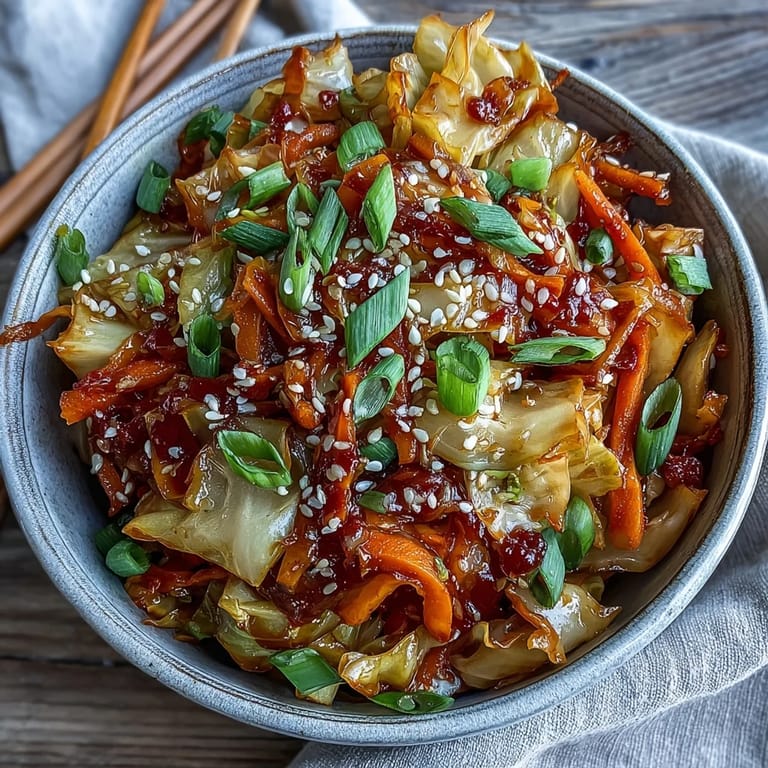
Pin This dish lives in that sweet spot where it's humble enough to make any night feel less monotonous, but bold enough that you actually remember eating it. Make it tonight and tomorrow you'll find yourself hungry for it again, which is the best thing a simple recipe can do.
Recipe Q&A
- → Can I use a different type of cabbage?
Yes, Napa cabbage works wonderfully and offers a milder, more delicate flavor. Red cabbage can also be used for a colorful variation, though it may slightly alter the dish's appearance.
- → How can I adjust the spice level?
Increase the chili paste or add red pepper flakes for more heat. For a milder version, reduce the chili paste to 1/2 tablespoon or use a mild chili sauce instead.
- → What can I serve this with?
This pairs beautifully with steamed jasmine or brown rice, grilled chicken, baked tofu, or any Asian-inspired main dish. It also works well alongside noodle dishes.
- → Can I make this ahead of time?
While best served fresh for optimal crunch, you can prepare it up to 2 hours ahead and reheat gently in a wok. The cabbage will soften slightly upon reheating.
- → What vegetables can I add to this dish?
Sliced mushrooms, bell peppers, snap peas, or baby corn all work well. Add them when you stir-fry the cabbage to ensure even cooking.
- → Is this dish gluten-free?
It can be made gluten-free by substituting regular soy sauce with tamari or a certified gluten-free soy sauce. Always verify product labels to ensure compliance with dietary needs.