 Pin
Pin The first time I attempted a lattice dessert, I was standing in my kitchen on a crisp October afternoon, watching my neighbor arrange apple slices with the kind of precision that made it look effortless. She moved them like she was conducting an orchestra—one slice over, one under, a gentle overlap—and suddenly what seemed impossible became almost meditative. I realized that day that the lattice wasn't about perfection; it was about rhythm and patience, about creating something beautiful with your own hands while the oven waited patiently for its turn.
I made this for a dinner party where my usually chatty friends fell almost silent after taking a bite, which is somehow more complimentary than words. Someone asked if I'd bought it from a bakery, and I remember feeling that specific kind of proud—not from the dessert itself, but from knowing I'd taken the time to weave something beautiful by hand.
Ingredients
- All-purpose flour: Keep it cold and measure by weight if you can, because that's where crust success actually lives.
- Cold unsalted butter: This is non-negotiable—warm butter makes for tough pastry, so chill your mixing bowl too if you're working in a warm kitchen.
- Granulated sugar (for crust): Just enough sweetness to complement the filling without overwhelming it.
- Ice water: Add it slowly, one tablespoon at a time, because adding too much turns delicate dough into a dense brick.
- Walnuts: Chop them roughly by hand rather than using a food processor, which tends to turn them into dust.
- Honey: This is your glue and your flavor, so don't cheap out here—get something that tastes like honey, not just sweet.
- Light brown sugar and cinnamon (filling): These two together create this warm, almost savory undertone that balances the apples perfectly.
- Apples: Honeycrisp and Granny Smith are your friends, but honestly any firm, slightly tart apple works—mealy apples will disappoint you.
- Lemon juice: A small dose prevents browning and adds brightness that prevents the whole dessert from tasting too heavy.
- Cinnamon (for apples): Toast it in a dry pan for thirty seconds before mixing if you want to deepen its flavor, but it's optional.
Tired of Takeout? 🥡
Get 10 meals you can make faster than delivery arrives. Seriously.
One email. No spam. Unsubscribe anytime.
Instructions
- Set your oven and prep:
- Preheat to 375°F and grease your pan generously—this is the moment to think ahead and save yourself frustration later.
- Build the crust:
- Combine your dry ingredients, then cut in that cold butter until the texture reminds you of coarse sand. The goal is pea-sized pieces of butter scattered throughout, not a smooth paste. Add ice water one tablespoon at a time, tossing gently with a fork, until the dough just barely holds together when you squeeze it.
- Shape and chill:
- Press the dough into your pan, working it up the sides evenly, then dock it with a fork so it doesn't puff up. Fifteen minutes in the fridge is the minimum; longer is better if you have time.
- Blind bake for structure:
- Line with parchment, fill with weights or beans, and bake for twelve minutes, then remove the weights and bake another five until the bottom is set and pale golden. This step matters because it prevents sogginess, which is the enemy of any good tart.
- Create the walnut honey layer:
- Mix your walnuts, honey, brown sugar, cinnamon, and salt, then spread it over the cooled crust—this is your secret flavor layer, the thing people taste but can't quite identify.
- Slice the apples:
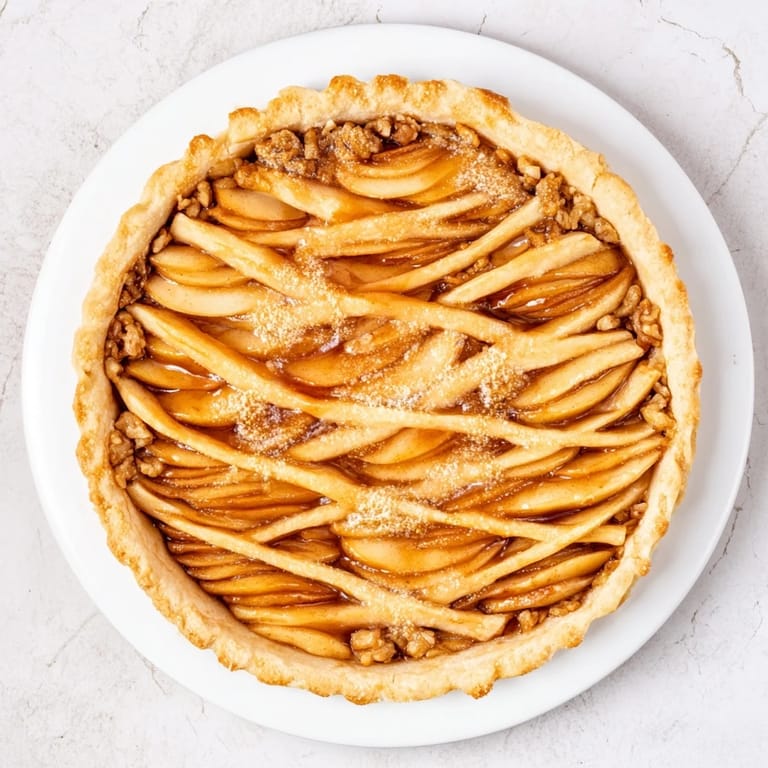
- Peel them if you prefer appearance over rustic charm, then core and slice as thin as you can manage, ideally around 1/8 inch. Toss immediately with lemon juice so they don't brown.
- Weave the lattice:
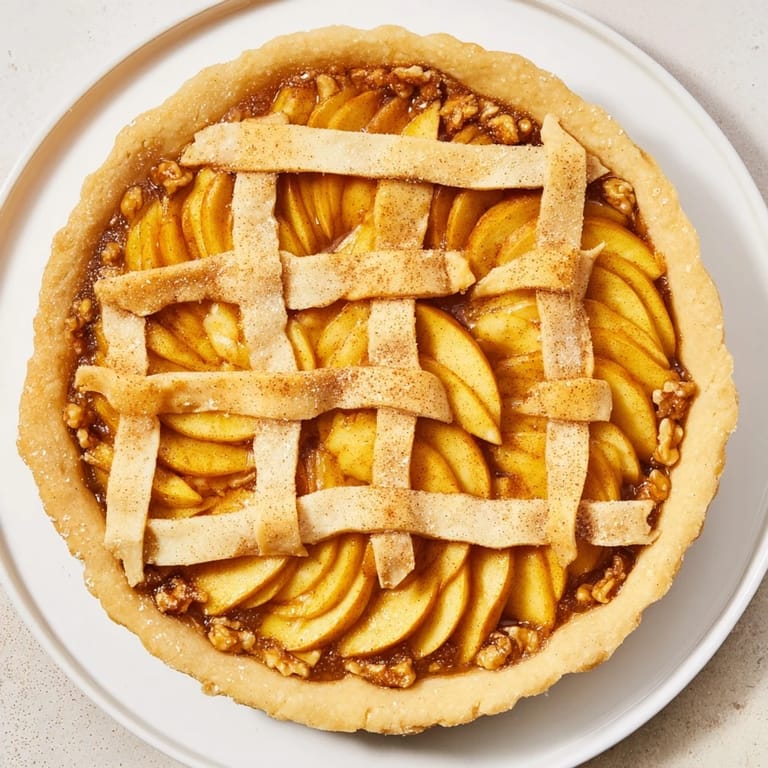
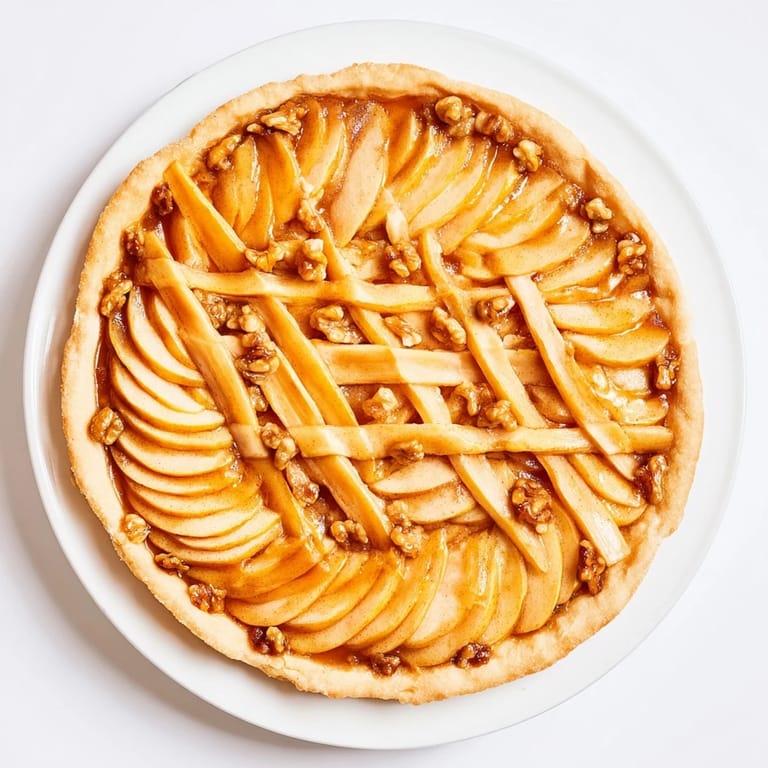
- On parchment, lay half your slices in parallel rows, overlapping slightly, then weave the other half over and under with patience and a gentle hand. Transfer this to your tart by sliding parchment underneath and letting the lattice settle naturally into place, then trim any wild edges.
- Bake with protection:
- Cover loosely with foil for the first twenty minutes, then remove it and bake another ten to fifteen until the apples are tender and the lattice edges are golden. The foil prevents over-browning while the filling catches up.
- Cool before serving:
- At least twenty minutes, or the whole thing will collapse messily when you cut it—trust me on this one.
 Pin
Pin There's this moment when you transfer the lattice from parchment to tart where your breath catches a little, because the whole thing seems so impossibly fragile that it might shatter. Then it settles onto the filling and holds, and you realize that delicate things are often stronger than they look. That moment, more than anything else, is why I keep making this dessert.
The Walnut Layer Philosophy
The walnut-honey filling isn't just a flavor player—it's the foundation that elevates this from a simple apple tart into something with actual complexity. That texture, part sticky and part chunky, creates pockets of richness against the tender apples, and it's why this dessert somehow satisfies both as a light finish to dinner and as something substantial enough to stand on its own with coffee. I once tried skipping it to save time, and the tart tasted hollow, like something was missing even though everything else was perfect.
Lattice Weaving as Meditation
I've learned that the lattice is less about technical skill and more about finding a steady rhythm. The repetition of over and under, the slight overlap that lets each slice support its neighbor, becomes almost hypnotic once you get started. Some people use special tools or molds, but honestly, your hands and a little confidence are all you actually need, and there's something satisfying about knowing that the most impressive part of this dessert requires nothing except patience and intention.
Variations Worth Trying
Once you nail the basic structure, the possibilities open up in interesting ways. I've made it with pears, with a hint of cardamom in the walnut layer, with pecans instead of walnuts, even with a brush of apricot jam warmed and drizzled over the top for extra shine. The beauty is that the framework is so strong that it accommodates your preferences without falling apart, which is honestly the mark of a truly good recipe.
- Toast your walnuts lightly in a dry pan before chopping to deepen their flavor and add crunch.
- A small brush of warmed apricot jam or apple jelly over the baked lattice adds shine and a subtle fruity note that people notice and love.
- Serve it warm or at room temperature with vanilla ice cream or barely whipped cream, because the contrast between temperatures and textures is where the magic actually happens.
 Pin
Pin This dessert has a way of becoming a signature dish without much effort on your part—just good ingredients, a little time, and hands willing to do something beautiful. Make it once, and people will ask for it by name.
Recipe Q&A
- → What apples work best for the lattice top?
Firm, sweet-tart apples like Honeycrisp or Granny Smith create a sturdy lattice and balanced flavor.
- → How do I make the lattice from apple slices?
Slice apples very thinly, then weave half the slices in parallel rows and lay the remaining slices over and under to form the lattice.
- → Can I substitute walnuts with other nuts?
Yes, pecans make an excellent alternative, offering a slightly sweeter, buttery flavor profile.
- → Is blind baking the crust necessary?
Blind baking ensures a crisp crust that won’t become soggy from the filling during baking.
- → What enhances the shine on the lattice?
Brushing the baked lattice with warmed apricot jam adds a beautiful gloss and subtle sweetness.