 Pin
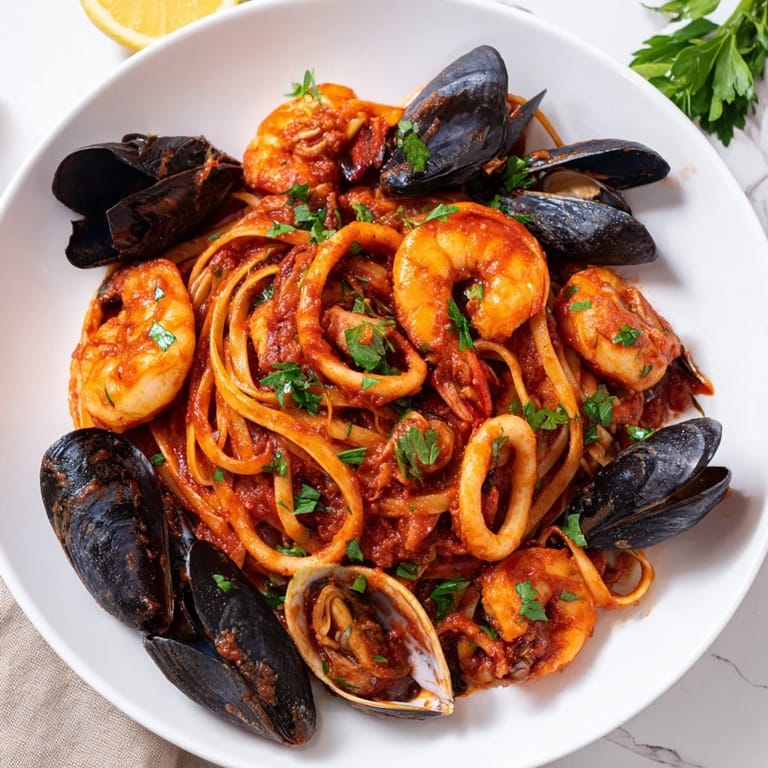
Pin There's something magical about the moment you open a bottle of crisp white wine in the kitchen and know exactly what you're making. I was standing in a Roman trattoria once, watching the chef toss handfuls of shrimp and squid into a bubbling red sauce with the confidence of someone who'd done it a thousand times, and I thought, I need to learn this. Now, whenever I make seafood marinara pasta, I'm transported back to that kitchen, that smell of garlic meeting wine, that perfect urgency of getting everything to the table while the seafood is at its peak.
My partner once came home as I was draining the pasta, and the aroma hit them before they even put their keys down—they literally stopped in the doorway. That's when I knew this recipe had staying power. It's become the dish I make when I want to impress without it feeling like I'm trying too hard, when seafood actually feels accessible instead of intimidating.
Ingredients
- Large shrimp (200 g): Buy them already peeled and deveined if you can—it saves time and your hands will thank you.
- Mussels (200 g): Rinse them thoroughly and pull off any loose beards; discard any that don't close when you tap them, as they're already gone.
- Squid rings (150 g): These cook fastest and get wonderfully tender if you don't overcook them; slice them thinly for even cooking.
- Sea scallops (150 g): Pat them dry with paper towels before cooking—moisture is the enemy of a good sear.
- Spaghetti or linguine (350 g): Thinner pasta catches the sauce better than thick shapes; save that pasta water without fail.
- Olive oil (2 tbsp): Use your good oil here; you're not frying, and every drop matters to the flavor.
- Onion and garlic: The onion should be very finely chopped so it dissolves into the sauce; garlic added too early turns bitter, so patience with timing is everything.
- Red pepper flakes (1/2 tsp): This is gentle heat, not fire—adjust to your preference, but remember it intensifies as the sauce simmers.
- Canned crushed tomatoes (800 g): San Marzano tomatoes are worth seeking out; they have a natural sweetness that balances everything.
- Tomato paste (2 tbsp): This deepens the sauce's color and richness; don't skip it or use double the crushed tomatoes instead.
- Dry white wine (100 ml): Something you'd actually drink—the cheaper the wine, the more the acidity sticks around in an unpleasant way.
- Dried oregano and basil (1 tsp each): These are the backbone of marinara; use them generously and taste as you go.
- Fresh parsley and lemon: Parsley brightens everything at the end; lemon squeezed over your plate cuts through the richness perfectly.
Tired of Takeout? 🥡
Get 10 meals you can make faster than delivery arrives. Seriously.
One email. No spam. Unsubscribe anytime.
Instructions
- Start the pasta water:
- Fill a large pot with plenty of water—seafood pasta needs room to dance. Salt it generously so the pasta tastes good on its own, then bring it to a rolling boil.
- Build the sauce foundation:
- Heat olive oil in your skillet over medium heat and let it warm for a moment. Add onion and watch it turn translucent and soft, about 2-3 minutes, then stir in minced garlic and red pepper flakes.
- Bloom with wine:
- Pour in your white wine and let it simmer for a couple minutes—you're burning off the harsh alcohol and concentrating the flavor. The kitchen should smell incredible right now.
- Build the tomato base:
- Add crushed tomatoes, tomato paste, oregano, basil, and a pinch of sugar to balance the acidity. Stir everything together and let it simmer gently for about 10 minutes, stirring occasionally so nothing sticks.
- Cook the pasta to al dente:
- While your sauce simmers, cook the pasta according to the box instructions, but start testing a minute or two early. You want it tender but with a subtle firmness when you bite it—it will cook a tiny bit more in the sauce.
- Add seafood in stages:
- Start with squid and scallops, which need a few minutes to turn opaque. After 2 minutes, add the shrimp and mussels, cover the skillet, and cook until the shrimp turns pink and the mussels open—usually 3-4 minutes. Any mussels that stay closed have to go.
- Bring it together:
- Drain your pasta and toss it gently into the sauce with all that beautiful seafood. If the sauce seems thick, add splashes of that reserved pasta water until everything moves together like silk.
- Taste and serve:
- Taste a bite and adjust the salt, pepper, and maybe a touch more lemon juice. Serve right away in warm bowls, scattered with fresh parsley and lemon wedges on the side.
 Pin
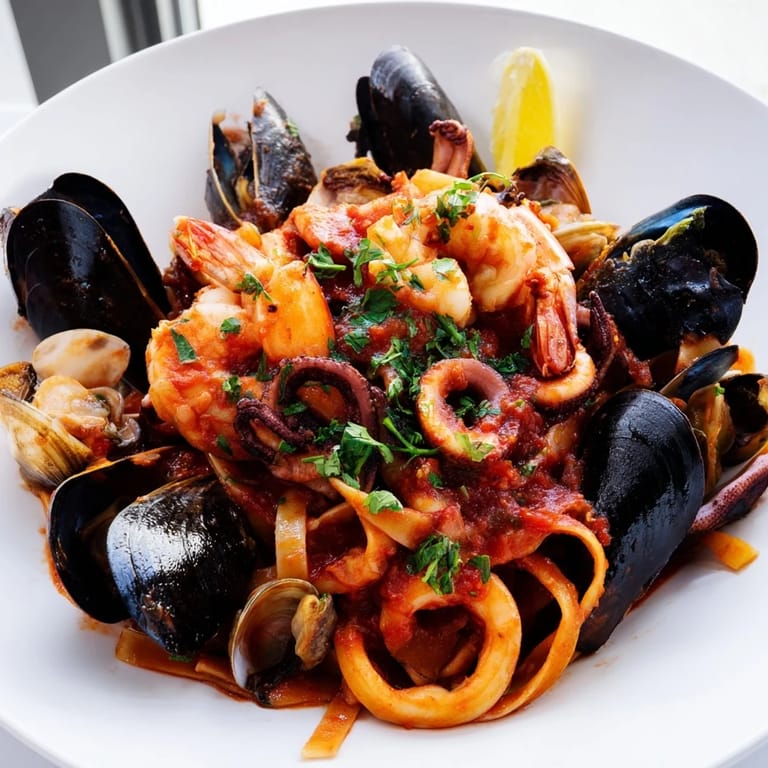
Pin The first time I nailed this dish, I sat down to eat and realized I wasn't thinking about the recipe anymore—I was just present in the moment, twirling pasta on my fork and feeling genuinely proud. That's the turning point for any home cook, when the technique becomes invisible and you're just making something delicious.
The Art of Timing
Seafood marinara lives and dies by the clock. The pasta, the sauce, and the seafood all need to finish at almost exactly the same moment, which sounds stressful but is actually liberating once you see how it works. Start your pasta water first, then the sauce has time to build flavor while you're not watching. The seafood goes in last, literally minutes before you serve, so it stays tender and sweet instead of turning into little rubber bands.
Wine and Seasoning
The wine in this sauce does two jobs: it adds a subtle acidity that makes your palate want another bite, and it burns off its harshness as it reduces, leaving only elegance behind. I learned early on that the quality of the wine matters because you taste it directly in the final dish. Salt the sauce properly—more than you think you need, actually—because seafood is delicate and a perfectly seasoned sauce makes it shine. Taste constantly as the sauce simmers; tomato acidity varies between cans, so you might need that pinch of sugar more or less than expected.
Seafood Secrets
Each piece of seafood in this dish has its own personality and cooking time, which is why we add them in waves instead of all at once. Squid and scallops go first because they're sturdy and can handle a couple extra minutes. Shrimp and mussels are faster, so they join the party just as the first batch is almost ready. The mussels are your visual cue—the moment they open, you're done.
- Buy the freshest seafood you can find, ideally from a fishmonger who will clean and prepare it for you if needed.
- If a mussel doesn't open during cooking, it was likely dead before it went in the pan and should be thrown away without hesitation.
- Scallops dry out quickly, so don't let them simmer longer than 4-5 minutes total; they only need enough time to turn opaque.
 Pin
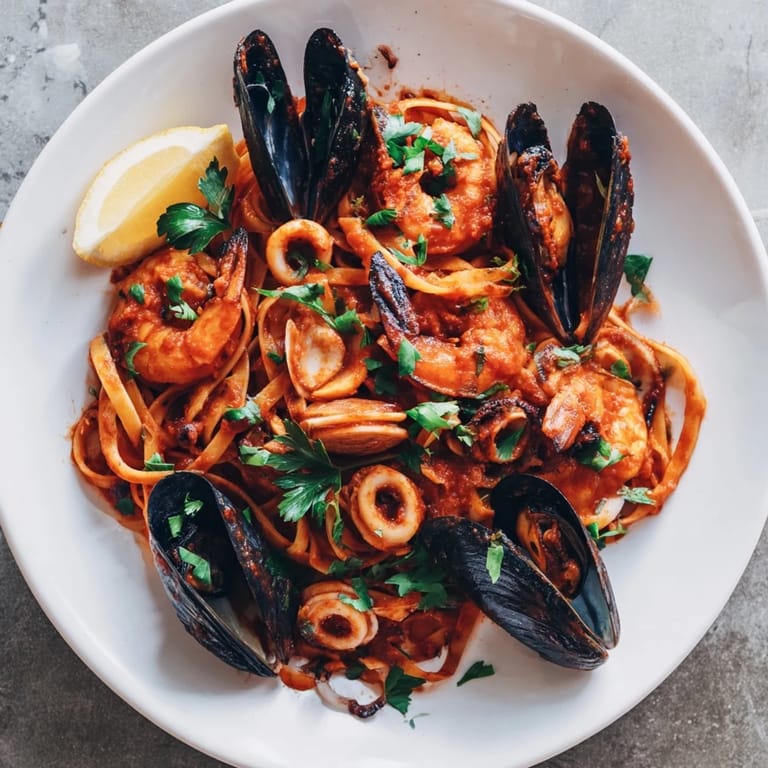
Pin This dish reminds me that some of the most impressive meals come together in less time than a movie, and that's the beauty of seafood. Make it when you want to feel like the cook you're becoming.
Recipe Q&A
- → How should the seafood be prepared before cooking?
Ensure shrimp are peeled and deveined, mussels cleaned and debearded, and squid rings and scallops are fresh and rinsed before use.
- → Can other types of seafood be used in this dish?
Yes, firm white fish or clams can be substituted according to preference, maintaining a balance of textures.
- → What is the best type of pasta for this dish?
Spaghetti or linguine are recommended as they hold the rich marinara sauce and seafood well.
- → How can I adjust the sauce consistency if it’s too thick?
Reserve some pasta cooking water to loosen the sauce when combining with pasta for optimal texture.
- → What garnishes complement the flavors here?
Freshly chopped parsley and lemon wedges are ideal, adding freshness and a bright citrus note.