 Pin
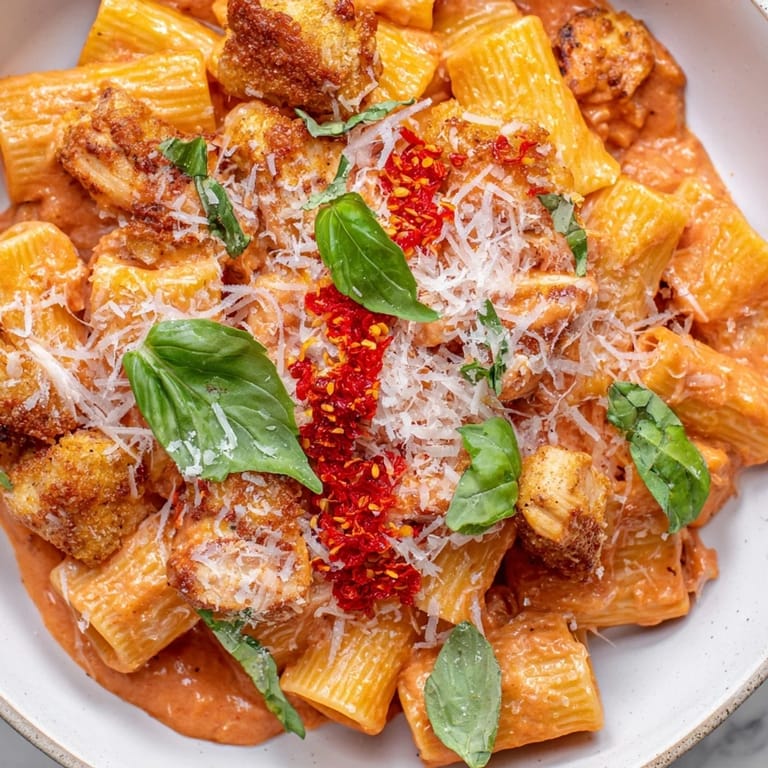
Pin The first time I made this, I wasn't trying to recreate anything viral or trendy—I just wanted pasta that felt luxurious on a Tuesday night. I'd bought vodka for a cocktail that never happened, found heavy cream going out of date, and realized I had chicken that needed using. What came together was this silky, sophisticated sauce that caught everyone off guard with its subtle heat and depth. That bowl disappeared faster than I could plate the second serving, and suddenly this became the dish I make when I want to impress without looking like I tried too hard.
I made this for my sister's boyfriend the night she told me they were moving in together, and something about the way the sauce came together felt like a small celebration. He asked for the recipe three times before he left, and now they make it in their new kitchen every other week. There's something about feeding people food that makes them want to linger at the table a little longer, and this pasta does exactly that.
Ingredients
- Boneless, skinless chicken breasts: Cut into bite-sized pieces so they cook evenly and get coated in every bite of sauce—smaller pieces also sear faster without drying out.
- Rigatoni or penne pasta: The ridges and tubes catch the cream sauce beautifully, though fusilli works too if that's what you have.
- Unsalted butter: This builds the base of your sauce and carries the garlic and tomato paste flavors—it's worth using actual butter here.
- Tomato paste: A small amount concentrates the tomato flavor without making the sauce thin, and when it darkens slightly, you know the deep flavors are activating.
- Chili crisp: This isn't just hot sauce—it's crispy fried chili pieces in oil that add texture and a nuanced heat that lingers pleasantly.
- Vodka: It dissolves flavors that water and cream can't reach, and most of the alcohol cooks off, leaving just richness behind.
- Heavy cream: This is what makes the sauce silky and forgiving—it's harder to break or separate than lighter dairy.
- Parmesan cheese: Freshly grated melts into the sauce smoothly, while pre-grated contains anti-caking agents that make it grainy.
Tired of Takeout? 🥡
Get 10 meals you can make faster than delivery arrives. Seriously.
One email. No spam. Unsubscribe anytime.
Instructions
- Get your pasta water started:
- Salt your water generously—it should taste like the sea. This is your only chance to season the pasta itself, so don't skip this step.
- Sear the chicken until golden:
- Pat the chicken dry so it browns properly instead of steaming, and listen for the sizzle when it hits the hot oil. Golden bits mean flavor, and cooked through means no surprises when you eat.
- Build your aromatics:
- Melt butter, then let the onion turn translucent and soft before adding garlic—this prevents burnt garlic and lets the sweetness come through.
- Darken the tomato paste:
- Stir it in with the chili crisp and red pepper and let it cook for two minutes. You'll see it deepen in color, and that's when the concentrated tomato flavor starts doing real work.
- Deglaze with vodka:
- Pour it in and scrape the bottom of the pan with a wooden spoon—those browned bits are liquid gold and dissolve right into your sauce. Let it simmer briefly so the sharp alcohol smell fades.
- Let the cream come in gently:
- Add it slowly to a cool sauce so it doesn't break, then simmer low and slow. The sauce should look smooth and slightly thickened, never curdled.
- Bring it all together:
- Toss the chicken back in, add Parmesan, then taste and adjust seasoning. This is where you decide if you want more salt, more heat, or more depth.
- Marry pasta with sauce:
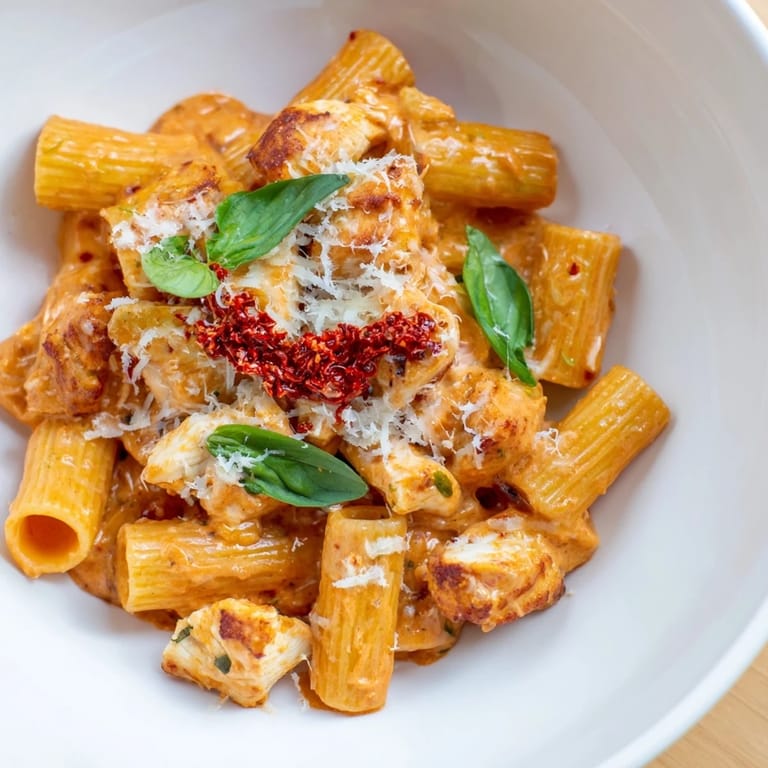
- Toss them together, adding pasta water a splash at a time until the sauce coats every piece with a silky sheen, not a puddle.
 Pin
Pin The moment I realized this was special was when my friend took a bite, closed her eyes for a second, and said, "This tastes like you've been making it for years." It was the first time, and I understood then that some recipes feel instantly familiar because they're built on techniques that work, not tricks that impress.
The Science of Silky Sauce
The magic here isn't in any single ingredient—it's in the order and temperature. Tomato paste needs heat to lose its raw edge, but cream needs gentleness to stay smooth. Vodka dissolves aromatic compounds that water can't reach, which is why even a small amount adds depth. Pasta water is liquid gold because its starch emulsifies with fat, creating a sauce that clings instead of sliding off. Understanding this means you can adjust seasoning, thickness, and heat without second-guessing yourself.
Heat as a Flavor, Not Just Spice
Chili crisp is different from hot sauce or simple pepper because it's textured—there are actual crispy bits that add crunch and a slow-building heat instead of an immediate burn. If you use red pepper flakes alone, you get a sharp heat that fades fast. Layering both gives you complexity: the flakes add initial warmth, the chili crisp adds texture and lingering spice, and the smoked paprika rounds everything into something sophisticated rather than aggressive. Taste as you go and remember that you can always add more heat, but you can't take it back.
Make It Your Own
This recipe is flexible in the best way—it respects the core technique while letting you adjust for what you have and what you like. Some nights I use less chili crisp and add smoked paprika for depth. Other times I throw in fresh spinach at the very end so it wilts into the sauce. The base stays strong enough to carry whatever you add.
- If you skip the chicken, sautéed mushrooms or roasted cauliflower become the star and no one misses the meat.
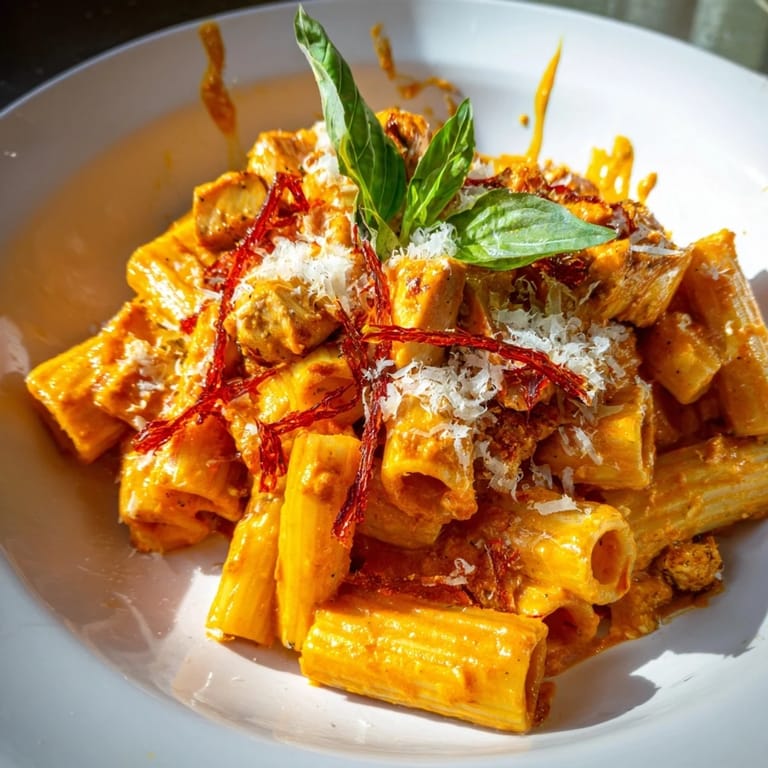
- Finish with a crack of black pepper and a basil leaf on top so people see and smell fresh herbs before they taste richness.
- Pair this with a crisp white wine or sparkling water with lemon to cut through the cream and refresh your palate between bites.
 Pin
Pin This is the kind of pasta you make when you want something that feels intentional without being fussy. It's ready in forty minutes, tastes like you've been cooking it forever, and always makes people want seconds.
Recipe Q&A
- → What type of pasta works best with this dish?
Rigatoni or penne pasta are ideal as their tubular shapes hold the creamy sauce well, but fusilli can also work nicely.
- → How can I adjust the spice level?
Modify the amount of chili crisp and crushed red pepper flakes according to your heat preference to control the spiciness.
- → Can I prepare this dish without chicken?
Yes, substituting chicken with sautéed mushrooms or roasted cauliflower offers a delicious vegetarian alternative.
- → What is the purpose of reserving pasta water?
Adding reserved pasta water helps to loosen the sauce and improve its consistency, making it silkier and better coating the pasta.
- → Is the alcohol fully cooked off in the sauce?
Simmering the vodka for a few minutes allows most of the alcohol to evaporate, leaving behind its distinct flavor without the harshness.