 Pin
Pin The first time I made manti was in a friend's Istanbul kitchen on a rainy afternoon, watching her grandmother fold those tiny dumplings with the kind of precision that comes from decades of practice. I was mesmerized by how quickly her hands moved, how she'd pinch each corner with barely a glance. Years later, when I finally mastered the technique myself, I realized it wasn't about speed at all—it was about understanding the exact moment when the dough was ready to listen to your fingers. Now every batch takes me back to that kitchen, the smell of butter warming on the stove, the way those delicate pockets floated up through boiling water like little edible clouds.
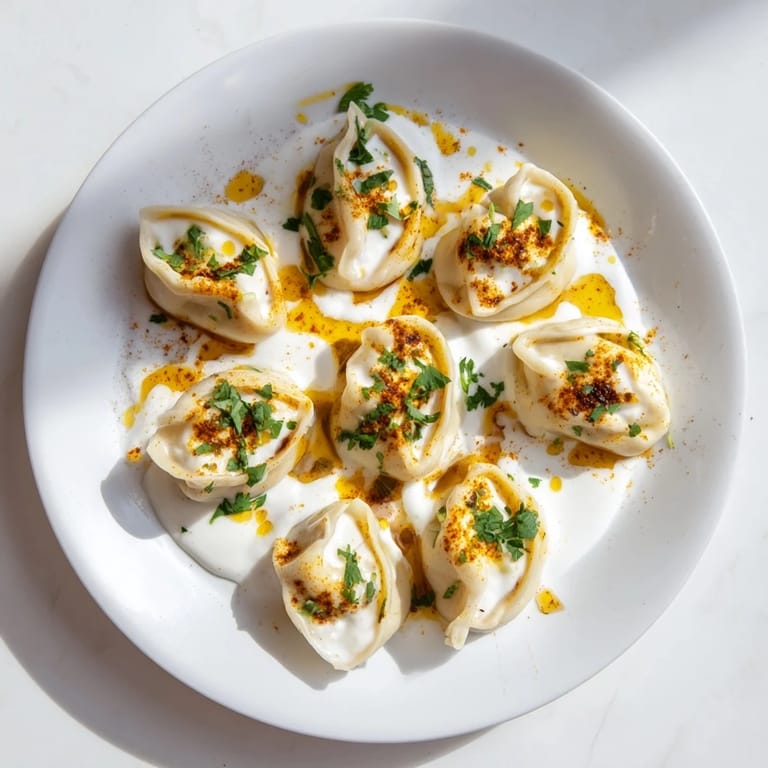
I served this to my partner on a Tuesday night when we both needed something that felt like a celebration but didn't require planning ahead. Watching them taste that first dumpling—the way their eyes closed for a second—reminded me why I love cooking things that marry texture and flavor so completely. The yogurt pooled around each manti like a blanket, and the butter drizzle caught the kitchen light in a way that made everything taste even better.
Ingredients
- All-purpose flour: The foundation of your dough—don't skip the rest time because that's when gluten relaxes and gives you sheets thin enough to almost see through.
- Egg: Your binder that brings everything together into a silky, elastic dough that won't crack or tear as you work it.
- Turkish white cheese or feta: The salty, crumbly heart of these dumplings; if you can't find Turkish white cheese, good quality feta works beautifully.
- Ricotta cheese: This softens the filling and gives it a creamier texture that balances the sharper feta.
- Fresh parsley: A small amount goes a long way, giving the filling brightness and that unmistakable herbaceous note that feels authentically Turkish.
- Greek yogurt: Thicker and tangier than regular yogurt, it clings to the dumplings like a proper sauce rather than just running off the plate.
- Garlic: Just one clove, because this is about supporting the other flavors, not overpowering them.
- Unsalted butter: The final flourish that brings everything together with its warm, toasted aroma.
- Aleppo pepper: This is where the magic lives—it has a fruity, slightly smoky heat that's gentler than regular chili flakes and tastes authentically Turkish.
Tired of Takeout? 🥡
Get 10 meals you can make faster than delivery arrives. Seriously.
One email. No spam. Unsubscribe anytime.
Instructions
- Make your dough base:
- Combine flour and salt in a wide bowl, then create a well in the center like you're making a flour nest. Crack your egg into that well, add water gradually, and start mixing with your fingertips until a shaggy dough forms. Knead it for about five minutes until it becomes smooth and elastic—this is when you know you've developed enough gluten to create sheets that won't tear.
- Rest and develop:
- Cover your dough and let it sit for twenty minutes while you prepare everything else. This resting period is non-negotiable; it's what lets the dough relax so you can roll it paper-thin without it springing back.
- Build your filling:
- Crumble both cheeses into a bowl, add finely chopped parsley and black pepper, then stir until you have a consistent mixture. Taste it—it should be salty and herbaceous, since it will be balanced against the cool yogurt later.
- Prepare the yogurt sauce:
- Stir minced garlic and salt into Greek yogurt until completely smooth. If it seems too thick, add a tablespoon of water at a time until you reach a pourable consistency that will coat the back of a spoon.
- Roll and cut your dough:
- Flour your work surface lightly and roll the dough as thin as you can manage—about 2 millimeters, which is thin enough to almost see your hand through it. Using a sharp knife or pastry cutter, cut it into 1.5-inch squares; you should get dozens from a single sheet.
- Fill and fold your dumplings:
- Place approximately half a teaspoon of filling in the center of each square, then pinch all four corners together and seal them into a small purse shape. Work methodically and don't overfill, or the cheese will burst through the dough as it cooks.
- Cook your manti:
- Bring a large pot of salted water to a boil and add your dumplings in batches so they have room to move freely. They'll sink at first, then float to the surface after about four minutes; give them another minute or two until they're tender all the way through.
- Infuse your butter:
- While manti cook, melt butter in a small pan over low heat, then add paprika and Aleppo pepper. Let it warm for about thirty seconds until the spices release their aroma—this is when you'll smell why this step matters.
- Plate and serve:
- Arrange drained manti on warm plates, spoon the cool yogurt sauce generously over top, then drizzle with your spiced butter in a thin stream. If you have it, add a final pinch of parsley for color and a whisper of sumac if you're feeling adventurous.
 Pin
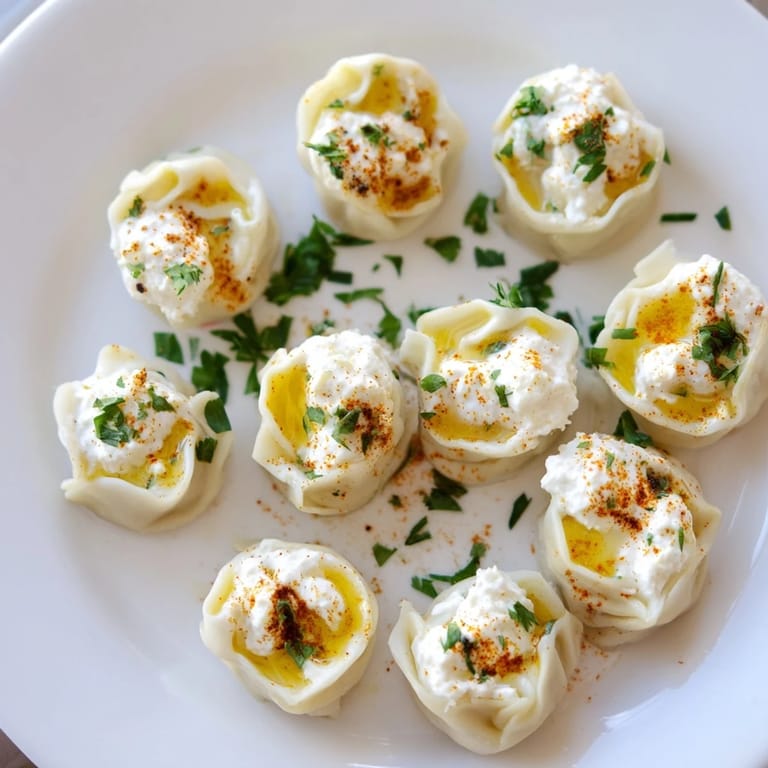
Pin I remember the moment I understood why these dumplings had survived so many centuries and so many kitchens across Turkey and beyond. It wasn't about complexity—it was about how three simple components (dough, cheese, yogurt) create something that feels complete and luxurious. That's the kind of recipe that stays with you.
The Dough: Why Patience Matters
Making manti dough is one of those kitchen skills that feels impossible the first time and obvious once it clicks. The key is treating the flour with respect—it wants to become something beautiful if you let it rest and don't rush the kneading. I've learned that even thirty seconds of extra kneading can make the difference between a dough that tears and one that rolls like silk.
Rolling Thin: The Art and the Practice
This is where manti separates from other dumplings. Those paper-thin sheets aren't just for show—they cook quickly enough that the cheese inside warms through without the dough becoming tough. The first time you roll dough this thin, you'll doubt yourself, but that's the exact moment you're doing it right.
Flavor Layers: How Each Component Earns Its Place
What makes manti brilliant is that nothing here is random. The filling needs to be salty and bright because the yogurt will cool it down; the yogurt needs garlic to cut through the richness; and the spiced butter needs to arrive hot to wake up everything on the plate.
- If your filling tastes bland on its own, it will disappear once you add the yogurt—taste it and adjust before sealing a single dumpling.
- The Aleppo pepper in the butter is doing the heavy lifting; regular chili flakes will work but won't give you that fruity, almost raisin-like warmth that feels authentic.
- Serve immediately, because the longer these sit, the more the dough absorbs the yogurt and loses its delicate texture.
 Pin
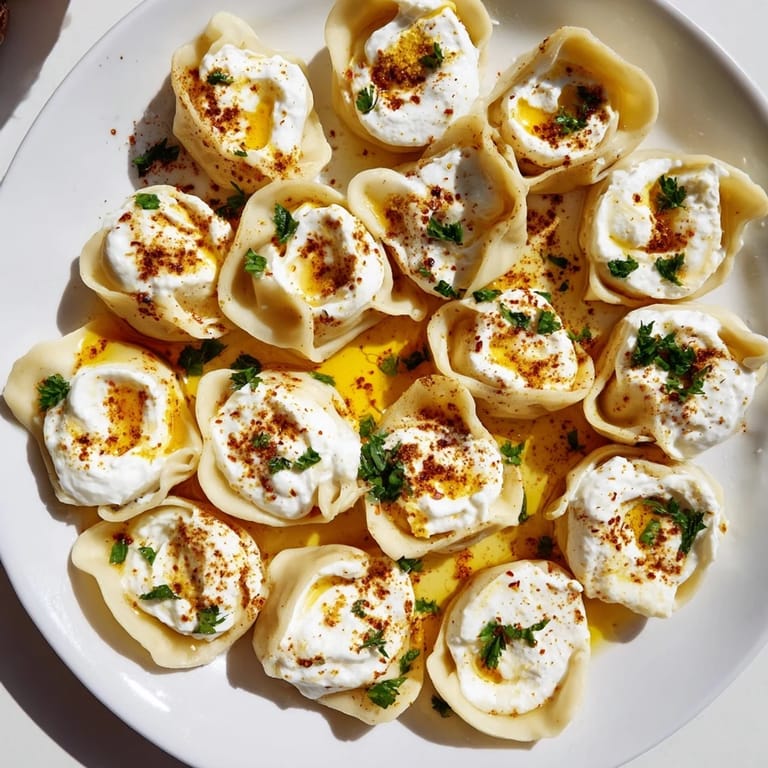
Pin These delicate dumplings are a reminder that some of the most memorable food comes from patience, precision, and the willingness to let time work for you. Once you make them once, you'll understand why they've been worth making for centuries.
Recipe Q&A
- → What type of cheese is best for the filling?
Traditional Turkish white cheese or feta combined with ricotta gives the filling a creamy and slightly tangy flavor.
- → How thin should the dough be rolled?
The dough should be rolled very thin, about 2 millimeters, to ensure delicate dumplings that cook evenly.
- → Can I substitute the spices used in the butter drizzle?
Yes, paprika and Aleppo pepper provide warmth and mild heat, but you can adjust with chili flakes or sumac for varied flavors.
- → How long should the dumplings be cooked?
Boil the dumplings for 5 to 7 minutes until they float and become tender, ensuring they are cooked through but still delicate.
- → What is the best way to serve these dumplings?
Serve them hot, drizzled with garlic yogurt sauce and spiced butter, garnished with fresh parsley for a vibrant finish.