 Pin
Pin My grandmother had a way of turning a pot of black-eyed peas into an entire afternoon of comfort. One New Year's Day, watching her slice vegetables with that old knife of hers, I realized it wasn't just about tradition—it was about the smell of ham and thyme filling the kitchen, the sound of a gentle simmer, the knowing that this stew would taste better tomorrow than it did today. She never rushed it, and neither should you.
Years ago, I made this for friends on a gray November evening when everyone seemed to need something warm and real. Someone asked for seconds before finishing their first bowl, and another person quietly asked for the recipe. That's when I knew this stew had the kind of quiet power that doesn't need showiness—just good ingredients and time.
Ingredients
- Smoked ham hocks (2, about 1.5 lbs / 680 g): These are the soul of the stew, slowly releasing smoky, salty depth into the broth as they cook—don't skip them or substitute with bacon.
- Dried black-eyed peas (2 cups, soaked overnight and drained, or 4 cups canned, rinsed and drained): Soaking overnight saves time during cooking and makes them tender without falling apart; canned works fine if you're short on time.
- Onion (1 large, diced): This forms the flavor base, so take a breath and dice it reasonably fine—it disappears into the stew and sweetens everything.
- Carrots (2, peeled and diced): They soften beautifully and add natural sweetness that balances the smokiness.
- Celery stalks (2, diced): This completes the holy trinity alongside onion and carrot, giving the broth its backbone.
- Potatoes (2 medium, peeled and cut into 1-inch cubes): Cut them uniformly so they cook evenly and add heartiness without overpowering the peas.
- Diced tomatoes (1 can, 14.5 oz / 400 g, with juice): The acidity brightens everything and adds a subtle depth that balances the richness.
- Garlic cloves (3, minced): Mince it fresh and add it after the soffritto—this keeps it from burning and ensures a clean garlic flavor.
- Chicken or vegetable broth (6 cups / 1.5 L, low-sodium): Low-sodium lets you control the salt and lets the ham hock flavor shine through.
- Bay leaves (2): They steep quietly in the background, adding herbaceous notes—always remove them before serving.
- Dried thyme (1 teaspoon): Thyme and smoked meat are old friends; it rounds out the flavors without announcing itself.
- Smoked paprika (1/2 teaspoon): This is what makes the stew taste like it's been tended for hours, even if you're only halfway through.
- Freshly ground black pepper (1/2 teaspoon): Freshly ground tastes brighter and less dusty than pre-ground—grind it yourself if you can.
- Cayenne pepper (1/4 teaspoon, optional): Add this only if you like a gentle heat that creeps in at the end; leave it out if you're cooking for mixed palates.
- Salt (to taste): The ham hock already brings salt, so taste as you go and adjust at the very end.
- Fresh parsley (2 tablespoons, chopped, optional): A handful stirred on top at the last minute adds a fresh note that cuts through the richness.
Tired of Takeout? 🥡
Get 10 meals you can make faster than delivery arrives. Seriously.
One email. No spam. Unsubscribe anytime.
Instructions
- Soak your peas the night before (if using dried):
- Cover them generously with cold water and let them sit on the counter overnight, or for at least 8 hours. In the morning, drain and rinse them under cold water until the water runs mostly clear.
- Prepare your vegetables:
- Dice the onion, carrots, and celery into roughly the same size so they cook evenly. Peel the potatoes and cut them into 1-inch cubes—not too small or they'll dissolve, not too large or they'll be crunchy in the finished stew.
- Build your flavor base:
- Heat a splash of oil in your Dutch oven over medium heat, then add the diced onion, carrots, and celery. Sauté for about 5 minutes, stirring occasionally, until they soften and the onion turns translucent—this is when your kitchen will smell incredible.
- Wake up the garlic:
- Stir in the minced garlic and cook for about 1 minute, just until fragrant. You'll know it's ready when you can smell it clearly; any longer and it'll start to brown.
- Add everything to the pot:
- Now add the ham hocks, drained black-eyed peas, potato cubes, canned tomatoes with their juice, broth, bay leaves, thyme, smoked paprika, black pepper, and cayenne if you're using it. Stir everything together so nothing sticks to the bottom.
- Bring it to a boil, then let it rest low and slow:
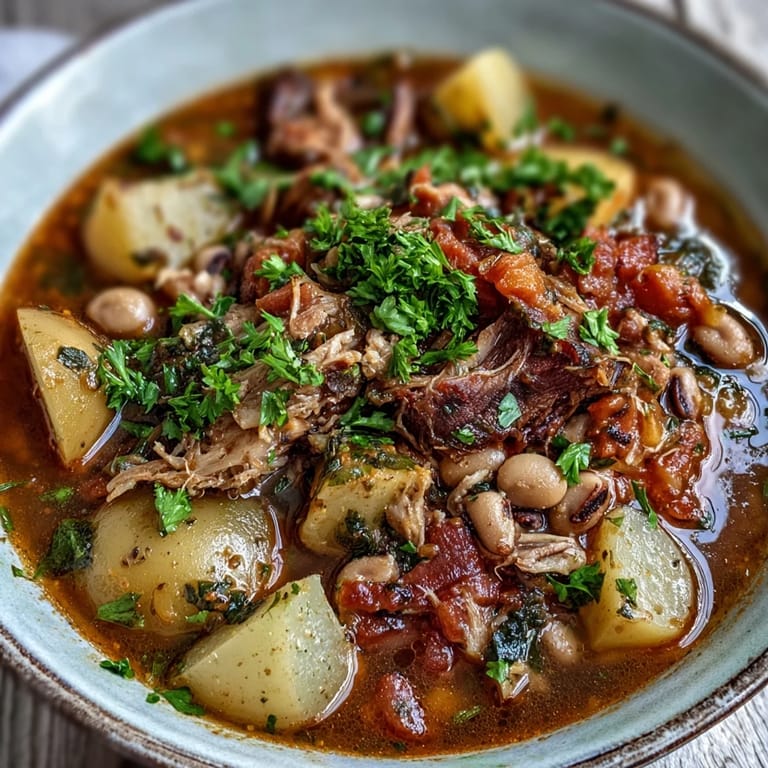
- Bring the whole pot to a rolling boil, then turn the heat down to low and cover with a lid. Let it simmer gently for about 2 hours, stirring occasionally so nothing catches on the bottom. The peas should be completely tender and the ham will be falling apart when a fork touches it.
- Shred the ham and return it to the pot:
- Carefully remove the ham hocks (they'll be hot), let them cool slightly, then pull the meat from the bones, shredding it as you go and discarding the skin, bones, and any excess fat. Return all the shredded meat to the pot and stir it in.
- Taste and adjust:
- Taste a spoonful and decide if you need more salt—remember that the ham hock has already salted the stew. If you like it thicker, simmer uncovered for 10 to 15 minutes more to reduce it slightly.
- Finish and serve:
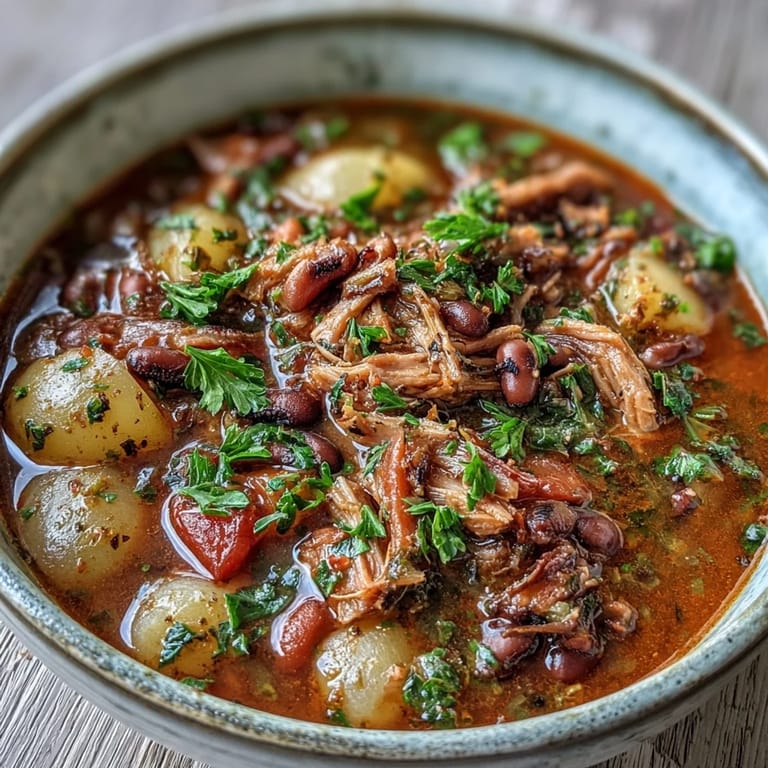
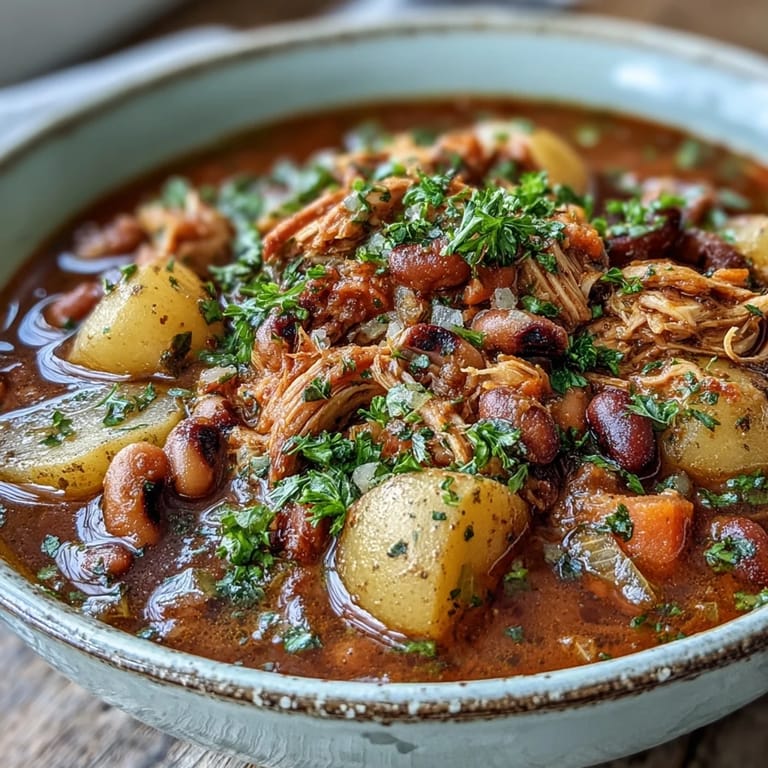
- Remove the bay leaves before serving, then ladle the stew into bowls. Top with fresh parsley if you have it, and set out hot sauce for anyone who wants extra heat.
 Pin
Pin I made this stew one January for someone going through a difficult time, and I brought it over in an old pot because I knew they wouldn't feel like cooking. Three days later they texted to say they'd eaten it for lunch, dinner, and even breakfast, and that it had somehow made things feel a little less heavy. That's when I understood that good food is sometimes the only honest thing we can offer each other.
Why This Stew Works
Black-eyed peas and smoked ham hocks are a partnership that's been working for centuries—the peas provide a creamy, earthy canvas, while the ham infuses everything with a savory depth that tastes like it took hours to achieve. The vegetables soften into the broth until they're almost invisible, thickening it naturally. The whole thing becomes greater than the sum of its parts, transforming from a pot of separate ingredients into something unified and warming.
When to Make This and Serve It
This is stew for moments when you need time to pass slowly—rainy afternoons, gatherings where people linger, New Year's Day suppers, or quiet nights when you want to eat something that feels like a hug. Serve it in bowls with cornbread on the side for soaking up the broth, or spoon it over steamed rice if you prefer something lighter underneath. It reheats beautifully and actually tastes better after a day or two in the refrigerator, so don't hesitate to make it ahead.
Variations and Improvements
Once you've made this basic version, you'll start to see where your own tastes can take over. Some people add a splash of apple cider vinegar at the end for brightness, others stir in a touch of honey to balance the smokiness, and some add chopped fresh kale or collard greens in the last 10 minutes of cooking for something lighter. For a vegetarian version, skip the ham hocks entirely and add smoked paprika, a teaspoon of liquid smoke, and an extra half-teaspoon of salt to compensate—it won't taste identical, but it will be deeply flavorful in its own way.
- If you're making this for a crowd, double it—it freezes for up to three months and thaws beautifully.
- Hot sauce on the side lets everyone adjust the heat to their preference without you having to guess.
- Fresh parsley is optional but worth the small effort, as it adds a bright note that cuts through the richness perfectly.
 Pin
Pin This stew teaches you something every time you make it—that the best meals are built on patience and simple things done well. Make it often, make it for people you care about, and let it become one of those recipes you know by heart.
Recipe Q&A
- → Do I need to soak the black-eyed peas overnight?
Yes, dried black-eyed peas should soak overnight in plenty of water before cooking. This ensures even cooking and tender texture. You can substitute with canned peas to save time.
- → Can I make this vegetarian?
Absolutely. Simply omit the ham hocks and use vegetable broth instead of chicken broth. Add extra smoked paprika or a few drops of liquid smoke to maintain that smoky flavor profile.
- → What should I serve with this stew?
Cornbread is the classic Southern pairing. You can also serve it over steamed rice, with crusty bread, or alongside a simple green salad for a complete meal.
- → How long do leftovers keep?
The stew actually tastes better the next day as flavors deepen. Store in an airtight container in the refrigerator for up to 3 days. Reheat gently on the stovetet, adding a splash of broth if needed.
- → Can I freeze this stew?
Yes, this freezes beautifully. Cool completely before transferring to freezer-safe containers. It will keep for up to 3 months. Thaw overnight in the refrigerator before reheating.
- → How do I know when the ham hocks are done?
The ham hocks are ready when the meat is falling off the bone and easily shreds with a fork. This typically takes about 2 hours of simmering.