 Pin
Pin The steam rising from my wok that first Tuesday evening carried something electric—garlic hitting hot oil, ginger blooming, and the deep savory sweetness that makes Korean flavors feel like a warm hug. I'd been craving something between a stir-fry and a noodle bowl, something substantial but not heavy. The kitchen smelled incredible, and my roommate wandered in from her room asking what magic I was creating. That night became the template for dozens of variations, but this version remains the one that makes everyone pause mid-bite and ask for the recipe.
Last winter during a particularly brutal cold snap, my sister showed up at my door shivering and looking defeated by a terrible week at work. I made a double batch of these noodles, and we sat cross-legged on the couch with steaming bowls, watching snow pile up outside the window. She texted me the next morning saying those noodles were exactly what she needed, and now whenever she visits, this is the first thing she requests.
Ingredients
- 8 ounces rice noodles: These soak up that incredible sauce while maintaining their silky texture, and they cook in minutes which keeps the whole dish fast and forgiving
- 1 pound flank steak, thinly sliced against the grain: Cutting against the grain transforms this lean cut into meltingly tender bites that sear quickly and stay juicy
- 1 cup broccoli florets: They become tender-crisp and their little trees catch sauce in every nook and cranny
- 1 bell pepper (red or yellow), sliced: Red or yellow brings sweetness and gorgeous color that makes the bowl look as good as it tastes
- 1 carrot, julienned: Thin matchsticks cook through but retain a slight crunch, adding freshness and bright color
- 2 green onions, chopped: Save these for the end because their sharp bite and fresh pop against the rich, glossy noodles
- 3 cloves garlic, minced: Fresh garlic matters here—jarred stuff can't give you that sizzling moment when it hits the hot oil
- 1 teaspoon ginger, grated: Fresh grated ginger brings that warm, zippy kick that defines Korean-inspired flavors
- 1/3 cup soy sauce: The salty backbone of the whole dish, so use a good quality brand you actually enjoy tasting
- 2 tablespoons brown sugar: This caramelizes slightly and creates that gorgeous glossy finish while balancing the salty soy
- 1 tablespoon sesame oil: A little goes a long way, but that toasted nutty flavor is what makes everything taste restaurant-quality
- 2 tablespoons vegetable oil: You need a neutral oil with a high smoke point for proper high-heat stir-frying
- Sesame seeds, for garnish: These add a nutty crunch and make the final dish look professionally finished
Tired of Takeout? 🥡
Get 10 meals you can make faster than delivery arrives. Seriously.
One email. No spam. Unsubscribe anytime.
Instructions
- Get your noodles ready first:
- Cook those rice noodles exactly according to the package, then drain them well and set them aside—having them ready means you can toss everything together at the end without any scrambling
- Crank up the heat and sear the beef:
- Heat your vegetable oil in a large skillet or wok over medium-high heat until it's shimmering, then add that thinly sliced flank steak and let it sear undisturbed for 2 to 3 minutes until it's beautifully browned
- Build the flavor foundation:
- In that same gorgeous skillet, toss in your garlic and ginger and stir for just 30 seconds—you want them fragrant and sizzling, not burned
- Stir-fry your vegetables:
- Add the broccoli, bell pepper, and carrot and stir-fry for about 5 minutes, watching them turn bright and tender-crisp while your kitchen fills with incredible smells
- Whisk together the sauce:
- While the vegetables work, stir together the soy sauce, brown sugar, and sesame oil in a small bowl until the brown sugar completely dissolves
- Bring it all together:
- Return the beef to the skillet, pour that glossy sauce over everything, and stir until it's bubbling and coating every piece
- Finish with the noodles:
- Add your cooked rice noodles and gently toss everything for about 2 minutes until they're heated through and evenly coated in that incredible sauce
- Garnish and serve immediately:
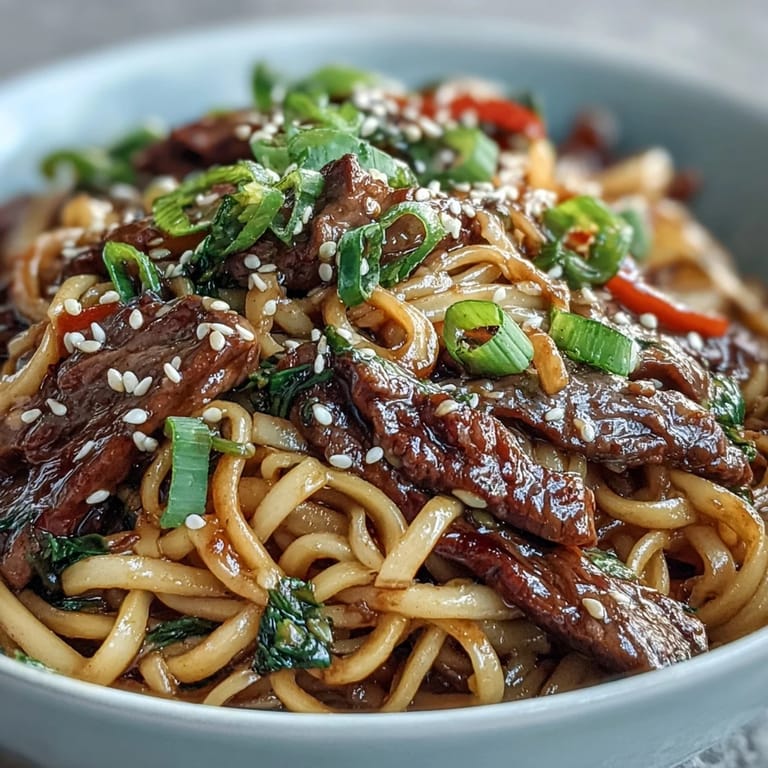
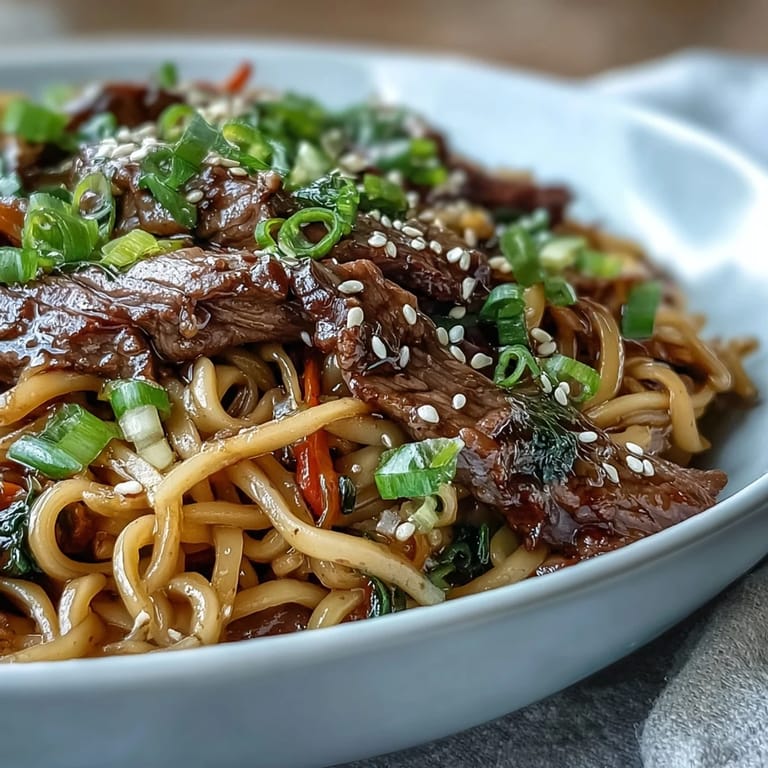
- Scatter those chopped green onions and sesame seeds over the top and serve while everything's still steaming hot
 Pin
Pin This recipe became my go-to for new neighbors, heartbroken friends, and celebratory dinners alike. Something about those slippery noodles and that rich, glossy sauce makes people feel cared for, like you put real effort into feeding them well even though it came together in a flash.
Making It Your Own
Snap peas work beautifully here and add a fresh crunch that pops against the tender noodles. Zucchini noodles can replace half the rice noodles for extra vegetables without sacrificing texture. If you love heat, sriracha or gochujang stirred into the sauce transforms it into something spicy and bold.
Protein Swaps That Actually Work
Thinly sliced chicken breast cooks even faster than beef and stays juicy if you don't overcrowd the pan. Firm tofu, pressed and cubed, soaks up that incredible sauce and makes this completely plant-based. Shrimp work beautifully too—just add them at the very end so they don't overcook and turn rubbery.
Getting Ahead
Slice your beef and vegetables up to a day ahead and store them in separate containers in the fridge. The sauce can be whisked together and refrigerated for up to three days. Noodles are best cooked fresh because they tend to clump when stored, but if you must cook them ahead, toss them with a little sesame oil to prevent sticking.
- Leftovers reheat surprisingly well in the microwave with a splash of water to loosen the sauce
- The flavors actually deepen overnight, making this an excellent meal prep option
- Package garnishes separately so they stay fresh and crunchy
 Pin
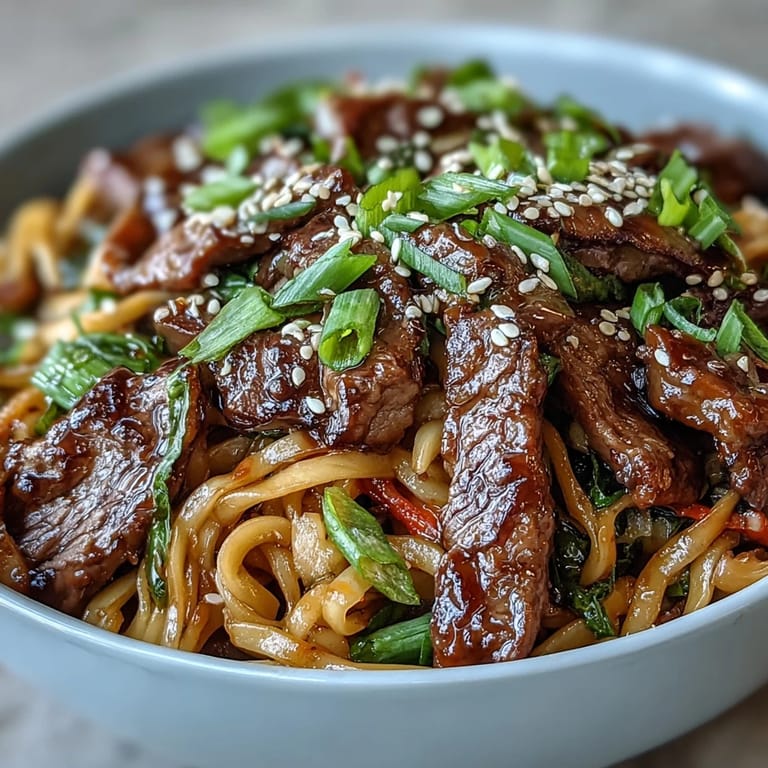
Pin There's something profoundly satisfying about slurping these noodles straight from the bowl, sauce dripping, vegetables crunching, beef melting. Simple food done well feeds more than just hunger.
Recipe Q&A
- → Can I use a different type of protein?
Yes, chicken breast, shrimp, or even firm tofu are excellent substitutes for flank steak in this dish. Adjust cooking times accordingly to ensure they are cooked through.
- → What kind of noodles work best?
Rice noodles are traditional for their silky texture, but you could also use udon noodles, lo mein noodles, or even spaghetti if you're looking for a different consistency.
- → How can I make this dish spicier?
For a spicy kick, consider adding a teaspoon of sriracha, gochujang (Korean chili paste), or a pinch of red pepper flakes to the sauce mixture. Taste and adjust to your preference.
- → What vegetables can I add or substitute?
Feel free to customize with your favorite vegetables. Snap peas, zucchini, mushrooms, or bok choy would all be delicious additions. Just ensure they are cut to similar sizes for even cooking.
- → Can I prepare any components in advance?
You can slice the beef, chop the vegetables, and mix the sauce ahead of time. Store them separately in the refrigerator. This will significantly speed up the cooking process when you're ready to eat.
- → How long do leftovers last?
Leftovers can be stored in an airtight container in the refrigerator for up to 3 days. Reheat gently in a skillet or microwave, adding a splash of water or broth if needed.