 Pin
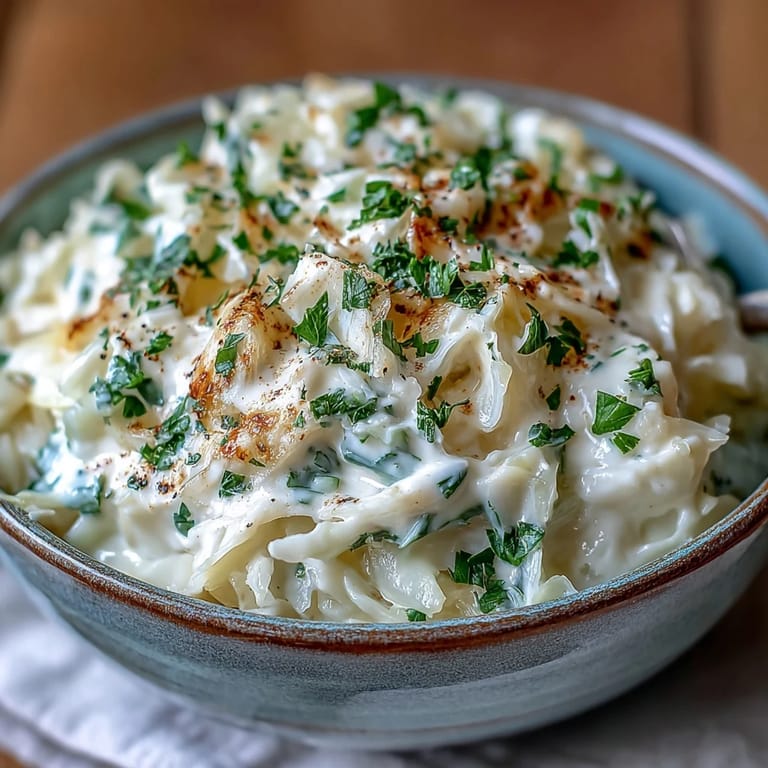
Pin My neighbor stopped by on a drizzly autumn afternoon with leftover cabbage from her garden, and I found myself wanting to do something gentler than coleslaw—something warm that wouldn't overwhelm the delicate sweetness vegetables develop after a frost. That's when creamed cabbage came together almost by accident, and what emerged from the pan was silky, tender, and somehow both indulgent and impossibly light. It's become the dish I turn to when I want comfort without heaviness, and it never fails to surprise guests who assume cabbage can't be this elegant.
The first time I brought this to a holiday potluck, I almost didn't include it—worried it seemed too simple compared to the elaborate casseroles everyone else was bringing. But it disappeared before the main course was even plated, and three people asked for the recipe while actually eating it, forks still in hand. That taught me something about underestimating quiet, honest food.
Ingredients
- 1 medium head green cabbage (about 2 lbs), cored and finely shredded: The foundation here, and shredding it fine matters because it allows the cream to coat every strand evenly, creating that silk-like texture instead of chunky pieces.
- 1 small yellow onion, finely chopped: This dissolves almost entirely into the sauce, adding sweetness and body without announcing itself—the supporting actor that makes everything else shine.
- 2 tablespoons unsalted butter: Use real butter, not a substitute, because you can actually taste it in something this simple, and it rounds out the flavor beautifully.
- 1 cup whole milk or half-and-half for richer sauce: Whole milk keeps it light and elegant, while half-and-half takes it into decadent territory—pick based on your mood.
- 1/2 cup heavy cream: This is what transforms the dish from creamy to luxurious, so don't skip it even if you're trying to be virtuous.
- 1 tablespoon all-purpose flour or gluten-free flour blend: This thickens the sauce without making it heavy, and whisking it in early prevents any lumps from hiding in there.
- 1/4 teaspoon ground nutmeg: A whisper of warmth that deepens the flavor mysteriously—people often can't identify what makes it taste so good until you tell them.
- Salt and freshly ground black pepper, to taste: Don't be shy with either; the cream mutes seasoning, so you need more than you'd think.
- 1 tablespoon fresh parsley, chopped for garnish, optional: A bright finish that's entirely optional, but it adds a gentle freshness that cuts through the richness.
Tired of Takeout? 🥡
Get 10 meals you can make faster than delivery arrives. Seriously.
One email. No spam. Unsubscribe anytime.
Instructions
- Soften the onion in butter:
- Melt your butter over medium heat and listen for that gentle sizzle when you add the chopped onion—it should smell sweet and soft after just a few minutes, never brown or crispy. If it starts to brown, your heat's too high, so dial it back.
- Wilt the cabbage down:
- Add the shredded cabbage with a generous pinch of salt and stir frequently as it releases its moisture and collapses into tender strands—this takes about 6 to 8 minutes and the pan will smell almost sweet. You'll know it's ready when there's no crunch left when you taste a piece.
- Create the flour paste:
- Create the flour base:
- Sprinkle the flour directly over the wilted cabbage and stir it constantly for about a minute until every shred is coated in flour—this step prevents lumps from forming when you add the liquid. It'll smell a bit toasty, which is exactly right.
- Combine with cream and milk:
- Pour the milk and cream in slowly while stirring constantly, as if you're teaching the flour to dissolve gently into the liquid rather than seizing up. Take your time here; there's no rush, and steady stirring is your friend.
- Simmer until silky:
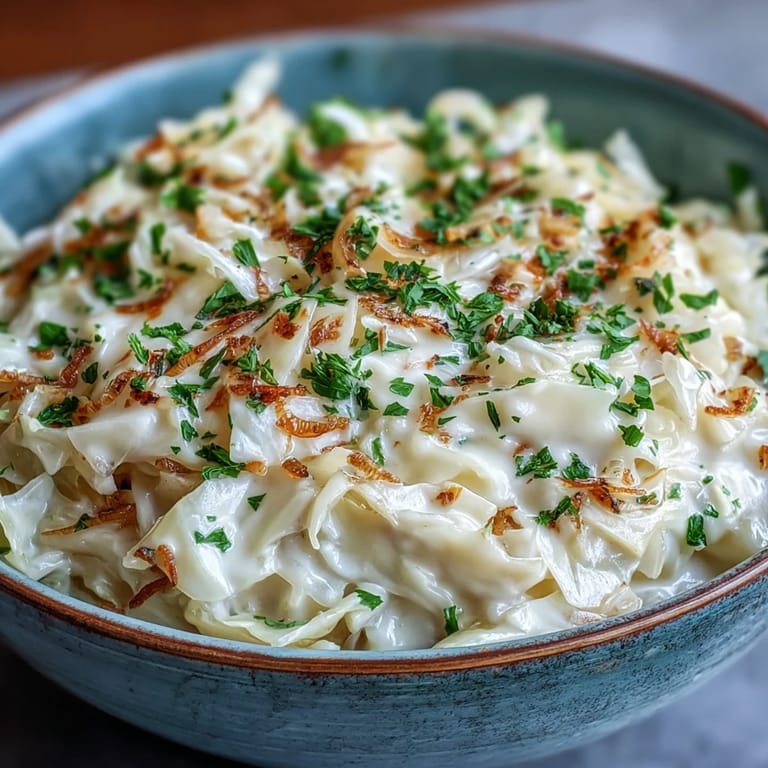
- Lower the heat and let it bubble gently for 6 to 8 minutes, stirring occasionally, until the sauce clings to a spoon and coats the cabbage like liquid silk. The slower you go, the better the texture becomes.
- Season and finish:
- Stir in the nutmeg and taste as you go, adding black pepper and more salt until it tastes balanced and comforting—this is the moment where the dish reveals its true personality. Transfer to a warm serving dish and scatter parsley on top if you'd like that bright green finish.
 Pin
Pin There's a quiet moment I cherish about this dish—when someone who claims not to like cabbage takes a bite and their whole face changes, and they become a convert right there at the table. It's the kind of food that heals small kitchen failures and reminds you that simple technique and real ingredients can create something memorable.
Why This Dish Works with Everything
Creamed cabbage sits in that perfect middle ground where it doesn't demand attention but absolutely earns it the moment someone tastes it. Pair it with roast chicken and it becomes the thing people reach for twice, or serve it alongside pork chops where the cream echoes the richness of the meat without competing. Even when I make it as part of a vegetarian meal with crusty bread and sharp cheese, it feels like the centerpiece rather than a supporting dish.
Making It Your Own
The beauty of this recipe is that it invites gentle experimentation without falling apart. Add a clove of minced garlic to the onion if you want more depth, or try swapping half the green cabbage for Savoy or Napa varieties when you want a more delicate texture that almost melts on the tongue. I've even made a lighter version using all milk and skipping the cream on nights when I wanted the same comfort with less heaviness, and it works beautifully.
Storage and Make-Ahead Magic
This dish actually improves slightly after a day or two in the refrigerator, as the flavors meld and the sauce becomes even silkier—I've found it reheats gently on the stove over low heat with a splash of extra milk if needed. It also freezes respectably well for up to a month, though the texture becomes slightly less creamy, so I reserve freezing for when I know I'll want the comfort of it on a chaotic weeknight.
- Reheat gently on the stovetop over low heat rather than blasting it in the microwave, which can cause the cream to separate.
- Taste and adjust seasoning after reheating, as salt and pepper flavors sometimes fade after storage.
- A sprinkle of fresh parsley right before serving adds brightness even to day-old portions.
 Pin
Pin This is the kind of dish that reminds you why cooking matters—not because it's complicated, but because taking simple things and treating them with care creates something that nourishes. I hope it becomes one of your quiet favorites too.
Recipe Q&A
- → Can I make this dish ahead of time?
Yes, you can prepare it up to 2 days in advance. Store in an airtight container in the refrigerator and reheat gently on the stovetop with a splash of milk to restore the creamy consistency.
- → What type of cabbage works best?
Green cabbage is traditional, but Savoy cabbage offers a more delicate texture. Napa cabbage also works well for a lighter, sweeter flavor. You can even mix varieties for added complexity.
- → How can I make this lighter without sacrificing creaminess?
Use all whole milk instead of cream, or substitute half the cream with vegetable or chicken stock. The flour will still create a satisfying, velvety texture without the extra richness.
- → What proteins pair well with creamed cabbage?
This side complements roast chicken, pork chops, braised beef, or grilled sausages beautifully. It also works wonderfully alongside salmon or other fish for a lighter meal option.
- → Can I add other vegetables or ingredients?
Absolutely! Try adding crispy bacon bits, sautéed mushrooms, or a handful of peas. Caraway seeds or fresh dill also add wonderful flavor dimensions that complement the creamy cabbage.
- → How do I prevent the sauce from becoming lumpy?
Ensure the flour is evenly distributed over the cabbage before adding liquid. Pour the milk gradually while stirring constantly, and keep the heat at medium-low to allow smooth incorporation.