 Pin
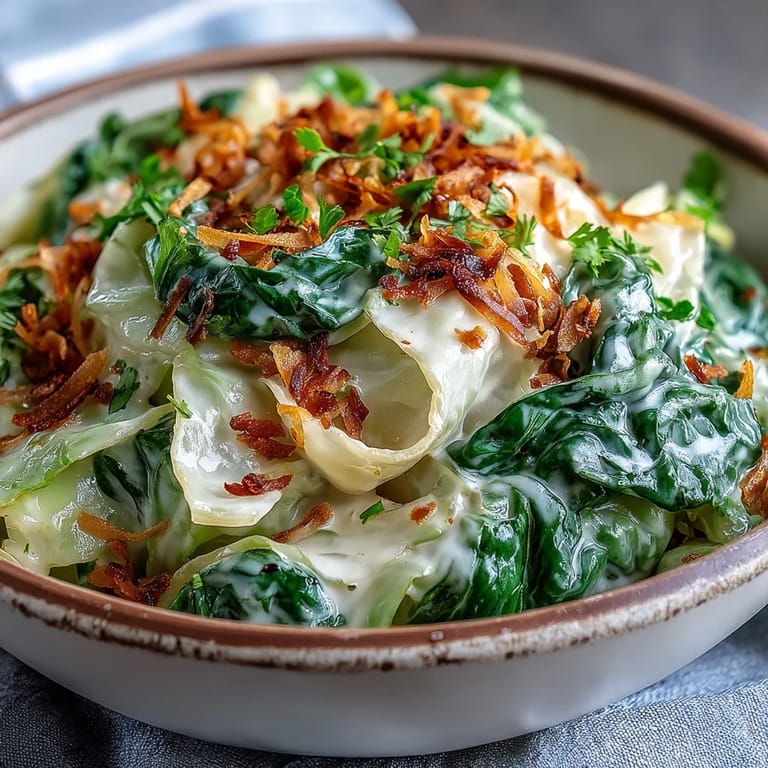
Pin A friend handed me a bowl of this at a dinner party, and I nearly didn't try it—cabbage has never been my thing. But the first spoonful stopped me cold: creamy, warmly spiced, with this gentle coconut sweetness that made the humble vegetable taste almost luxurious. I went back for seconds before asking for the recipe, and now it's become my go-to dish when I want something that feels both comforting and a little bit special.
The kitchen smelled incredible the first time I made this for my parents—my mom kept wandering in asking what I was cooking because the turmeric and coconut milk combination filled the whole house. When I served it alongside some grilled chicken, my dad actually asked for the recipe, which is saying something since he's usually skeptical of anything too unfamiliar. That's when I realized this dish has this quiet power to win people over who think they already know what they like.
Ingredients
- 1 medium green cabbage, cored and thinly sliced: Slice it thin enough that it wilts properly but not so paper-thin that it disappears—you want some texture left.
- 1 medium yellow onion, thinly sliced: Yellow onions caramelize beautifully here and add a natural sweetness that balances the spices.
- 2 cloves garlic, minced: Fresh garlic matters more than you'd think; jarred just doesn't give you that sharp, clean flavor.
- 1-inch piece fresh ginger, grated: Don't skip this—it adds a brightness that makes the whole dish feel alive and prevents it from tasting one-note.
- 1 tsp ground turmeric: This is the soul of the dish; it gives the creamy sauce that warm golden color and earthy depth.
- 1 tsp ground cumin: Cumin and turmeric are a classic pair, and together they create a flavor profile that feels both familiar and exotic.
- 1/2 tsp chili flakes: Keep this optional and start small—heat builds and you can always add more at the end.
- 1/2 tsp black pepper: Fresh cracked pepper tastes noticeably better than pre-ground, especially in something this simple.
- 3/4 tsp fine sea salt: Fine salt dissolves evenly and doesn't create those occasional crunchy moments that coarse salt can.
- 400 ml full-fat coconut milk: Full-fat is non-negotiable here; lite coconut milk will make this taste thin and watery instead of rich and comforting.
- 120 ml vegetable broth or water: Broth adds more flavor, but water works fine if that's what you have on hand.
- 1 tbsp coconut oil or neutral oil: Coconut oil amplifies the tropical notes, but any neutral oil will work if you prefer a cleaner taste.
- 2 tbsp fresh cilantro or parsley, chopped: The fresh herb at the end cuts through the richness and brings the whole dish into focus.
- 1 tbsp toasted coconut flakes: These are optional but add a subtle textural contrast and a hint of nutty sweetness.
Tired of Takeout? 🥡
Get 10 meals you can make faster than delivery arrives. Seriously.
One email. No spam. Unsubscribe anytime.
Instructions
- Warm your oil and soften the aromatics:
- Heat the coconut oil in a large skillet over medium heat, then add the sliced onions and let them cook undisturbed for the first minute—this helps them develop a gentle color and sweetness. After about 3 to 4 minutes, they should be soft and turning translucent.
- Build the flavor base:
- Add the minced garlic and grated ginger, stirring constantly for just about a minute until your whole kitchen smells incredible and the raw edge is gone. This is the moment where the dish starts to feel less ordinary.
- Wake up the spices:
- Sprinkle in the turmeric, cumin, chili flakes, and black pepper all at once, stirring quickly for about 30 seconds so the heat releases their essential oils and they coat everything evenly. You'll notice the aroma shift—that's how you know it's working.
- Coat the cabbage:
- Add all the sliced cabbage at once along with the salt, then toss everything together with a wooden spoon for about a minute so each piece gets coated in the spice mixture. The cabbage will seem like way too much, but it shrinks as it cooks.
- Add the creamy liquid:
- Pour in the coconut milk and broth, stirring until everything is evenly combined and there are no dry bits of cabbage clinging to the bottom of the pan. The mixture should look cohesive and slightly soupy.
- Let it braise low and slow:
- Bring the whole thing to a gentle simmer, then cover it and turn the heat down to low—this is not a hard boil situation. Cook for 15 to 18 minutes, stirring every few minutes, until the cabbage has completely softened and lost its raw crunch but hasn't turned to mush.
- Finish and thicken (optional):
- Remove the lid and cook uncovered for 3 to 5 minutes if you like a slightly thicker, more concentrated sauce. This step is optional but it does make the dish feel richer.
- Taste and adjust:
- Take a spoonful and really taste it—this is your moment to add more salt if it feels flat or more chili if you want more heat. Trust your instincts here.
- Plate and garnish:
- Transfer everything to a serving dish and scatter the fresh cilantro and toasted coconut flakes on top right before serving, so they stay fresh and visible.
 Pin
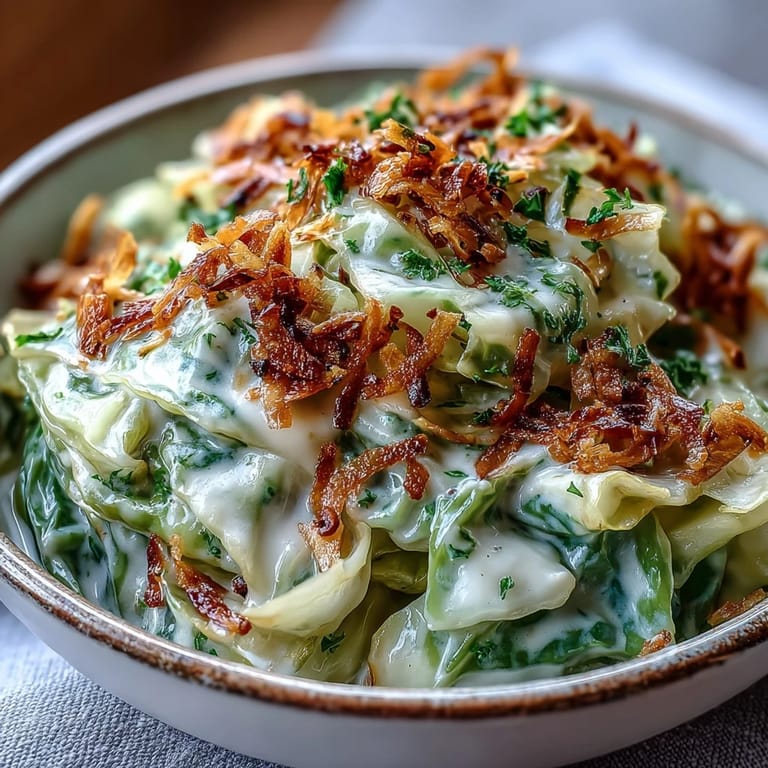
Pin I brought this to a potluck once where everyone was stressed about whether their food would be good enough, and watching people actually relax and enjoy a simple bowl of braised cabbage was oddly touching. It became this quiet reminder that the best meals aren't about impressing anyone—they're about making something warm and real that tastes good.
What Makes This Different
Most braised cabbage recipes feel heavy or one-dimensional, but the combination of coconut milk and warm spices creates something that's both rich and bright. The coconut doesn't overpower the dish—instead it acts like a gentle cushion that lets the turmeric and cumin shine without being sharp. This is comfort food that doesn't feel lazy or boring.
The Best Way to Serve It
I've served this alongside grilled chicken, spooned it next to rice, used it as a topping for baked sweet potatoes, and even tucked it into tacos with some charred vegetables. The versatility is part of what makes it so useful to have in your rotation—it works with almost anything. A squeeze of fresh lime juice right before eating brings everything into sharper focus and adds a brightness that feels almost magical.
Variations and Swaps
Once you understand how this dish works, it becomes a template you can play with endlessly. Savoy cabbage has a more delicate texture, napa cabbage brings an almost sweet note, and red cabbage will turn everything a beautiful purple but tastes just as good. Some nights I add a handful of diced tomatoes for acidity, other times I stir in some coconut cream at the very end for extra richness.
- Try swapping in half the coconut milk for real cream if you want something even richer and less tropical-tasting.
- Add a teaspoon of tamarind paste or a tablespoon of lime juice near the end for a sour note that changes everything.
- Fresh turmeric root makes this taste noticeably brighter if you happen to find it, and it's worth seeking out for a special dinner.
 Pin
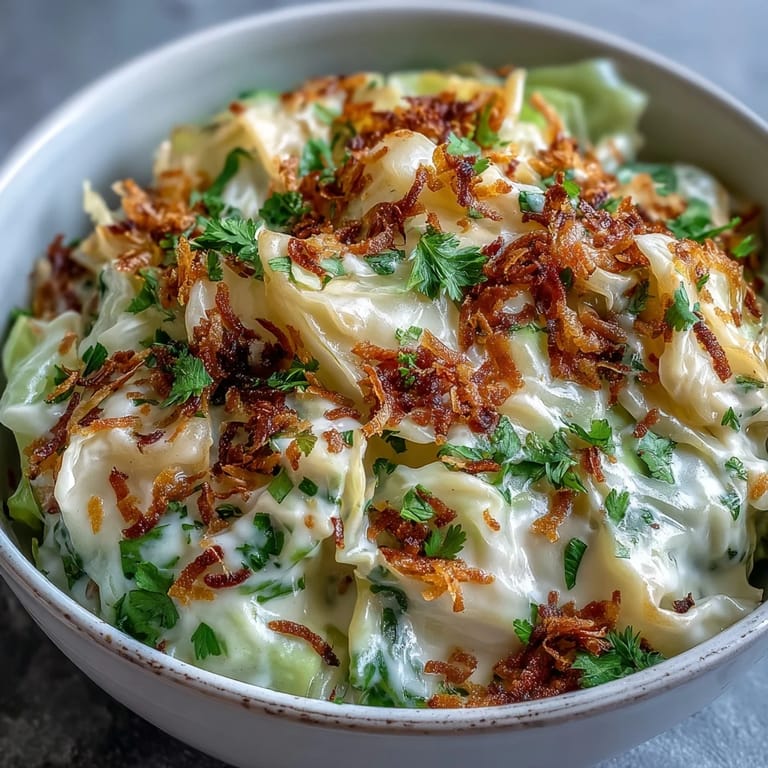
Pin There's something deeply satisfying about a dish this humble becoming something people actually ask for. This coconut braised cabbage has earned its permanent spot in my weeknight rotation, and I hope it does the same for you.
Recipe Q&A
- → Can I use a different type of cabbage?
Yes, savoy cabbage or napa cabbage work beautifully as substitutes for green cabbage. They have a more delicate texture and will cook slightly faster, so reduce the braising time by 3-5 minutes.
- → How do I make this dish spicier?
Increase the chili flakes to 1 teaspoon or add a fresh sliced chili pepper when sautéing the aromatics. You can also finish with a drizzle of chili oil for extra heat.
- → Can I prepare this ahead of time?
Absolutely. This dish reheats wonderfully and the flavors deepen overnight. Store in an airtight container in the refrigerator for up to 4 days. Reheat gently on the stovetop with a splash of water or broth.
- → What can I serve with coconut braised cabbage?
It pairs beautifully with steamed jasmine rice, quinoa, grilled chicken, fish, tofu, or as a side to any curry. It also works wonderfully as a topping for baked sweet potatoes or alongside roasted meats.
- → Can I use light coconut milk instead of full-fat?
You can, but the dish will be less rich and creamy. Full-fat coconut milk provides the luxurious texture that makes this dish special. If using light coconut milk, reduce the broth slightly to maintain a thicker consistency.
- → How do I prevent the cabbage from becoming mushy?
Monitor the cooking time carefully and test the cabbage after 15 minutes. It should be tender but not falling apart. Removing the lid for the last few minutes helps evaporate excess liquid while maintaining texture.