 Pin
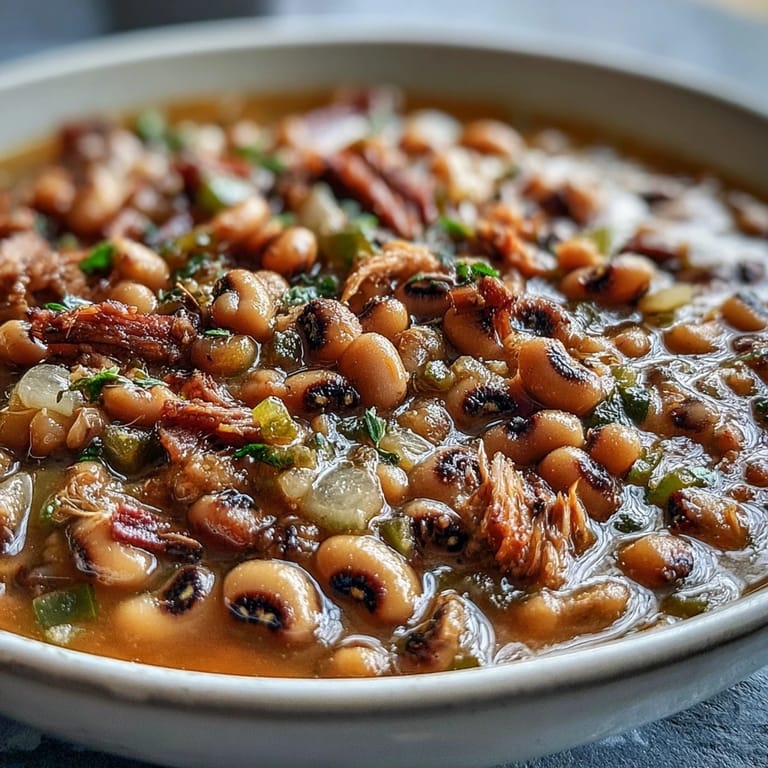
Pin My grandmother used to say that black-eyed peas on New Years Day weren't just dinner—they were insurance against a year of bad luck. I didn't believe her until I skipped the tradition one January out of sheer laziness, and somehow everything that could go wrong did. Now I simmer these tender legumes with smoked pork every single year, and whether it's superstition or just the comfort of ritual, I'm not taking any chances. There's something about the smell of Creole spices filling the kitchen while the peas go soft and the pork releases its smoky richness into the broth that makes the whole house feel like home.
I made this for a potluck once where I knew maybe three people, feeling anxious about whether anyone would actually eat what I brought. A woman I'd never met before took a second helping, then a third, and told me it tasted exactly like her mother's version. We ended up talking for two hours about food and family, and I realized that some dishes have this quiet power to connect you to strangers through the shared language of comfort. That's when I understood why my grandmother guarded her black-eyed peas recipe so carefully—it wasn't really about the ingredients.
Ingredients
- Black-eyed peas (1 pound): Soak them overnight if you have time, but don't stress if you forget—the quick soak works just fine and saves you a step.
- Smoked pork neck bones (1½ pounds): These are the quiet MVP here, slowly releasing smoke and flavor into everything around them; ask your butcher if you can't find them, as ham hocks work beautifully too.
- Onion, celery, and bell pepper: This holy trinity is where your flavor foundation lives, so don't skip chopping them fine—it helps them break down and dissolve into the broth.
- Garlic (4 cloves): One minute of cooking is all it needs; any longer and it turns bitter and bossy.
- Water or broth (7 cups): Broth gives you a head start on flavor, but water lets the pork and spices be the stars.
- Creole seasoning (1½ teaspoons): This is your spice backbone—if you can't find it, mix smoked paprika, cayenne, garlic powder, and thyme together, but start with less and taste as you go.
- Bay leaf, thyme, smoked paprika, and black pepper: These spices whisper rather than shout, building a complex background flavor that makes people ask what your secret is.
- Salt: Always taste at the end; you might need more or less depending on your broth.
- Fresh parsley and hot sauce (optional): The parsley brightens everything at the last moment, and hot sauce is there if you want to wake things up.
Tired of Takeout? 🥡
Get 10 meals you can make faster than delivery arrives. Seriously.
One email. No spam. Unsubscribe anytime.
Instructions
- Soak your peas:
- If you're thinking ahead, cover the rinsed peas with cold water and let them sit overnight—they'll cook faster and more evenly. If inspiration hits you at the last minute, pour boiling water over them, wait an hour, and drain; you're not cheating, you're just on a different timeline.
- Build your flavor base:
- Heat a splash of oil in your Dutch oven, then sauté the onion, celery, and bell pepper until they soften and start to smell sweet—about five minutes. This isn't fancy; it's just waking up the vegetables and letting them release their natural sugars.
- Toast the garlic:
- Add minced garlic and stir for about a minute until the whole kitchen smells like something good is happening. Resist the urge to walk away—garlic burns faster than you'd think, and bitter garlic is not your friend.
- Combine everything:
- Add the drained peas, smoked pork, broth, Creole seasoning, bay leaf, thyme, smoked paprika, and black pepper to the pot. Stir it all together so the spices distribute evenly, then let it come to a boil—you'll see the liquid darken and the peas start to bob around.
- Simmer low and slow:
- Once it boils, turn the heat down to low, cover the pot, and let it bubble gently for about an hour and a half. Stir every twenty minutes or so, just to check in—the peas should be getting softer and the pork should be starting to surrender. The kitchen will smell incredible, and you can do almost anything else while this is happening.
- Finish the pork:
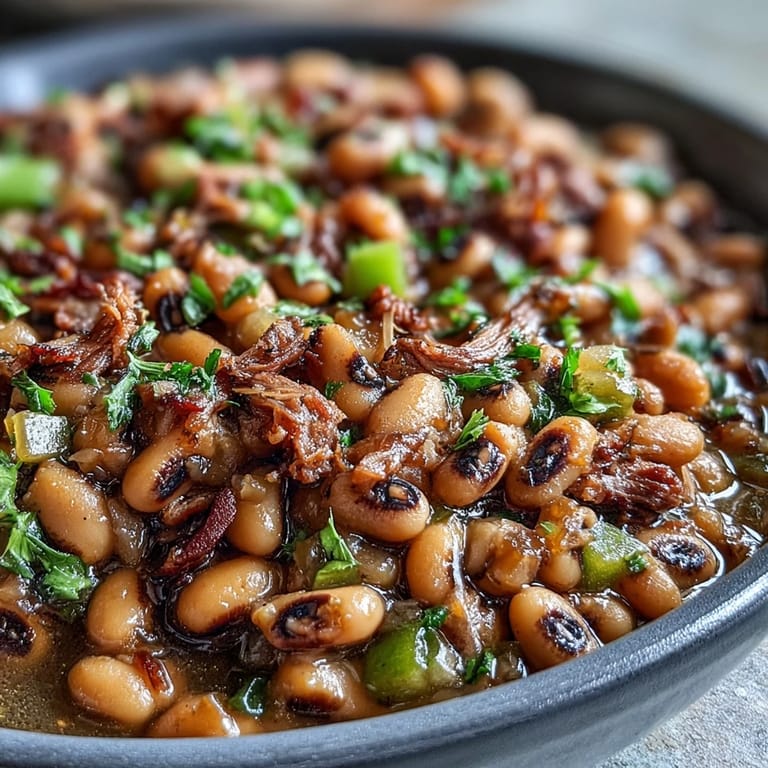
- When the peas are tender and falling apart if you touch them, fish out the pork bones. Let them cool just enough to handle, then shred any meat clinging to them and return the meat to the pot. Those bones did their job; let them go.
- Season and serve:
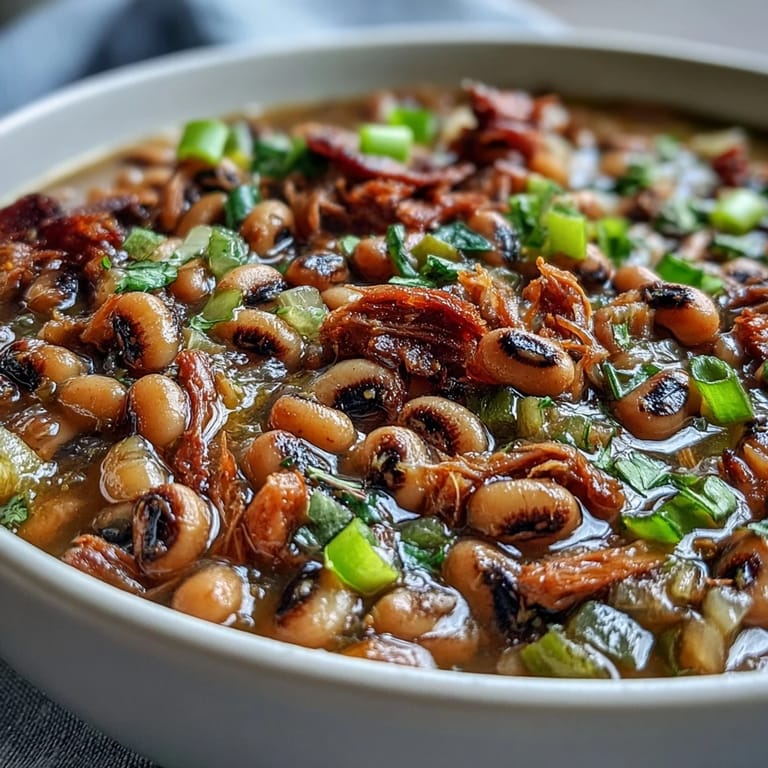
- Taste the broth and add salt until it's just right for you—this is the moment you're in charge. Fish out the bay leaf, then ladle into bowls. Finish with fresh parsley if you have it, a dash of hot sauce if you're feeling it, and serve over rice or with cornbread alongside.
 Pin
Pin My friend brought her daughter over one New Years, and the little girl took one spoonful and asked if she could have it for her birthday dinner too. That's the moment I stopped thinking of this as an old family tradition and started seeing it as something I was actually creating for the next generation. Food does that sometimes—it stops being about luck and starts being about love.
The Story Behind New Years Peas
There's real history here worth knowing—enslaved African Americans in the South made black-eyed peas affordable and delicious out of necessity, turning an humble legume into something that carried dignity and flavor. Over time, the tradition grew roots so deep that eating them on New Years Day became less about superstition and more about honoring that heritage and keeping alive a memory that deserves remembering. Every time you cook this dish, you're part of that story, and somehow that makes it taste better.
Making It Your Own
This recipe is flexible enough to bend without breaking—vegetarians can skip the pork and add a splash of liquid smoke plus extra smoked paprika to keep that depth. Some people add carrots or tomatoes, others swear by a pinch of cayenne, and I've seen versions that include a ham bone instead of neck bones. The beauty of cooking something this old is that it's already been adapted a thousand times, so feel free to think of this as a starting point rather than a rulebook.
Storing and Reheating
This dish actually gets better after sitting in the fridge overnight, as the flavors continue to marry and deepen—which is one reason it's perfect for make-ahead cooking. Leftovers keep beautifully for about five days in the fridge, and they freeze solid for up to three months, which means you can make a double batch and have instant comfort food waiting whenever you need it.
- Store in airtight containers and reheat gently on the stovetop with a splash of water or broth to loosen it up.
- If you're freezing, leave a little headspace at the top of the container so the liquid has room to expand.
- Frozen peas will thaw and reheat in about fifteen minutes over medium heat, stirring occasionally.
 Pin
Pin There's something sacred about a dish that tastes the same whether you're cooking it for a crowd or just for yourself, and black-eyed peas somehow manage that magic. Make this once, and you'll understand why my grandmother protected it like a secret.
Recipe Q&A
- → Why are black-eyed peas eaten on New Years?
Southern tradition holds that black-eyed peas bring good luck and prosperity when eaten on New Years Day. The peas represent coins, while the greens often served alongside symbolize paper money.
- → Do I need to soak the black-eyed peas first?
Yes, soaking overnight helps them cook evenly and tenderize. You can also use the quick-soak method by covering with boiling water for one hour. Proper soaking reduces cooking time and improves texture.
- → Can I make this vegetarian?
Simply omit the smoked pork bones and add extra smoked paprika plus a splash of liquid smoke for that smoky flavor. Use vegetable broth instead of chicken broth for a completely plant-based version.
- → What meat works best for this dish?
Smoked pork neck bones or ham hocks are traditional choices that infuse rich flavor. You can also use smoked turkey wings, a ham bone, or even diced bacon for different variations of smoky goodness.
- → How should I serve black-eyed peas?
Traditionally served over fluffy white rice with cornbread on the side. Add hot sauce, chopped fresh parsley, or green onions as garnish. Collard greens make the perfect accompaniment for a complete New Years meal.
- → Can I freeze leftovers?
Absolutely. Leftovers freeze beautifully for up to three months. Cool completely before transferring to airtight containers or freezer bags. Thaw overnight in the refrigerator and reheat gently on the stovetop.