 Pin
Pin I'll never forget the evening I discovered the magic of the infinity loop—not in a cookbook, but in the way my daughter traced figure-eights on the tablecloth while we talked about making dinner together. That simple gesture sparked an idea: what if I could arrange an entire dish like that, turning a plate into a work of art where each curve introduced a new flavor? The Infinity Loop Flow was born from that moment, a dish that transformed how I think about plating and the journey food takes from one side of your plate to the other.
I made this for my closest friends on a Friday night when we all needed something beautiful to believe in. When I set that platter down and watched their faces light up as they realized the whole thing was one continuous edible design, I knew I'd created something special—a dish that sparked conversation and made the meal feel like more than just dinner. That's when I understood: the infinity loop wasn't just about arranging food; it was about creating a moment everyone would remember.
Ingredients
- Fresh salmon fillets (2 fillets, about 300 g), skinless: The star of this dish—choose fillets that are firm and smell like the sea, not fishy. Skinless makes plating cleaner, and the gentle baking keeps them tender and flaky
- Olive oil (1 tbsp): A good quality oil makes all the difference; it carries the salmon's delicate flavor rather than overwhelming it
- Salt and freshly ground black pepper, to taste: Season generously right before cooking—this is where you build the salmon's foundation of flavor
- Medium zucchini, thinly sliced (1): The pale green ribbons create visual contrast; slice them on a mandoline for uniform thickness so they cook evenly
- Medium carrot, thinly sliced (1): Its natural sweetness and golden color add warmth to the figure-eight; the thin slices soften perfectly with just a brief blanch
- Small fennel bulb, thinly sliced (1): This is the secret whisper of anise that makes people pause and ask what that delicious flavor is—it's what transforms this from good to unforgettable
- Baby spinach leaves (1 cup): They nestle into the curves of the couscous and add earthiness without heaviness
- Pearl couscous (1/2 cup): Larger than regular couscous, these little pearls create beautiful texture and hold their shape perfectly along the infinity line
- Vegetable broth (1 cup): Use a good quality broth; it flavors the couscous and makes each grain taste intentional
- Greek yogurt (2 tbsp): Creamy and tangy, it becomes a flavor anchor that brightens everything around it
- Lemon zest (1 tsp): Fresh and vital—zest it just before mixing so it perfumes the yogurt dressing
- Fresh dill, finely chopped (1 tbsp): The herbaceous friend that makes salmon sing; fresh always, never dried
- Capers, rinsed and drained (1 tbsp): These little briny pops provide surprise flavor bursts throughout the loop
- Toasted pine nuts (1 tbsp): The final luxury—toasting them yourself makes them warm and nutty rather than flat and ordinary
Tired of Takeout? 🥡
Get 10 meals you can make faster than delivery arrives. Seriously.
One email. No spam. Unsubscribe anytime.
Instructions
- Heat your oven and prepare your stage:
- Preheat to 180°C (350°F) and line your baking tray with parchment paper. This gentle temperature cooks the salmon through without drying it out, and the parchment means zero cleanup and perfect flake preservation
- Coax the couscous to life:
- In a small saucepan, bring your vegetable broth to a boil—you'll hear it before you see it. Add the pearl couscous, reduce the heat to low, cover, and let it simmer for 10 minutes. Don't peek; patience here matters. When the timer goes off, fluff with a fork, breaking up any clumps gently. The couscous should be tender with just a whisper of bite remaining
- Blanch the vegetables with intention:
- Bring a pot of salted water to a rolling boil—the salt seasons the vegetables as they cook. Working quickly, add your zucchini, carrot, and fennel slices for just 1–2 minutes. You're looking for that moment when they soften but the colors intensify; this is the precise point to pull them out. Immediately plunge them into ice water to shock them into stillness and set their colors. Pat them dry on paper towels—moisture is the enemy of a beautiful plating
- Gently coax the salmon to perfection:
- Rub your salmon fillets with olive oil, then season generously with salt and pepper. Place them on your parchment-lined tray and slide into the oven. Bake for 12–15 minutes until the flesh is just cooked through—it should be opaque but still tender. Let it cool slightly, then break into large, beautiful flakes with a gentle touch. Handle it like you're cradling something precious, because at this point, you are
- Create the dressing that binds flavors together:
- In a small bowl, whisk together the Greek yogurt, fresh lemon zest, and finely chopped dill. The yogurt should become pale green and fragrant. Taste it—adjust lemon zest or dill until it makes you smile
- Compose the infinity loop on your canvas:
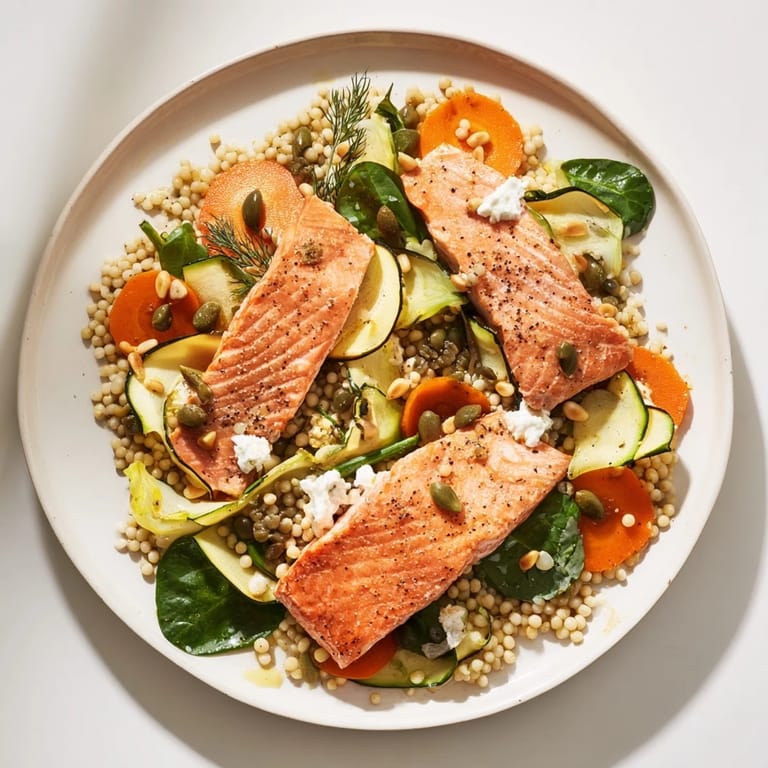
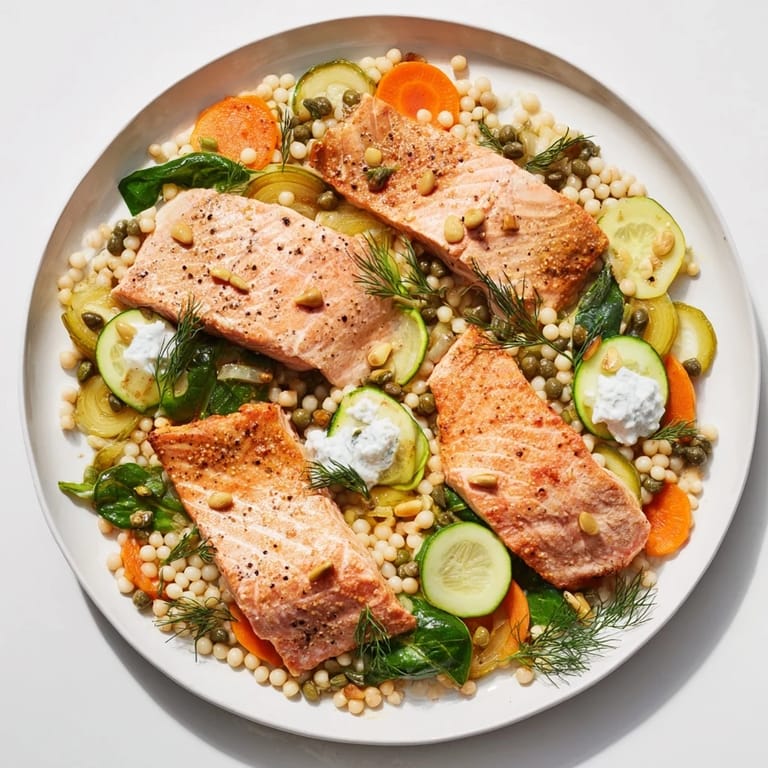
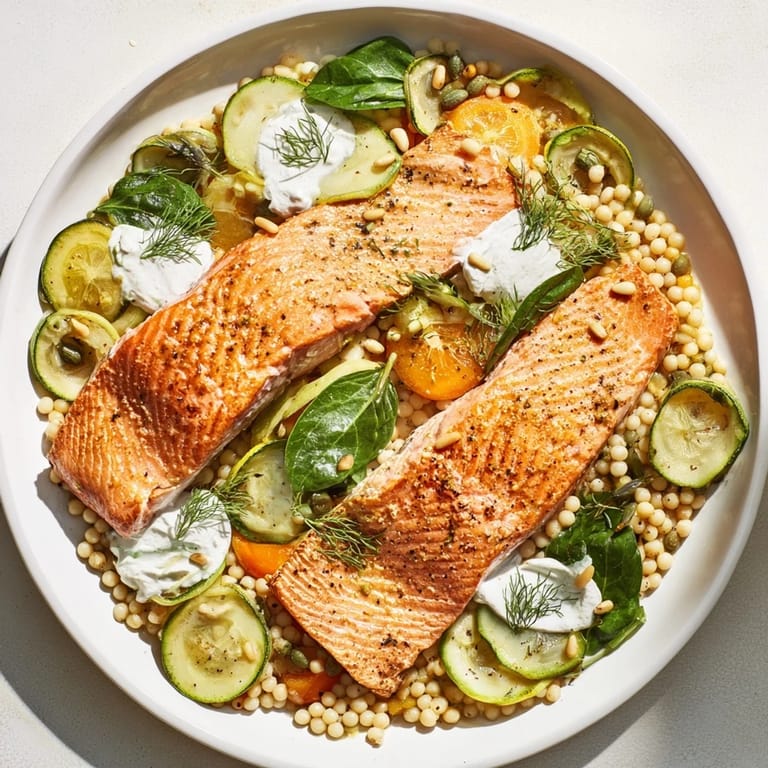
- This is the moment where technique becomes art. On a large, flat serving platter, spoon the pearl couscous in a continuous figure-eight shape—start at the top left, loop down and around, then back across and down again. Let it form the lazy, elegant curves of an infinity symbol. Along each curve, arrange your blanched vegetable slices in an alternating pattern—a piece of zucchini, then carrot, then fennel, repeating. Layer the baby spinach leaves between the vegetables, letting them catch in the curves. Nestle the salmon flakes into the softer valleys of the couscous so they feel secure but visible. Dot the dressing strategically—use a small spoon to place it where it will catch the light. Finally, scatter the toasted pine nuts across the entire landscape, and add the capers in clusters that look intentional rather than random
- Present with pride and serve immediately:
- Bring this to the table and let people absorb the vision for a moment before anyone takes the first bite. As people serve themselves, each plate should capture the seamless transition of flavors—no single element dominates, but together they create something greater than their parts
 Pin
Pin There was a moment, after everyone had taken their first bites and fallen silent, when I realized this dish had become more than just food—it had become a shared experience. My friend looked up at me with genuine wonder and said, 'You made dinner into art,' and I understood then that the infinity loop wasn't just about visual beauty. It was about creating something that made people slow down, look, and appreciate every element working together in harmony. That's when I knew this recipe was something I'd be making for the rest of my life.
The Art of Thin Slicing
One of the hidden secrets to making this dish look professional is the way the vegetables are sliced. I spent years struggling with irregular thickness until I invested in a mandoline—a kitchen tool that felt intimidating at first but quickly became my best friend. The mandoline creates those gossamer-thin slices that blanch evenly, cook in seconds, and catch the light on the plate. If you don't have one, a very sharp knife and a steady hand work too, but take your time. The uniformity of your slices directly affects how impressive the final presentation looks and how enjoyable each bite tastes.
Why This Plating Matters
Plating is often dismissed as purely visual, but the truth is deeper. When each element is placed thoughtfully, it changes how people eat. They don't just grab a fork and attack the plate; instead, they become conscious of each flavor, each texture. The infinity loop asks people to follow a path, to experience the dish as a journey rather than a jumble. This deliberate approach to arrangement means every bite tastes intentional, and that intention elevates the entire meal into something memorable and meaningful.
Wine Pairing and Serving Suggestions
The delicate balance of flavors in the Infinity Loop Flow deserves a wine partner that complements rather than competes. A crisp Sauvignon Blanc brings out the citrus notes in the lemon zest and dill, while its minerality echoes the fennel's subtle complexity. A light-bodied Pinot Gris works beautifully too, offering softness that doesn't overshadow the salmon. Serve both wine and platter chilled or at room temperature, depending on your preference, and always taste the wine before the first bite of food—you want both to surprise and delight you simultaneously.
- Chill your white wine for at least two hours before serving; room temperature wine tastes flat alongside this fresh, bright dish
- Consider serving this as a special lunch rather than dinner—the brightness of the components shines even more in daylight, making the presentation even more stunning
- If you're making this for a dinner party, you can prepare the couscous and blanch the vegetables up to two hours ahead; just store them separately and assemble on the platter 15 minutes before guests arrive
 Pin
Pin Every time I make this dish, I'm reminded that cooking is love made visible. The Infinity Loop Flow isn't just a recipe—it's an invitation to slow down and create something beautiful together.
Recipe Q&A
- → How should the salmon be cooked for optimal texture?
Bake the salmon at 180°C (350°F) for 12–15 minutes until just cooked through, ensuring it remains moist and flaky.
- → What is the purpose of blanching the vegetables?
Blanching maintains the vibrant color and slightly tender texture of the zucchini, carrot, and fennel slices without overcooking.
- → How is the infinity loop arrangement achieved?
Pearl couscous is shaped in a figure-eight on a platter, with vegetables and salmon flakes placed alternately to create an elegant flow of colors and textures.
- → What adds brightness to the dish?
A fresh yogurt dressing with lemon zest and dill provides a tangy and herbaceous contrast to the richness of salmon and pine nuts.
- → Can the fish component be substituted?
Yes, trout or cod can be used instead of salmon to suit different preferences while maintaining the dish’s flavor profile.