 Pin
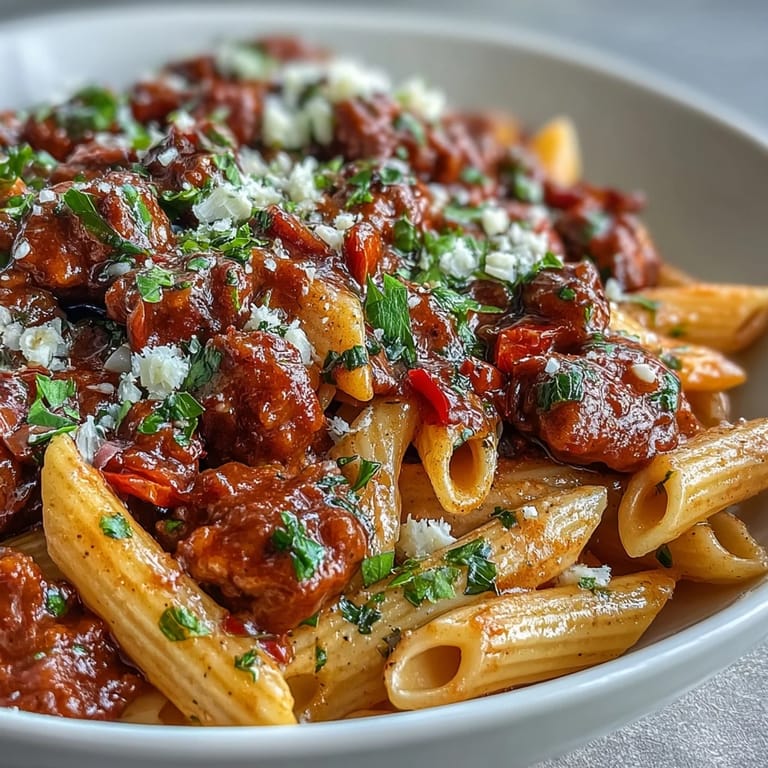
Pin There's something magical about the smell of sausage hitting a hot pan—that sizzle that tells you something delicious is already underway. One rainy Wednesday, I threw together whatever was in my pantry: red wine left over from the weekend, a package of sausage, pasta, and cream. What emerged was this one-pot wonder that made my small kitchen feel like an Italian trattoria, and honestly, it's been on rotation ever since because it asks for so little effort but delivers so much comfort.
I made this for friends on a cold evening, and watching them slow down mid-bite, eyes widening slightly as the creamy wine sauce coated their forks—that's when I knew this recipe had staying power. No one asked for the recipe that night, but three of them texted within the week.
Ingredients
- Italian sausage (300 g): The backbone of this dish; I prefer spicy because it cuts through the cream beautifully, but mild works if you're feeding cautious eaters.
- Yellow onion (1 medium): Don't skip the step of chopping it finely—it dissolves into the sauce and builds the base flavor.
- Garlic (3 cloves): Minced small so it distributes evenly and toasts slightly in the fat from the sausage.
- Red bell pepper (1): Adds sweetness and texture; I usually dice mine into small pieces so they soften completely and blend into the sauce.
- Canned crushed tomatoes (400 g): The acidity here balances the richness of the cream—use good quality because there's nowhere for watered-down flavor to hide.
- Penne or rigatoni (300 g): Shapes with ridges or tubes catch the sauce better than smooth pasta.
- Dry red wine (120 ml): Use something you'd actually drink; cheap wine tastes cheap in the pot, and the alcohol cooks off leaving only the flavor.
- Low-sodium chicken broth (750 ml): This is your cooking liquid that replaces the usual pasta water method.
- Soy sauce (2 tbsp): A secret weapon that adds umami depth without tasting salty or soy-forward.
- Heavy cream (120 ml): Added at the end to create that luxurious coating on each piece of pasta.
- Dried oregano and basil (1 tsp and ½ tsp): Dried herbs work beautifully here because they infuse into the liquid as everything cooks.
- Crushed red pepper flakes (¼ tsp): Optional but recommended—a tiny amount gives the dish personality without making it painful.
- Parmesan cheese (30 g) and fresh herbs: These finish the dish and remind you why you cooked from scratch.
Tired of Takeout? 🥡
Get 10 meals you can make faster than delivery arrives. Seriously.
One email. No spam. Unsubscribe anytime.
Instructions
- Brown the sausage generously:
- Heat your pot over medium-high heat and let it get properly hot before adding the sausage—you want a good sear that creates fond on the bottom, not a pale, steamed texture. Break it into small pieces as it cooks, about 3 to 4 minutes, and don't stir constantly; let each piece kiss the pan.
- Build flavor with aromatics:
- Once the sausage is golden, toss in the onion and pepper, stirring occasionally as they soften for about 3 minutes. The garlic goes in last for just 1 minute because it burns quickly and turns bitter—timing matters here.
- Deglaze with wine:
- Pour in the red wine and use a wooden spoon to scrape up those brown bits stuck to the pan; they're pure flavor. Let it bubble and reduce for about 2 minutes—you'll notice the sharp alcohol smell fade slightly, which means the wine is mellowing into the sauce.
- Add the remaining ingredients:
- Stir in the tomatoes, soy sauce, oregano, basil, red pepper flakes, uncooked pasta, and broth all at once. It might look like a lot of liquid, but trust the process—the pasta will absorb it as it cooks.
- Simmer until pasta is tender:
- Bring everything to a boil, then drop the heat to a simmer and cover the pot. Stir occasionally over the next 12 to 14 minutes—the pasta will gradually soften and the liquid will reduce. You're looking for al dente pasta, not mushy, so start checking around the 12-minute mark.
- Finish with cream:
- Once the pasta is nearly done and most liquid is absorbed, uncover the pot and stir in the heavy cream. Let it simmer uncovered for another 2 to 3 minutes, and you'll watch the sauce transform into something silky and coating that clings beautifully to each piece of pasta.
- Season and serve:
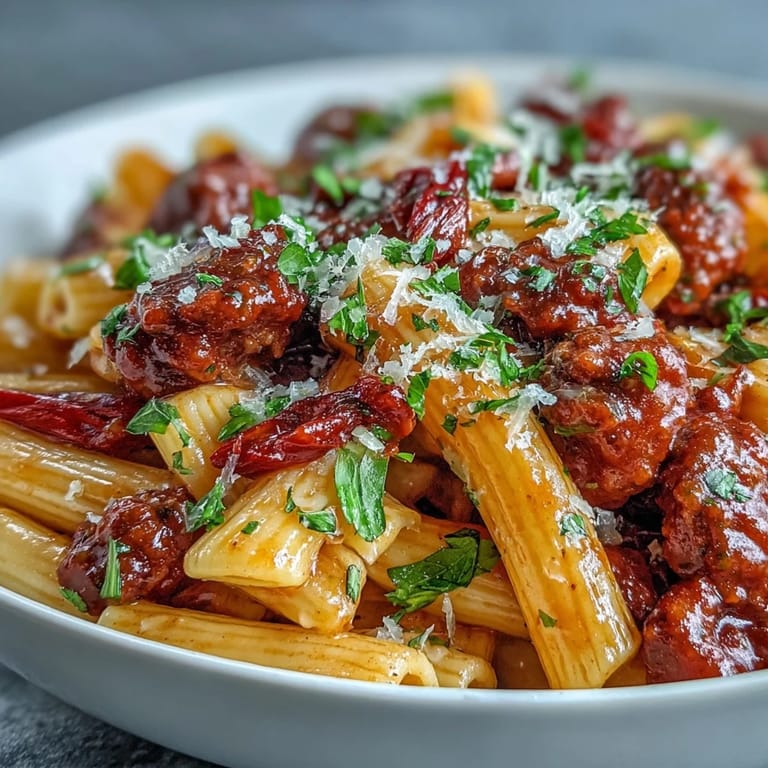
- Taste as you go and adjust salt and pepper to your preference. Divide into bowls, shower with Parmesan, scatter fresh basil or parsley on top, and serve immediately while everything is hot and creamy.
 Pin
Pin I realized this dish stopped being just dinner the moment my sister asked for seconds and then sat quietly with her bowl, working through each bite like it deserved her full attention. That's when you know you've created something that lands deeper than the plate.
The Science Behind the Sauce
The magic of cooking pasta directly in the sauce instead of separately means the starch from the pasta gets released into the liquid, thickening the sauce naturally without cream alone doing all the work. The red wine's acidity cuts through the richness so each bite feels bright rather than heavy, while the soy sauce adds umami—that savory depth that makes people pause and wonder what the secret ingredient is. It's less about complexity and more about balance, which is why something this simple tastes so intentional.
Why This Works as a One-Pot Meal
Most pasta dishes require you to boil water separately, drain, then build a sauce and combine everything—a choreography of pots and timing. This method skips that entirely by using the broth as your cooking liquid, which means you're reducing your cleanup footprint while actually building better flavor because the pasta releases starch directly into the sauce. The only real requirement is a pot deep enough to hold everything without overflow, and honestly, most of us have that sitting in the cabinet already.
Variations and Adaptations
This recipe is forgiving enough to shift based on what's open in your fridge or what your mood calls for on a given evening. I've made it with turkey sausage when I wanted something lighter, and the flavor deepens without losing character because the sauce does the heavy lifting. Fresh spinach stirred in during the last few minutes adds color and a subtle earthiness that feels like you planned it that way, though really you're just using up what needed cooking.
- Swap the heavy cream for half-and-half or even whole milk if you want something less rich without sacrificing the creamy texture.
- Add a handful of fresh spinach or chopped kale in the final 3 minutes for green vegetables that won't overshadow the other flavors.
- A pinch of nutmeg or a small splash of balsamic vinegar at the very end adds complexity if you want to feel like you're experimenting.
 Pin
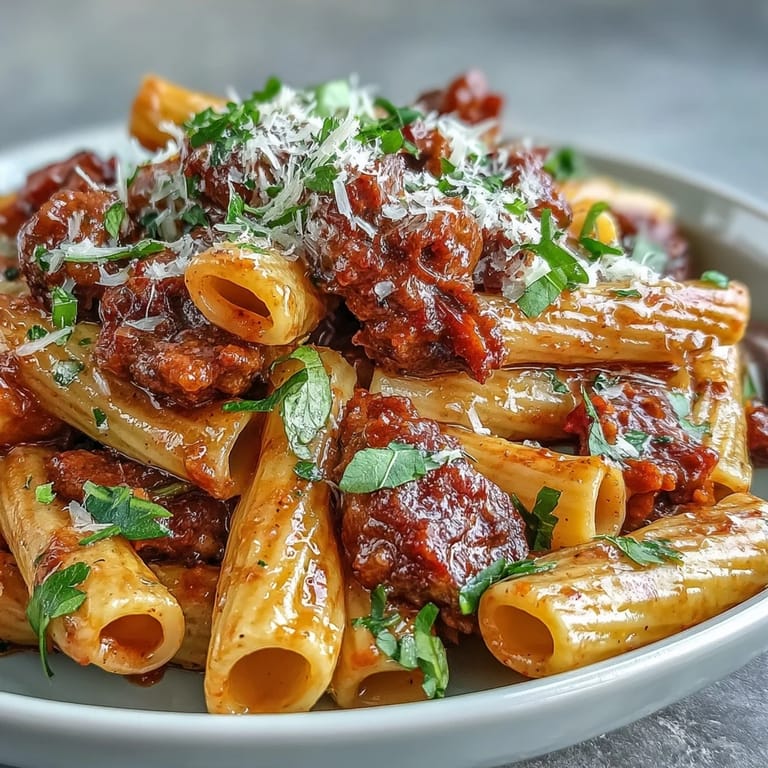
Pin This recipe lives in my rotation because it asks so little and delivers so much—a rare combination in cooking that makes it feel less like following instructions and more like rediscovering something you already knew how to make. Serve it with crusty bread and maybe that same red wine you cooked with, and you've got the kind of meal that feels both effortless and thoughtful.
Recipe Q&A
- → Can I use different pasta shapes?
Yes, while penne and rigatoni work best for holding the creamy sauce, you can substitute other short pasta shapes like ziti, fusilli, or macaroni. Cooking times may vary slightly depending on the pasta size and thickness.
- → What type of red wine works best?
Dry red wines like Chianti, Merlot, or Pinot Noir work beautifully. Avoid sweet wines or very tannic varieties. Use a wine you'd enjoy drinking, as the flavor will concentrate in the sauce.
- → Can I make this dish ahead?
This dish is best enjoyed fresh, as pasta continues to absorb liquid. If making ahead, undercook slightly and add extra broth when reheating. Leftovers store well for 2-3 days in the refrigerator.
- → How can I make it lighter?
Substitute half-and-half or light cream for heavy cream, and use turkey or chicken sausage instead of pork. You can also increase the vegetable ratio with more bell peppers or add spinach.
- → What can I substitute for the soy sauce?
The soy sauce adds umami depth. If avoiding soy, substitute with a splash of Worcestershire sauce, balsamic vinegar, or additional salt to maintain the savory balance.