 Pin
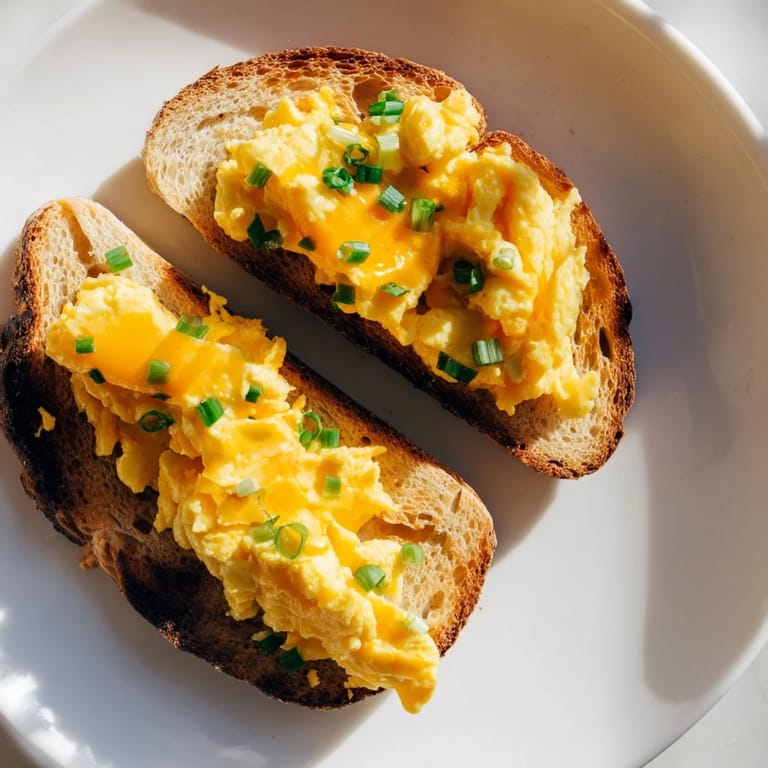
Pin I used to think breakfast sandwiches required multiple pans, patience I didn't have, and a willingness to scrub dried egg off everything. Then one rushed Tuesday, I cracked eggs straight onto toasted bread still sitting in the skillet. The eggs pooled around the bread, set gently, and folded over like they'd been planning it all along. I ate standing at the counter, shocked at how simple it had been.
The first time I made this for my partner, they watched skeptically as I poured eggs around toasted bread like it was some kind of culinary gamble. When I folded the whole thing into a sandwich and slid it onto a plate, they took one bite and asked why we'd ever used a toaster and separate frying pan before. Now it's our Saturday ritual, and we argue good naturedly over who gets the spatula.
Ingredients
- Large eggs: The foundation of this dish, whisked with milk to stay soft and creamy instead of rubbery. Three eggs give you just enough to blanket the bread without overflow.
- Milk: Two tablespoons might seem small, but it loosens the eggs just enough to spread easily and cook gently against the heat.
- Salt and black pepper: Season the eggs before they hit the pan so the flavor runs all the way through, not just on the surface.
- Sturdy sandwich bread: Sourdough or whole wheat holds up under the weight of wet eggs without turning to mush. Thin sliced bread will fall apart.
- Unsalted butter: One tablespoon coats the pan and toasts the bread with a nutty richness that salted butter can sometimes overpower.
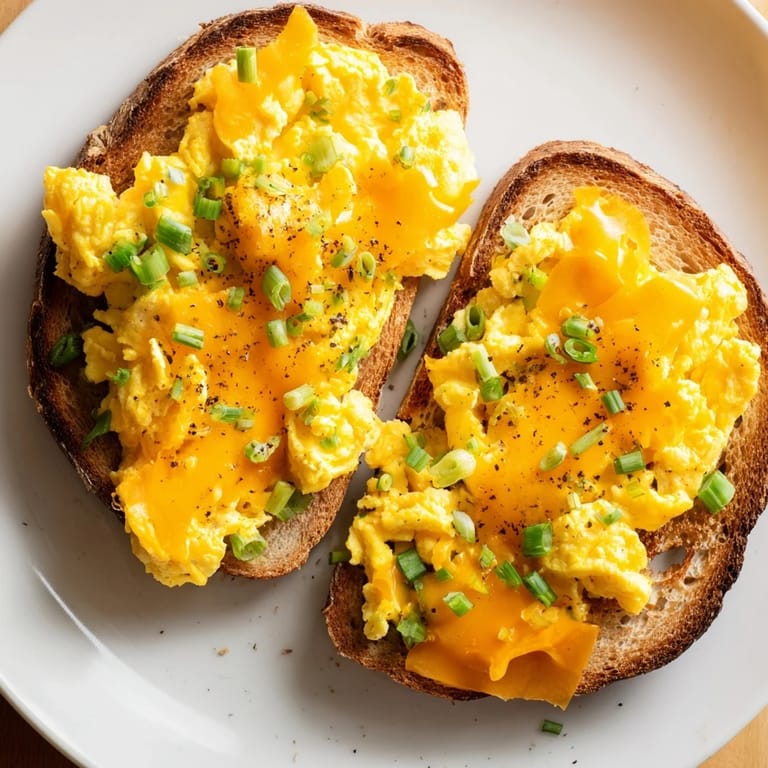
- Cheddar cheese: Two slices melt fast and add sharpness, but you can swap in Swiss, pepper jack, or whatever is already open in your fridge.
- Chopped chives or green onions: Optional, but they add a fresh bite that cuts through the richness right before you take the first bite.
Tired of Takeout? 🥡
Get 10 meals you can make faster than delivery arrives. Seriously.
One email. No spam. Unsubscribe anytime.
Instructions
- Whisk the eggs:
- In a bowl, beat the eggs with milk, salt, and pepper until the yolks and whites blend completely into a pale yellow. This takes about twenty seconds of steady whisking.
- Melt the butter:
- Set a large nonstick skillet over medium heat and add the butter. Swirl it around as it melts so every corner of the pan gets coated.
- Toast the bread:
- Lay both slices side by side in the pan. Let them toast for one to two minutes until the underside turns golden and smells faintly sweet. Flip them over.
- Pour the eggs:
- Immediately pour the whisked eggs over and around the bread slices while they sit in the pan. Wait ten to fifteen seconds for the eggs to begin setting at the edges.
- Push the eggs inward:
- Use a spatula to gently nudge the eggs toward the bread, letting the runny parts flow underneath. This builds soft layers instead of one flat sheet.
- Add the cheese:
- Once the eggs look mostly set but still glossy on top, lay a slice of cheese on each piece of bread. The residual heat will start melting it right away.
- Fold and stack:
- Lift any stray cooked egg with your spatula and fold it onto the bread. Then carefully stack one slice over the other to form a sandwich.
- Finish cooking:
- Press down gently with the spatula and cook for another one to two minutes until the cheese melts completely and the bottom turns golden. Remove from heat, cut in half if you like, and sprinkle with chives or green onions.
 Pin
Pin I remember making this on a cold morning when the power had flickered overnight and the coffee maker refused to work. The sizzle of butter, the smell of toasting bread, and the way the eggs folded around everything warm and easy made the kitchen feel like the only place I wanted to be. My neighbor stopped by, saw me eating it over the sink, and asked for the recipe on the spot.
How to Customize Your Sandwich
Once you have the technique down, this sandwich becomes a template for whatever is in your fridge. I have folded in leftover roasted vegetables, torn pieces of cooked bacon, and even a handful of spinach that was about to go bad. The eggs hold everything together, and the cheese melts over it all like it was planned. You can also swap the cheddar for pepper jack if you want heat, or use cream cheese for something richer and tangier.
What to Serve Alongside
This sandwich is filling enough to eat on its own, but I like pairing it with fresh fruit or a handful of cherry tomatoes when I have time to sit down. A glass of orange juice or a smoothie balances the richness, and if you are feeding a crowd, you can double the recipe and use two pans at once. Hot sauce on the side is non negotiable in my house.
Storage and Reheating
Honestly, this sandwich tastes best when eaten right out of the pan, but I have wrapped leftovers in foil and reheated them in a skillet over low heat with decent results. The eggs lose a little moisture, but the bread crisps back up and the cheese melts again. I do not recommend microwaving it because the texture turns rubbery and the bread goes limp.
- Wrap tightly in foil if storing for later and refrigerate for up to one day.
- Reheat in a dry skillet over low heat, pressing gently with a spatula until warmed through.
- Add a small pat of butter to the pan if the bread seems dry during reheating.
 Pin
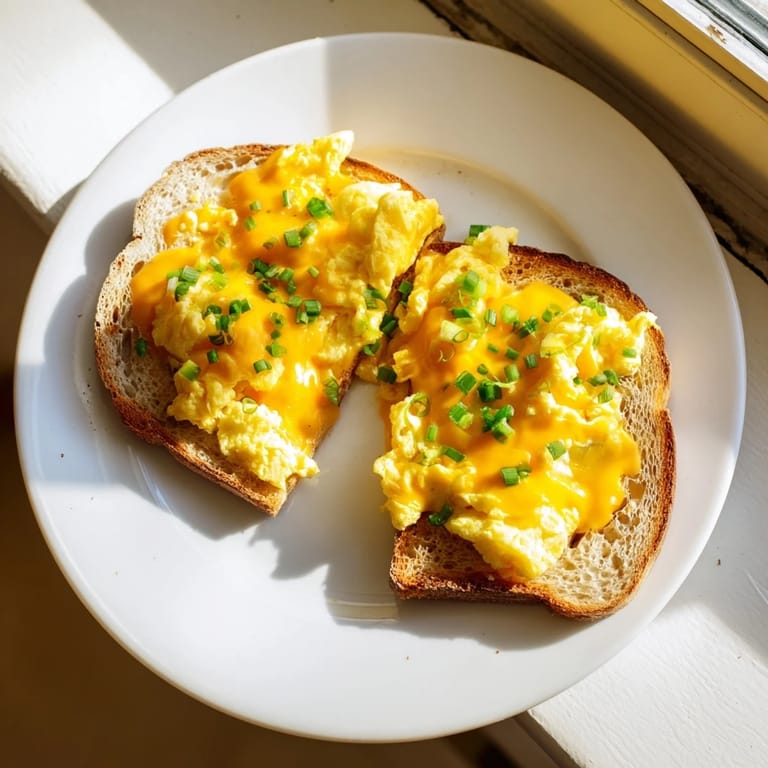
Pin This sandwich taught me that breakfast does not have to be complicated to feel like a win. Some mornings, standing at the stove with a spatula in hand and the smell of butter in the air is all the ceremony you need.
Recipe Q&A
- → Can I use different types of bread?
Yes, sourdough, whole wheat, or any sturdy sandwich bread works well to hold the eggs and fillings.
- → How do I prevent eggs from sticking to the pan?
Using a well-coated nonstick skillet and melting butter before adding bread helps keep eggs from sticking.
- → What cheese pairs best with this dish?
Cheddar is great for melting and flavor, but any cheese with good melting qualities can be used.
- → Can I prepare this sandwich vegetarian?
Yes, as presented, it’s vegetarian-friendly with eggs, cheese, and optional green onions.
- → Are there suggested toppings to enhance flavor?
Chopped chives or green onions are recommended, and additions like hot sauce or sautéed veggies can add variety.