 Pin
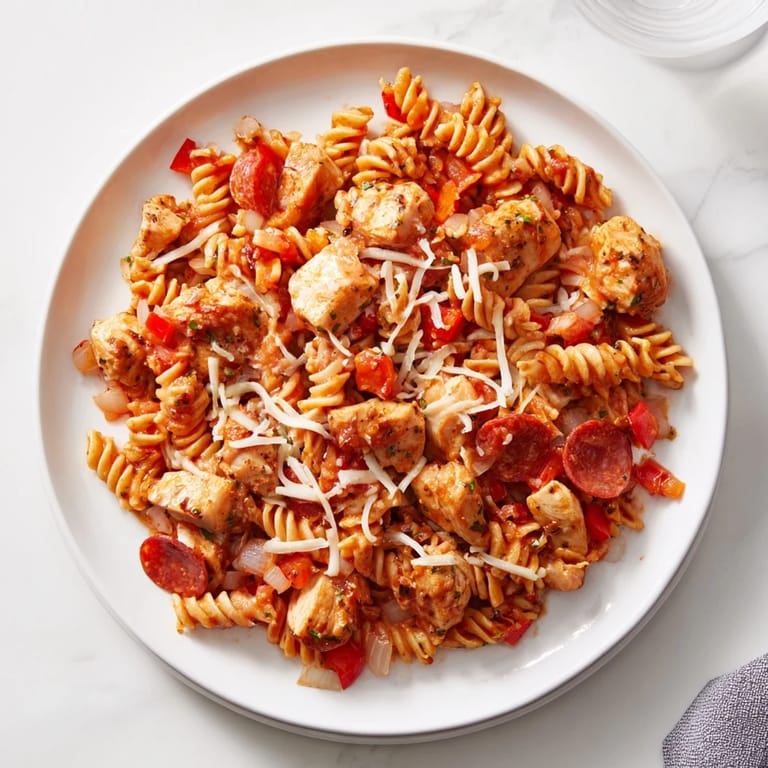
Pin There's something about the way a kitchen smells when pepperoni hits hot oil that makes everything feel a little more special. I discovered this one-pan pizza pasta on a Tuesday night when I had just enough ingredients to avoid ordering takeout, but not quite enough energy for complicated cooking. The first time it all came together in one skillet, the cheese bubbling over the edge, I realized I'd stumbled onto something that tasted like comfort food but only demanded thirty minutes of my attention.
I made this for my roommate on a night when she'd had a rough day at work, and watching her face light up when she tasted it was the kind of small victory that sticks with you. She asked for the recipe before she'd even finished her first bite, which is how I knew it was a keeper.
Ingredients
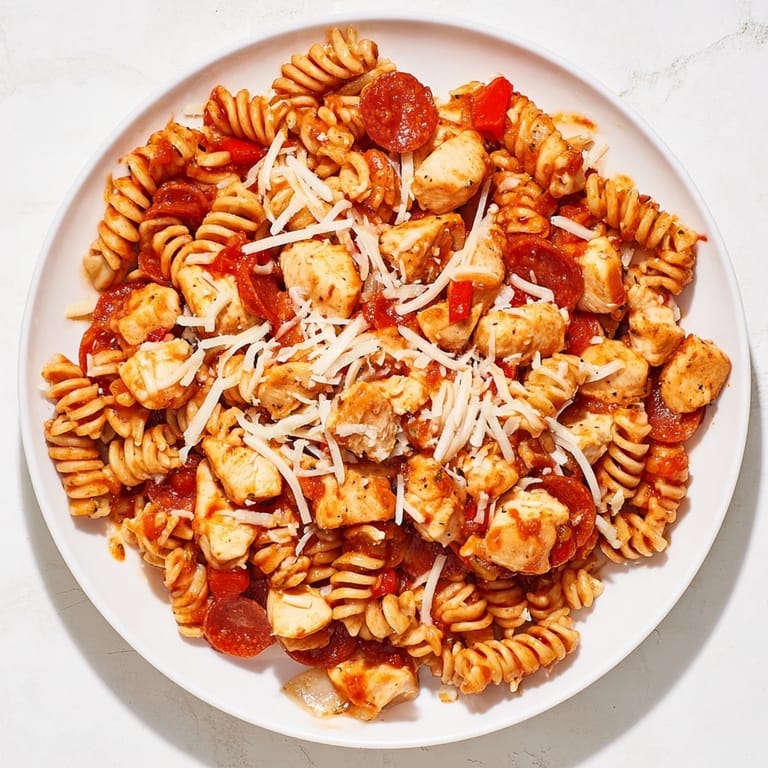
- 1 large boneless, skinless chicken breast (about 250 g), cut into bite-sized pieces: Keeping the pieces roughly the same size means they'll cook evenly and stay tender instead of drying out on the edges.
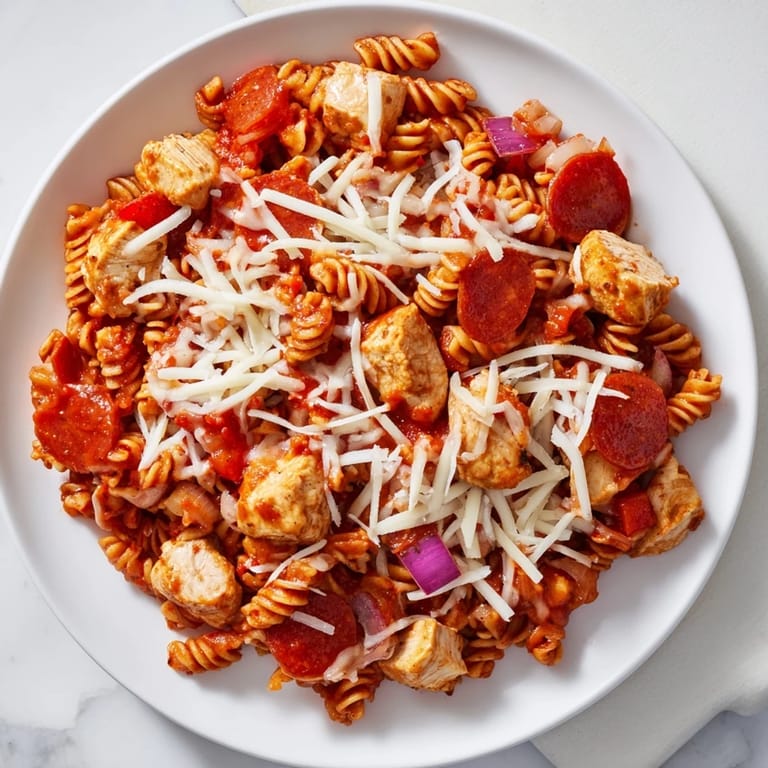
- 80 g pepperoni, sliced or quartered: Don't skimp here—the pepperoni is where all the flavor lives, and those crispy edges are non-negotiable.
- 300 g rotini pasta (uncooked): The spiral shape catches sauce beautifully, though penne works if that's what you have.
- 200 g shredded mozzarella cheese and 40 g Parmesan: Use real cheese if you can; the pre-shredded stuff has anti-caking agents that make the sauce grainy.
- 500 ml marinara or pizza sauce: I use the jarred stuff and no one's ever called me out, so don't overthink this one.
- 1 small onion and 2 cloves garlic, minced: These two are the quiet foundation that makes everything taste intentional rather than rushed.
- 400 ml chicken broth or water: This is what lets the pasta cook through while staying creamy instead of stodgy.
- 1 tablespoon olive oil, 1 teaspoon dried Italian herbs, ½ teaspoon red pepper flakes: The herbs and heat are optional but make the difference between good and the kind of meal people remember.
Tired of Takeout? 🥡
Get 10 meals you can make faster than delivery arrives. Seriously.
One email. No spam. Unsubscribe anytime.
Instructions
- Sear the chicken first:
- Heat the olive oil in a large, deep skillet over medium heat and add the chicken pieces with a pinch of salt and pepper. You want them to brown lightly on the outside—this takes about 3 to 4 minutes and creates little flavor pockets even though they won't be fully cooked yet.
- Build the aromatics:
- Toss in the onion, garlic, and bell pepper if using them, stirring for 2 to 3 minutes until they soften and the kitchen smells unmistakably like something good is happening. This is when you know you're on the right track.
- Welcome the pepperoni:
- Add the pepperoni and let it cook for just a minute, letting those edges crisp up and release their oils into the pan.
- Combine everything:
- Pour in the uncooked pasta, sauce, broth, Italian herbs, and red pepper flakes, stirring well to make sure the pasta isn't clumping together at the bottom. It should look a little wet—the pasta will drink up most of that liquid as it cooks.
- Low and slow simmer:
- Bring it to a gentle boil, then drop the heat to low, cover it, and let it bubble quietly for 12 to 14 minutes, stirring once or twice so nothing sticks. The pasta should be tender and the liquid mostly absorbed when you're done.
- Melt in the cheese:
- Stir in half the mozzarella and all the Parmesan, then top with the remaining mozzarella, cover, and cook for another 2 to 3 minutes until everything is melted and bubbly.
- Rest and serve:
- Take it off the heat and let it sit for 2 minutes—this helps the cheese set up and makes plating easier. A sprinkle of fresh herbs on top feels fancy for something this simple.
 Pin
Pin One morning I made this for meal prep and realized halfway through portioning it into containers that I'd created something that tastes even better the next day when the flavors have had time to settle into each other. It became my quiet win on busy weeks when I needed something that looked and felt homemade without dominating my schedule.
Why This Works as a One-Pan Meal
The magic of cooking pasta directly in the sauce and broth instead of separately is that every strand gets soaked in flavor from the beginning. You're not diluting anything or dealing with overcooked pasta that's been sitting in water. The starches release into the liquid, creating this silky, savory base that holds everything together and tastes like you cared more than you actually did.
Customizing Without Losing the Plot
I've tried this with different pepperoni—spicy varieties kick things up nicely if you like heat, and I've swapped mushrooms for the bell pepper when I didn't have fresh vegetables on hand. The structure is forgiving enough that you can play around without it falling apart, which is exactly what home cooking should feel like.
Serving and Pairing
A simple green salad on the side cuts through the richness, and if you're feeling it, a light red wine like Chianti pulls the whole meal together without pretending to be something it's not. This is the kind of dish that doesn't need much accompaniment—it's complete and confident on its own.
- Serve it straight from the skillet if you're eating casually, or transfer to a serving bowl for a cleaner presentation.
- Leftovers reheat beautifully in a covered pan over low heat with a splash of water to loosen them up.
- Fresh basil or oregano on top right before serving adds brightness without changing the core of what makes this special.
 Pin
Pin This is the kind of recipe that earns its place in your rotation not because it's fancy, but because it delivers exactly what you need when you need it. Thirty minutes, one pan, and suddenly dinner feels intentional.
Recipe Q&A
- → Can I use a different pasta type?
Yes, penne or fusilli can be substituted if rotini is unavailable.
- → How can I make it spicier?
Use spicy pepperoni and add extra crushed red pepper flakes for more heat.
- → What can replace bell pepper in this dish?
Mushrooms or olives are great alternatives that add different textures and flavors.
- → Is it possible to prepare this without chicken?
Omitting chicken will lighten the dish; consider adding extra pepperoni or vegetables to maintain heartiness.
- → How should leftovers be stored?
Store in an airtight container in the refrigerator for up to 3 days; reheat gently to preserve texture.