 Pin
Pin My grandmother kept a worn index card tucked behind her stove with just three words scrawled in fading blue ink: Hoppin John luck. She'd make it every January first without fail, the kitchen filling with the smell of bacon fat and simmering peas while the rest of the neighborhood was still asleep. I didn't understand the superstition as a kid, but I understood the comfort of watching her stir that pot with the same wooden spoon she'd used for decades, the one with a slight scorch mark that proved its loyalty.
I made this for my partner's family on New Year's Day during our first year together, nervous about impressing people I barely knew. Someone's aunt asked for seconds before I'd even finished plating the first round, and my hands stopped shaking after that. Food has a way of doing that—turning strangers into people who suddenly feel like family.
Ingredients
- Thick-cut bacon (6 oz / 170 g): The smokiness becomes the backbone of this whole dish, so don't skimp or use thin strips that disappear into the peas.
- Onion (1 medium): This should be finely chopped so it nearly dissolves into the broth, thickening it naturally.
- Celery (2 stalks): A classic aromatic that adds earthiness without announcing itself loudly.
- Garlic (2 cloves): Minced fresh is non-negotiable here—jarred garlic won't give you that fragrant moment when it hits the hot fat.
- Green bell pepper (1, optional): It brightens the dish if you want it, but the peas are stunning without it too.
- Dried black-eyed peas (1 ½ cups / 300 g): Overnight soaking matters more than you'd think—it helps them cook evenly and reduces that slightly bitter edge.
- Chicken or vegetable broth (4 cups / 1 liter): Low-sodium lets you control the salt level as you taste along the way.
- Bay leaf (1): This quiet worker adds depth that most people can't quite identify but definitely taste.
- Dried thyme (½ teaspoon): Southern cooking relies on thyme's gentle herbal notes to make everything feel settled and right.
- Cayenne pepper (¼ teaspoon, optional): A whisper of heat that makes you reach for another spoonful without knowing why.
- Salt and black pepper: Taste as you go—the broth and bacon already bring saltiness, so go gentle at first.
- Long-grain white rice (2 cups / 360 g): The fluffy bed under the peas, best when each grain stays separate and tender.
- Water for rice (4 cups / 950 ml): This ratio matters for the texture you're after.
- Butter or oil (1 tablespoon): A little fat makes the rice taste richer and prevents sticking.
- Scallions (2, thinly sliced): The green brightness that reminds you this dish celebrates new beginnings.
- Hot sauce (optional): For people who want to add their own heat signature to the plate.
Tired of Takeout? 🥡
Get 10 meals you can make faster than delivery arrives. Seriously.
One email. No spam. Unsubscribe anytime.
Instructions
- Render the bacon until it's golden and crackling:
- Cut your bacon into small pieces and let them cook over medium heat in your largest pot, stirring occasionally so they brown evenly instead of clumping together. This takes about six to eight minutes, and you'll know it's done when most pieces look almost caramelized and the fat has turned clear and fragrant.
- Set aside half for garnish, then build your flavor base:
- Use a slotted spoon to fish out about half the crispy bacon and set it on a paper towel. Leave the rest and all those precious drippings in the pot—this bacon-flavored fat is liquid gold for what comes next.
- Add your vegetables and let them get tender:
- Toss in your chopped onion, celery, and pepper if using, stirring them around in that hot bacon fat for about five minutes until they soften and start to stick slightly to the bottom of the pot. The edges of the onion should turn a little golden.
- Bloom the garlic for one minute:
- Add your minced garlic and stir constantly—garlic burns fast and turns bitter, so keep an eye on it and pull everything off the heat the second you smell that sweet, peppery aroma.
- Add the peas and broth, then let it simmer gently:
- Pour in your drained soaked peas, the broth, bay leaf, thyme, and cayenne. Bring everything to a boil, then turn the heat down to medium-low and let it bubble gently without a lid for thirty-five to forty-five minutes if you used dried peas (only twenty to twenty-five if you're using canned). The peas should be tender enough to break between your tongue and the roof of your mouth, not chalky but not falling apart either.
- Season carefully at the end:
- Taste the broth before adding salt—the bacon and broth already brought plenty. Add pepper and salt slowly, tasting between additions. Remove the bay leaf once you're happy with the flavor.
- Cook your rice while the peas finish:
- In a separate saucepan, combine rice, water, butter, and a pinch of salt. Bring to a boil, then immediately turn the heat to low, cover the pot, and let it cook undisturbed for exactly fifteen minutes. Don't peek—the steam is doing important work.
- Let the rice rest to finish cooking:
- Remove from heat and keep it covered for five minutes, which lets all those grains absorb the last bit of moisture and become fluffy instead of dense. Then fluff it gently with a fork, turning it over so the butter distributes.
- Plate and garnish with intention:
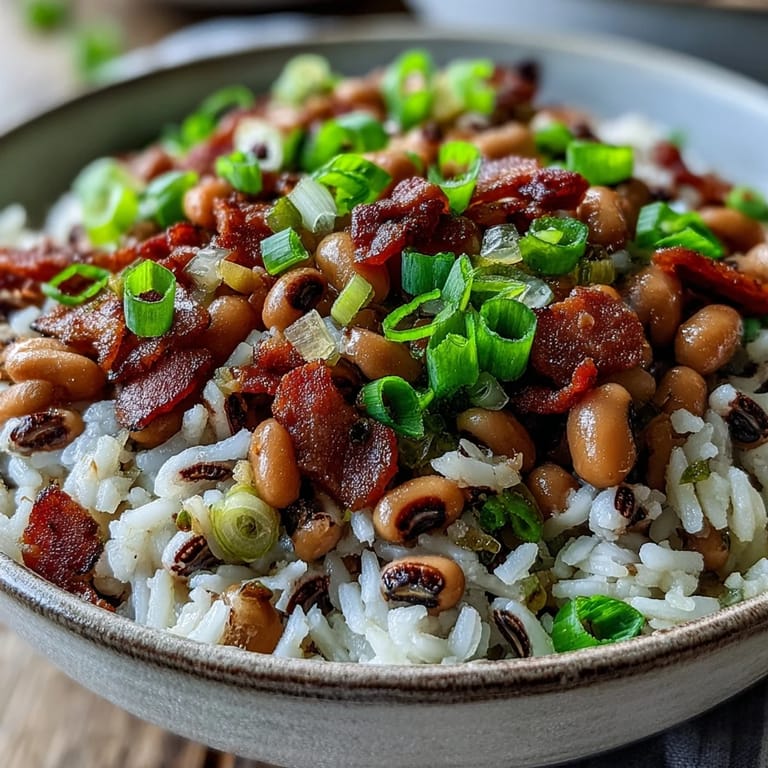
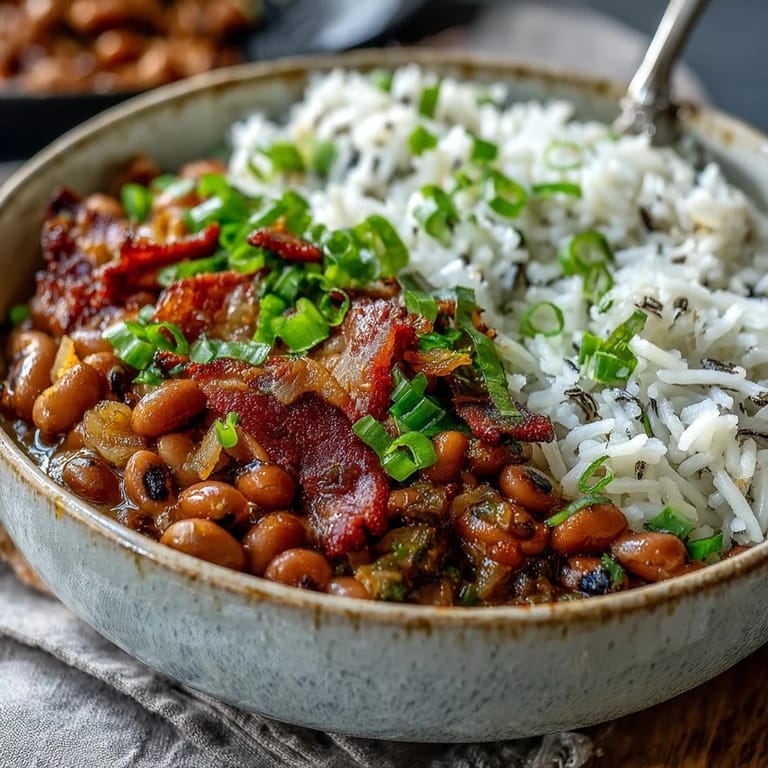
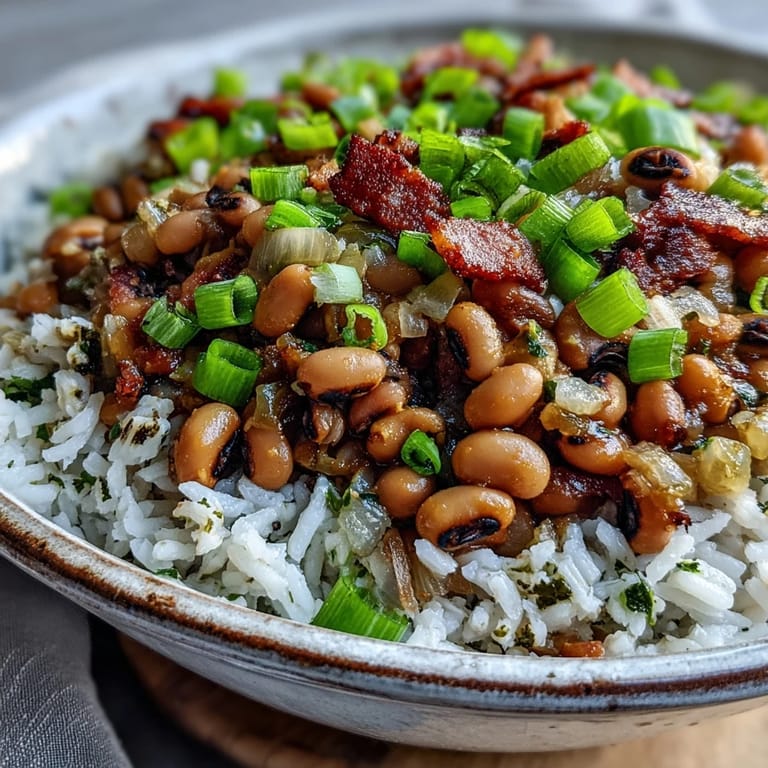
- Spoon a generous amount of rice onto each plate, then ladle the black-eyed peas and their broth over the top. Scatter the reserved crispy bacon and fresh scallions over everything, and offer hot sauce on the side for people who want to bring their own fire to the party.
 Pin
Pin There's a moment in January when everything feels heavy with intention, like every decision matters more than usual. My grandmother understood that, which is why she insisted this dish on New Year's Day wasn't just dinner—it was a quiet way of saying, I hope this year brings you something good.
The Southern Tradition Behind the Bowl
Hoppin John carries the weight of history and hope in every spoonful. The name itself has uncertain origins—some say it comes from the way children would hop around waiting for the dish to be served, others claim it's a corruption of French words lost to time. What matters is that somewhere along the way, this simple combination of legumes, pork, and rice became a ritual, a way for people to say to each other and themselves, we're going to be okay. The black-eyed peas symbolize coins, the rice represents abundance, and the collard greens (if you add them) look like folded dollar bills. It's folk magic disguised as dinner.
Why This Dish Feels Right Every Single Time
There's something about the combination of textures and temperatures—the tender peas soaking in rich broth, the fluffy rice underneath, the crispy bits of bacon scattered on top—that makes every bite feel complete. You get creaminess, heat, smoke, brightness, and comfort all in one bowl, which is rare. Most dishes are good at one thing; this one is good at everything.
Making It Your Own Without Breaking the Magic
Hoppin John is forgiving enough that you can bend it to fit your life without losing what makes it special. Add collard greens to the simmering broth in the last ten minutes for color and nutrition, or fold in some diced tomatoes. If you're vegetarian, leave out the bacon and stir in a teaspoon of smoked paprika to get that savory, smoky depth another way. Some people add a splash of apple cider vinegar at the end for brightness, others include a little hot sauce right in the pot instead of on the side. The bones of the dish stay the same—the ritual stays the same—but the details become yours.
- Collard greens added at the end will brighten both the flavor and the appearance of your finished dish.
- If you can't find black-eyed peas, purple hulls or crowder peas work beautifully and cook at similar times.
- Leftover Hoppin John reheats better than you'd expect and tastes even better the next day once the flavors have settled.
 Pin
Pin This is the kind of recipe that gets better every time you make it because you'll remember a little something different each iteration—a shortcut that worked, a variation someone requested, a moment that mattered. That's how traditions actually survive and thrive.
Recipe Q&A
- → Why is Hoppin John traditionally eaten on New Year's Day?
Black-eyed peas symbolize coins and prosperity, while the dish represents good fortune for the coming year. This Southern tradition has been passed down through generations as a way to ensure luck and abundance.
- → Can I make Hoppin John vegetarian?
Absolutely. Simply omit the bacon and add smoked paprika or liquid smoke to maintain that savory depth. Vegetable broth works perfectly in place of chicken broth for a completely plant-based version.
- → Do I need to soak dried black-eyed peas overnight?
Overnight soaking ensures even cooking and better texture. If you're short on time, use the quick-soak method (boil for 2 minutes, then soak for 1 hour) or substitute with canned peas, reducing the simmering time accordingly.
- → What should I serve with Hoppin John?
Cornbread and sautéed collard greens make the perfect accompaniment for an authentic Southern meal. The sweetness of cornbread balances the savory peas beautifully.
- → How long will leftovers keep in the refrigerator?
Stored in an airtight container, leftovers will stay fresh for 4-5 days. The flavors actually deepen over time, making it an excellent make-ahead dish for meal prep.
- → Can I freeze Hoppin John?
Yes, freeze the pea mixture separately from the rice for up to 3 months. Thaw overnight in the refrigerator and reheat gently, adding a splash of broth if needed. Cook fresh rice when serving.