 Pin
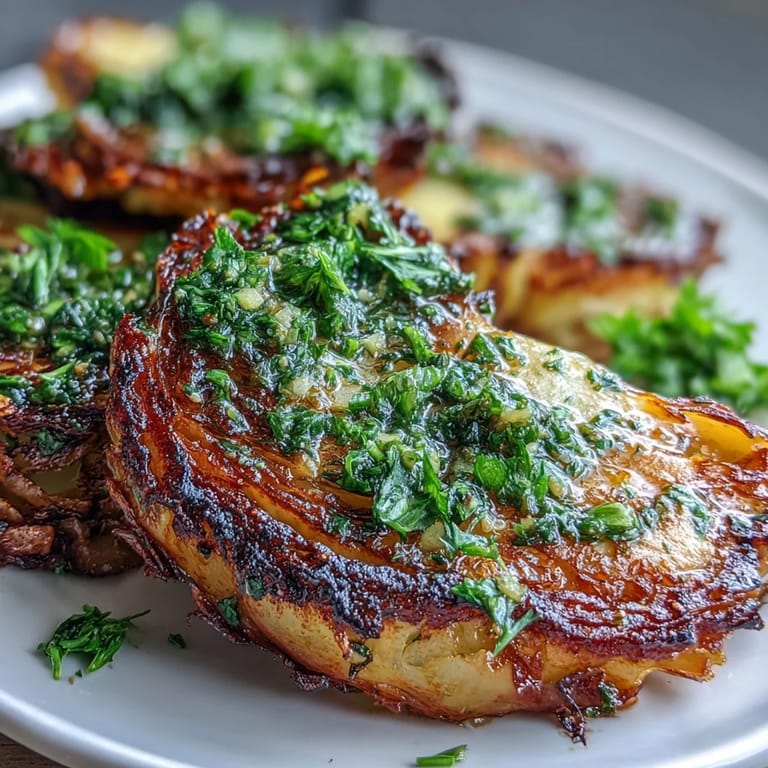
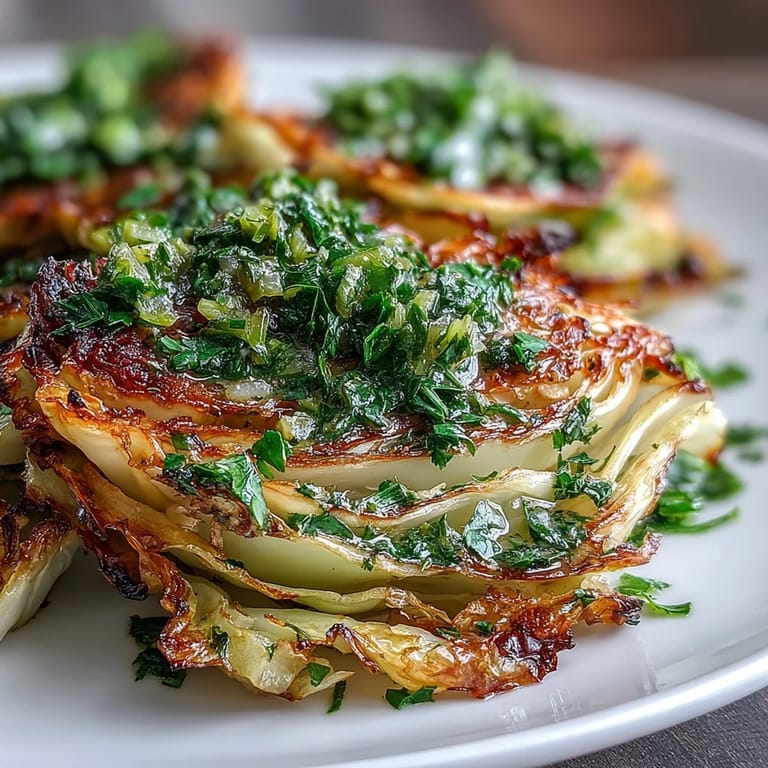
Pin There's something almost meditative about slicing a head of cabbage into thick, substantial steaks—it feels less like chopping vegetables and more like sculpting something with intention. The first time I roasted cabbage this way, I was skeptical, honestly; I'd grown up eating it boiled into submission, pale and sulfurous. But watching the edges turn caramelized and crispy in the oven, catching the sweet, almost nutty smell wafting through the kitchen, something clicked. That golden exterior paired with the bright, spicy punch of jalapeño chimichurri changed how I think about this humble vegetable entirely.
I made this for my roommate on a Tuesday night when she came home exhausted and announced she was cutting out red meat. I had about forty minutes and half a cabbage sitting in the crisper drawer, so I decided to experiment. Watching her face light up when she took that first bite—the way the roasted sweetness of the cabbage met the herbaceous punch of the chimichurri—reminded me that some of the best meals happen when you're not overthinking it, just working with what you've got and a little bit of heat.
Ingredients
- Large green cabbage: Choose one that feels dense and heavy for its size; this gives you substantial steaks that hold up beautifully to roasting without falling apart.
- Olive oil: Use a good quality extra-virgin for the chimichurri—it's where the real flavor lives—and a standard one for brushing the cabbage is perfectly fine.
- Sea salt and black pepper: Don't skip the fresh grinding for the pepper; it makes a noticeable difference in how the spices taste on the finished dish.
- Fresh flat-leaf parsley: Finely chop it by hand if you can; the knife releases more oils and keeps the herbs looking bright rather than bruised.
- Fresh cilantro: If you're in the camp that thinks it tastes like soap, you can swap it with more parsley or even some fresh mint for a different but equally delicious angle.
- Jalapeños: The seeds hold most of the heat; leave them in if you like real fire, remove them for something gentler and more about the bright, herbaceous flavor.
- Garlic cloves: Mince them small enough that they distribute evenly through the chimichurri and won't leave you with unexpected sharp bites.
- Red wine vinegar: This adds the backbone of acidity that keeps everything balanced and prevents the chimichurri from tasting one-note.
- Dried oregano: A small amount goes a long way here; it adds an earthy note that ties the whole sauce together.
- Red pepper flakes: Completely optional, but they give you another layer of heat if jalapeños alone aren't doing it for you.
Tired of Takeout? 🥡
Get 10 meals you can make faster than delivery arrives. Seriously.
One email. No spam. Unsubscribe anytime.
Instructions
- Get your oven ready and prep your workspace:
- Preheat to 425°F and line your baking sheet with parchment paper so cleanup is effortless later. There's nothing worse than starting to cook and realizing you're not set up to succeed.
- Transform your cabbage into steaks:
- Remove any yellowed or damaged outer leaves, then lay the cabbage on its side and slice straight down into rounds about 1 inch thick. You should get roughly four sturdy steaks that look almost like thick slices of bread.
- Season and oil your steaks:
- Arrange them on the sheet, brush both sides generously with olive oil, then sprinkle with salt and pepper. Don't be shy with the seasoning; cabbage can take it.
- Let them caramelize:
- Roast for 30 to 35 minutes, flipping halfway through so both sides get that gorgeous golden-brown, crispy exterior. You'll know they're done when the edges look a little charred and you can smell that sweet, nutty cabbage perfume filling your kitchen.
- Build your chimichurri while the cabbage roasts:
- In a small bowl, combine the chopped parsley, cilantro, jalapeños, and minced garlic, then pour in your extra-virgin olive oil and red wine vinegar. Add the oregano, red pepper flakes if using them, salt, and black pepper, then stir everything together and let it sit for at least 10 minutes—this resting time lets the flavors get to know each other.
- Bring it all together:
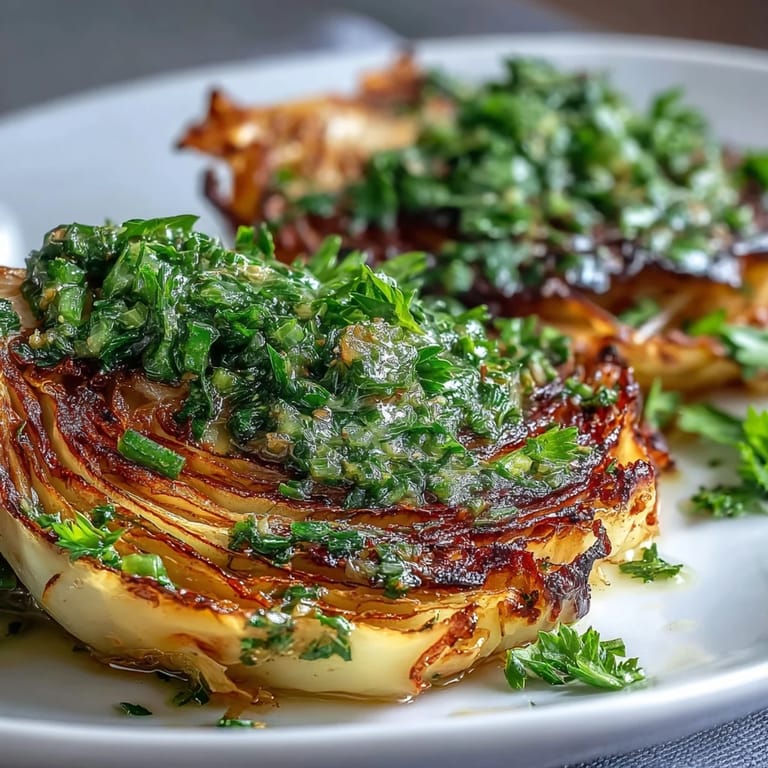
- Transfer each roasted cabbage steak to a plate, then spoon a generous amount of that vibrant green chimichurri right over the top. Serve immediately while the cabbage is still warm and the contrast is perfect.
 Pin
Pin There's a moment, right when you pull those steaks out of the oven, where the kitchen smells so good that everyone nearby comes wandering in asking what's cooking. It happened to me again last week—my partner couldn't believe it was just cabbage—and that's when I realized this dish has become something more than just a meal. It's become a conversation starter, a way to surprise people with how good something simple can taste.
On Choosing the Right Cabbage
A good head of cabbage should feel solid and dense when you pick it up, with no soft spots or dark patches. If it's been sitting in your fridge for a while, that's actually okay; older cabbage tends to be sweeter because the starches convert to sugars. I once used a cabbage I'd been meaning to cook for over a week, and it turned out to be one of the best batches I've made—those crispy edges were impossibly caramelized, and the flavor was deep and complex.
The Chimichurri Philosophy
Chimichurri is one of those sauces that invites personalization without ever losing its identity. Some people are precious about it, insisting on exact proportions; I find the best versions come from adjusting based on what's in your garden or what's looking vibrant at the market. Fresh herbs are crucial—dried parsley will not give you the same brightness—but whether you emphasize cilantro or mint, use one jalapeño or three, add a splash of lemon or stick with vinegar, those choices are yours to make.
Serving and Storage Wisdom
This dish is excellent served hot right from the oven, but it's equally wonderful at room temperature if you're planning ahead. I've found that leftover cabbage steaks taste even better the next day, when the flavors have had time to deepen and settle. The chimichurri keeps for up to three days in a sealed container in the refrigerator, making this a great make-ahead situation for busy weeks.
- Add a squeeze of fresh lemon just before serving if you want to brighten up the flavors even more.
- This works beautifully as a main course with grains, or as a side alongside grilled proteins if that's more your style.
- If you end up with extra chimichurri, it's fantastic on almost anything—eggs, grains, roasted vegetables, even simple bread.
 Pin
Pin This recipe has taught me that the most memorable meals often come from taking ordinary ingredients seriously and giving them the time and attention they deserve. There's real magic in watching someone taste something they thought they wouldn't enjoy and find themselves reaching for seconds.
Recipe Q&A
- → How do I prevent the cabbage steaks from falling apart?
Cut the cabbage into 1-inch thick rounds through the core, which helps hold the layers together. Keep the core intact when slicing to maintain the steak structure during roasting.
- → Can I make the chimichurri ahead of time?
Yes, the chimichurri actually improves when made ahead. Prepare it up to 3 days in advance and store in an airtight container in the refrigerator. The flavors will continue to develop and meld.
- → What can I serve with cabbage steaks?
These work beautifully over quinoa, rice, or couscous as a main dish. As a side, they pair wonderfully with grilled proteins, roasted chicken, or other plant-based mains like lentil patties.
- → How do I adjust the spice level?
For milder heat, use only one jalapeño and remove all seeds and membranes. For extra kick, leave some seeds in or add the optional red pepper flakes. You can also substitute half the jalapeños with mild green peppers.
- → Can I use a different type of cabbage?
Yes, red cabbage or savoy cabbage work well too. Red cabbage will take slightly longer to roast and has a sweeter flavor, while savoy cabbage has a more delicate texture and cooks a bit faster.
- → What if I don't have red wine vinegar?
Apple cider vinegar or white wine vinegar make excellent substitutes in the chimichurri. Fresh lemon or lime juice also works, though it will give a slightly different but equally delicious flavor profile.