 Pin
Pin There's something wonderfully practical about a salad that travels well, and this one emerged from a Tuesday afternoon when I was tired of soggy desk lunches. I'd grabbed a deli container on impulse, thrown in some chicken and vegetables with a quick sauce, given it a shake, and suddenly lunch tasted like something I actually wanted to eat. Now it's become my go-to formula whenever I need food that's both nourishing and genuinely satisfying.
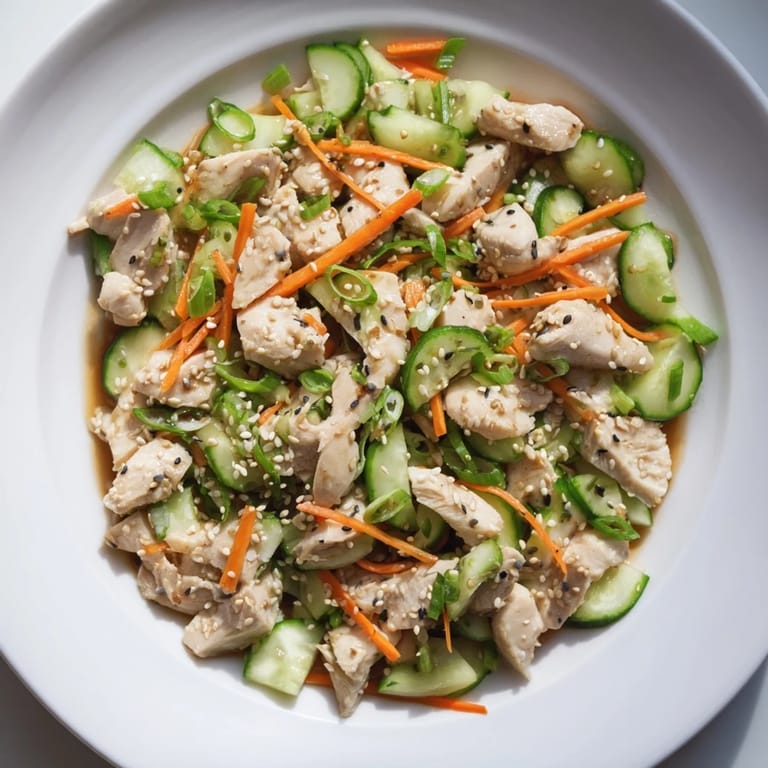
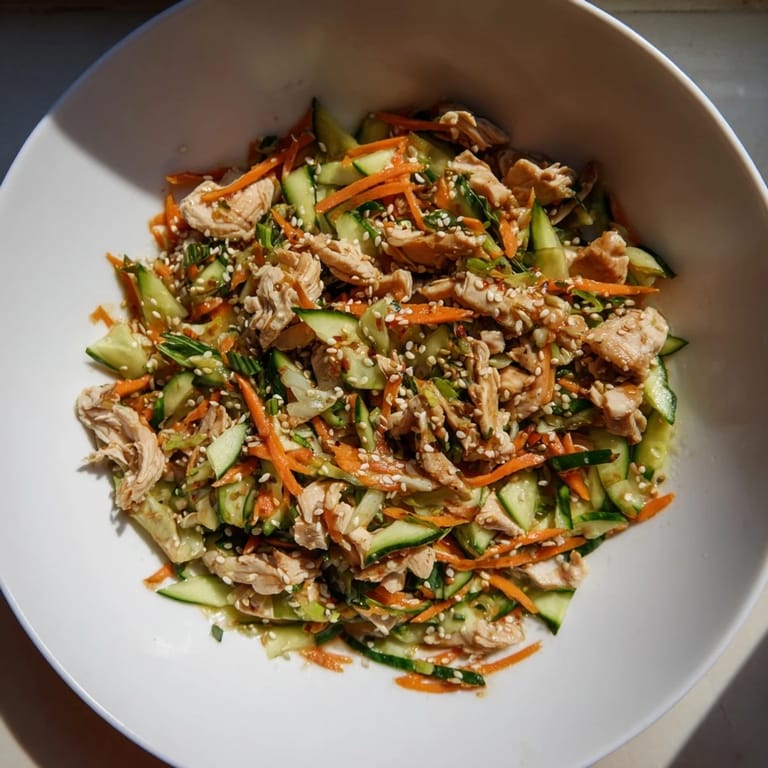
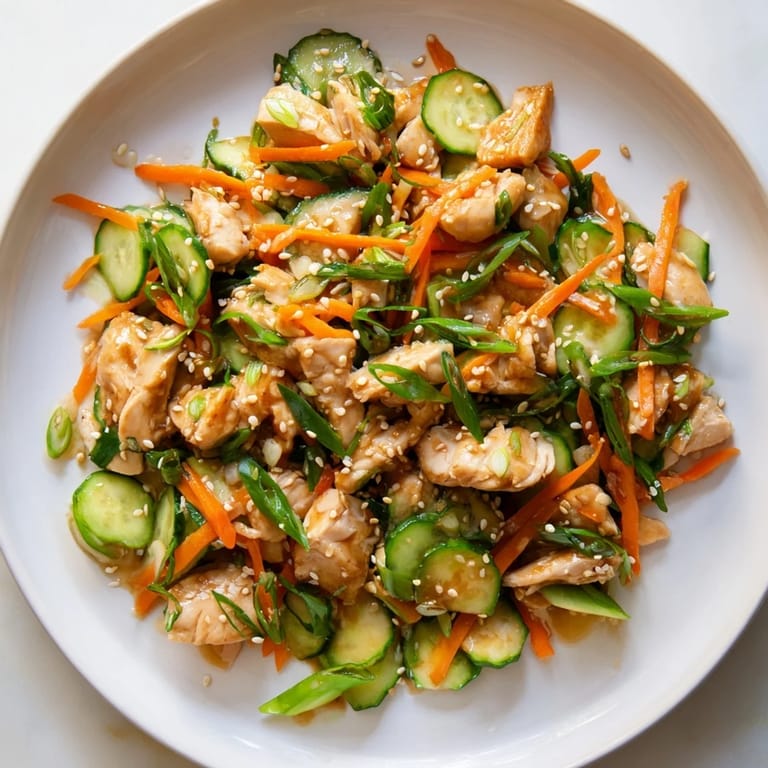
I remember making this for a friend who'd just started a new job and was dreading the vending machine circuit. I packed it in a clear container so she could see all the colors—the deep tan of the chicken, the pale green of cucumber, the coral sesame seeds—and when she texted later saying she'd actually looked forward to lunch, I knew this recipe had staying power.
Ingredients
- Cooked chicken breast, 2 cups diced or shredded: The foundation here is tenderness, so if you have time, poach it gently in broth instead of using a tough piece. Rotisserie chicken is a legitimate shortcut that actually works.
- Large cucumber, thinly sliced: This stays crisp because it's not tossed until the moment you shake—the whole point of the method.
- Scallions, 2 thinly sliced: They bring a sharp green note that cuts through the richness of the sesame oil perfectly.
- Small carrot, julienned (optional): Adds sweetness and color, but honestly it's optional if you're rushed.
- Toasted sesame seeds, 2 tablespoons: Toast them yourself if you can; the difference in flavor is real.
- Soy sauce, 3 tablespoons (low sodium preferred): The backbone of the dressing—low sodium lets you actually taste everything else.
- Rice vinegar, 1 tablespoon: Brightens the whole thing without being sharp like distilled vinegar would be.
- Toasted sesame oil, 1 tablespoon: This is not cooking oil; it's a finishing player. Buy the good stuff in a small bottle and use it intentionally.
- Honey or maple syrup, 1 teaspoon: A whisper of sweetness that balances the salty-savory profile.
- Fresh ginger, 1 teaspoon grated: Adds warmth and a subtle bite that keeps the salad from tasting flat.
- Garlic clove, 1 small minced: Raw and sharp, it becomes mellow as it sits in the dressing.
- Chili flakes, 1/2 teaspoon (optional): For when you want the salad to wake you up a little.
- Lime juice, from 1/2 lime: Fresh lime is non-negotiable here; bottled just doesn't have the same clarity.
Tired of Takeout? 🥡
Get 10 meals you can make faster than delivery arrives. Seriously.
One email. No spam. Unsubscribe anytime.
Instructions
- Make the dressing first:
- Whisk soy sauce, rice vinegar, sesame oil, honey, ginger, garlic, chili flakes if you're using them, and lime juice together in a small bowl or jar. Taste it before you go further—this is where you fix things if it needs more salt or more acid. The dressing should taste bold enough to carry the chicken and vegetables.
- Layer everything into your container:
- Start with the chicken on the bottom, then add cucumber, scallions, carrot if you're using it, and finish with sesame seeds on top. Don't mix yet; the layering means each shake distributes things evenly.
- Pour in the dressing:
- Pour everything over the layers and seal the container tight. Make sure the lid is secure or you'll learn this lesson the hard way.
- Shake with intention:
- Hold the container with both hands and shake vigorously for about thirty seconds. You want everything coated but not mushed. Listen for the sound—it changes as the dressing coats everything.
- Eat now or store:
- You can eat it immediately while the cucumber is still crisp, or refrigerate it for up to twenty-four hours. Shake again before eating if it's been sitting, since the dressing settles.
 Pin
Pin This salad became my argument against the idea that healthy eating has to be joyless. The day my colleague admitted she'd been eating this three times a week and actually felt better, I realized that constraints—a container, a shake, the same few ingredients—don't limit creativity; they focus it.
Why This Works as Meal Prep
The dressing keeps everything tasting fresh instead of turning soggy because the vegetables aren't sitting in liquid—they're coated by it, held in suspension by the shake. If you prep this on Sunday for the whole week, each shake reactivates the flavors, making Wednesday's lunch taste just as good as Monday's. The container itself becomes the tool that prevents the usual sad-desk-salad problem.
Building Variations Without Losing the Thread
Once you understand the formula—protein, vegetables that keep their texture, a bold dressing—you can bend it. Bell peppers add sweetness and a different kind of crunch; shredded cabbage becomes almost tender as it sits in the dressing; snap peas stay crisp. The core stays the same, but the salad changes with what you have or what you want that day.
The Container Makes It
I know this sounds small, but the right container is half the battle. A deli container with a secure lid isn't just convenient—it's the difference between a salad and a traveling salad, between something you'll actually make again and something that feels like a one-time idea. The shake is the method that matters.
- Use a container with a lid that seals tight enough that you feel resistance when you open it later.
- If you don't have a proper deli container, a wide-mouth mason jar works if you're careful about the shake.
- Glass is better than plastic if you care about flavors lingering, but plastic is practical for actual lunch transport.
 Pin
Pin This is the salad I make when I want to prove to myself that eating well doesn't have to be complicated, just intentional. It's become the template I return to, the formula that actually works.
Recipe Q&A
- → How do I make the soy-sesame dressing?
Whisk together soy sauce, rice vinegar, toasted sesame oil, honey, grated ginger, minced garlic, chili flakes (optional), and lime juice until well combined.
- → Can I prepare this salad ahead of time?
Yes, assemble and shake the salad in a sealed container, then refrigerate for up to 24 hours. Shake again before serving to redistribute the dressing.
- → What are good substitutions for chicken?
Try cubed tofu for a vegetarian option or use rotisserie chicken for quicker preparation.
- → How can I add more crunch to the salad?
Include thinly sliced bell peppers or shredded cabbage to increase texture and crunch.
- → Is this dish suitable for a gluten-free diet?
Yes, if gluten-free soy sauce such as tamari is used, the dish can be gluten-free. Always verify ingredient labels to be sure.