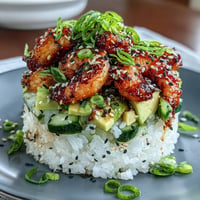
 Pin
Pin There's something about the way TikTok can turn a simple bowl into dinner table gold. I found myself scrolling one evening and stumbled on Emily Mariko's salmon rice bowl—crispy seaweed, flaky fish, creamy avocado all coming together in what looked like the easiest, most satisfying meal. Two minutes in the microwave later, I understood the hype. It's the kind of dish that feels fancy but actually lets you breathe in the kitchen.
I made this for a friend who was exhausted from work, and watching them light up when they tasted it reminded me why food matters. There's something about warm salmon and cool avocado that just clicks, and the way the soy sauce soaks into the rice? That's where the real magic happens.
Ingredients
- Cooked salmon fillet (6 oz): This is your protein anchor—flake it gently so you get those tender, uneven pieces that actually taste like something rather than mush.
- Short-grain rice, cooked and chilled (2 cups): Day-old rice is your secret weapon because it has texture and doesn't turn to glue under heat.
- Soy sauce (2 tablespoons): Split it between the rice before microwaving and the final drizzle so the salt builds in layers.
- Japanese mayonnaise (1 tablespoon): Kewpie is creamier and tangier than regular mayo—it actually makes a difference here.
- Sriracha (1 tablespoon): Use less if heat isn't your thing, or swap it for chili crisp if you want more texture without the fire.
- Ripe avocado, sliced: Wait to slice it until the last second so it doesn't brown and turn sad-looking.
- Green onion, thinly sliced: Those thin ribbons add bite and brightness—don't skip them even if you think onions aren't your thing.
- Toasted sesame seeds (1 teaspoon): Buy them already toasted because it saves a step and they have more flavor than raw ones.
- Roasted seaweed sheets (6–8): These are the fun part—they're crispy, salty, and the perfect vessel for scooping.
Tired of Takeout? 🥡
Get 10 meals you can make faster than delivery arrives. Seriously.
One email. No spam. Unsubscribe anytime.
Instructions
- Set Up Your Bowl:
- Scoop your chilled rice into a microwave-safe bowl—don't pack it down. Scatter the flaked salmon across the top and sprinkle with half the soy sauce, letting it pool slightly into the rice.
- Heat It Through:
- Cover loosely with parchment or a microwave-safe lid and microwave on high for 1–2 minutes. You're not cooking anything here, just warming everything so the flavors wake up without the salmon getting tough.
- Build the Flavor:
- Drizzle the warm rice and salmon with the creamy mayo and sriracha, then add the remaining soy sauce if your taste buds are asking for more salt. The heat melts the mayo slightly, creating these pockets of creaminess.
- Mix with Purpose:
- Use a fork to gently combine everything—you want streaks of sauce and texture, not a homogeneous paste. Some rice stays fluffy, some picks up that salmon and mayo richness.
- Crown It:
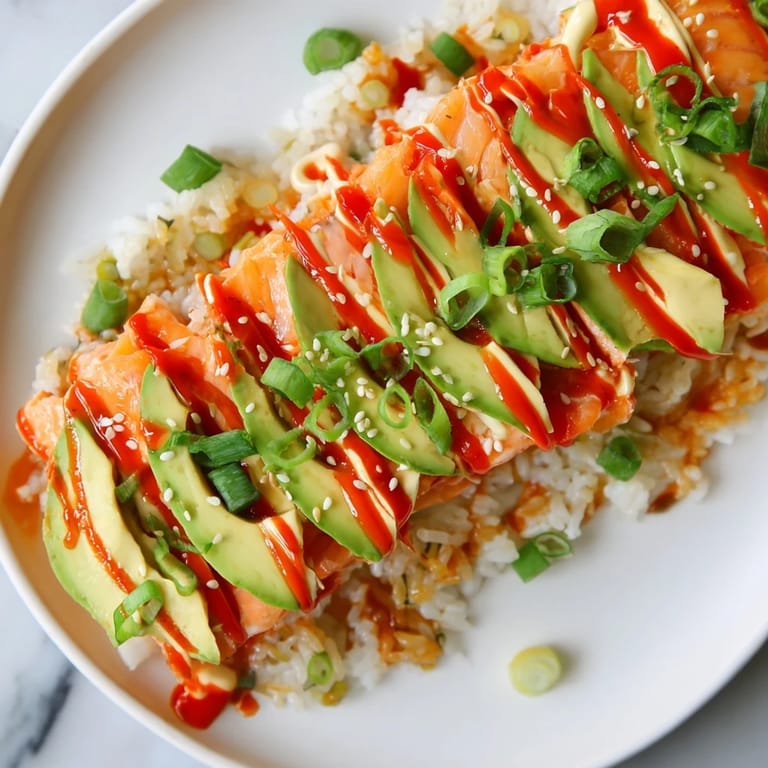
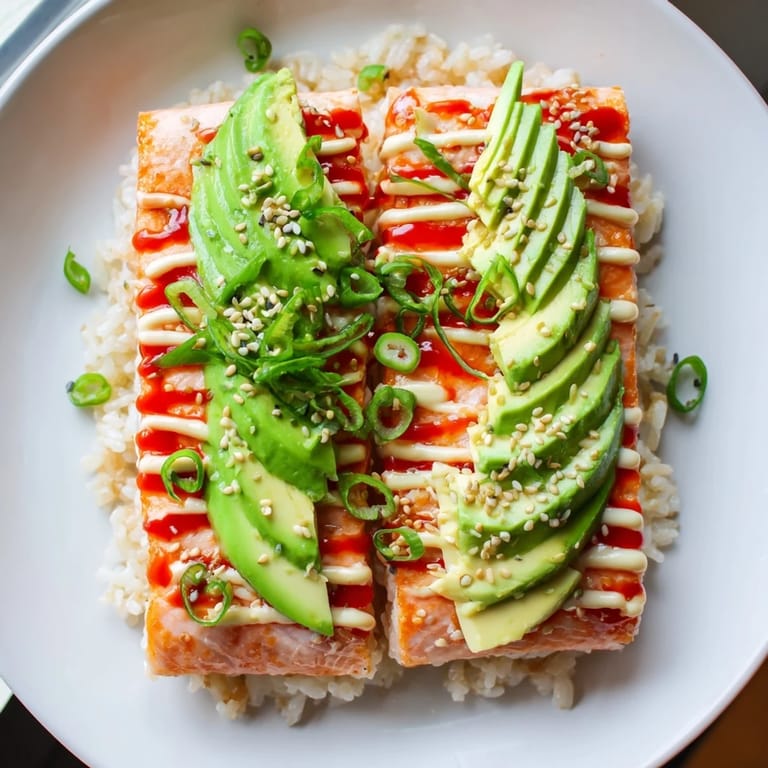
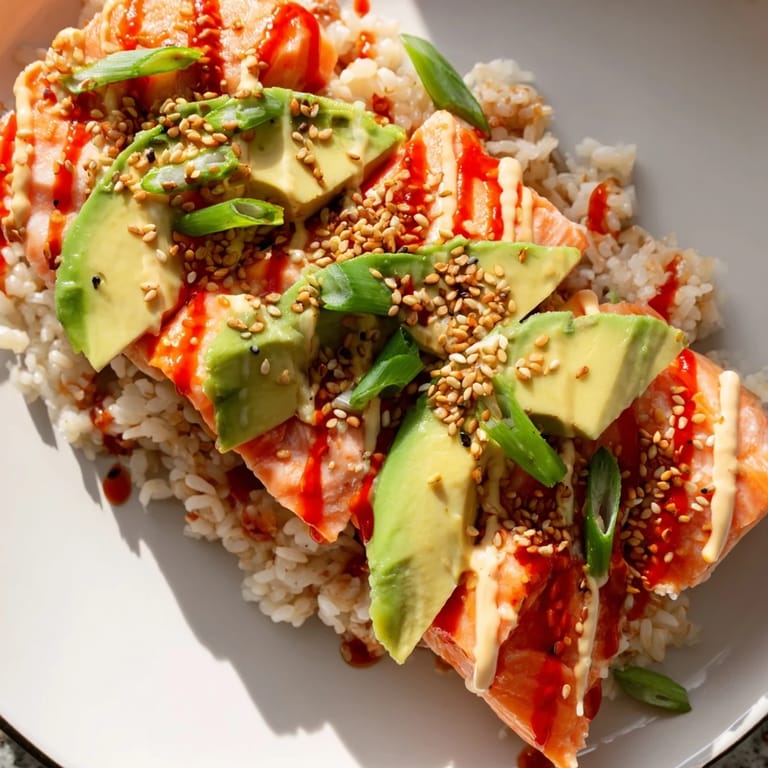
- Arrange the avocado slices on top, scatter the green onion ribbons, and finish with a sprinkle of sesame seeds. This is where it stops looking like dinner and starts looking like something special.
- Eat Like It's Meant to Be Eaten:
- Tear off a seaweed sheet, scoop a bit of the salmon rice mixture onto it, and fold it into a little hand roll. That snap of the nori combined with the soft everything else is the whole point.
 Pin
Pin My partner made this one morning for our late breakfast, and somehow it felt like we'd discovered a restaurant hack we could make at home. That's when I realized this isn't just a viral bowl—it's actually brilliant.
Why the Microwave Matters
You might think microwaving fish sounds wrong, but it's actually the fastest way to gently warm the salmon without making it rubbery. The steam from the rice keeps everything moist, and you're done in two minutes. It's one of those cooking moves that seems backward until you taste it.
The Seaweed Sheet Twist
These aren't sushi nori—they're the crispy snack sheets, and they're what makes this bowl feel interactive instead of just another rice bowl. Scoop, fold, bite, repeat. It's more engaging than eating straight from a bowl, and honestly, that matters when you're hungry and want to feel like you're doing something fun while you eat.
Make It Your Own
The beauty of this bowl is how forgiving it is. The ratios are more like guidelines than rules, and the flavor profile is a canvas for what you have on hand. I've made it with canned salmon on nights when fresh wasn't an option, and it's still satisfying.
- Drizzle rice vinegar over the rice for brightness if you have it, or add furikake for extra umami depth.
- Substitute chili crisp, gochujang, or your favorite hot sauce if sriracha isn't calling to you.
- Swap the salmon for canned tuna or whatever protein makes sense for your dinner—the formula works.
 Pin
Pin This bowl became a weeknight staple in my kitchen because it tastes like you tried without making you feel like you did. Make it once and you'll understand why it took over the internet.
Recipe Q&A
- → Can I use fresh salmon instead of cooked salmon?
It's best to use cooked salmon flakes for this bowl to ensure food safety and optimal texture. Fresh salmon should be cooked before assembling.
- → What type of rice works best for this bowl?
Short-grain rice, preferably leftover and chilled, works well to provide the sticky texture characteristic of sushi bowls.
- → How can I adjust the spice level?
Modify the amount of sriracha or substitute with chili crisp or your preferred hot sauce to control the heat.
- → Are there alternatives to seaweed sheets?
You can serve the bowl without seaweed or use toasted nori strips as a garnish to maintain the umami flavor.
- → Can I substitute the mayonnaise used here?
Japanese mayonnaise adds a creamy, slightly sweet note, but you may use regular mayo or vegan alternatives if preferred.