 Pin
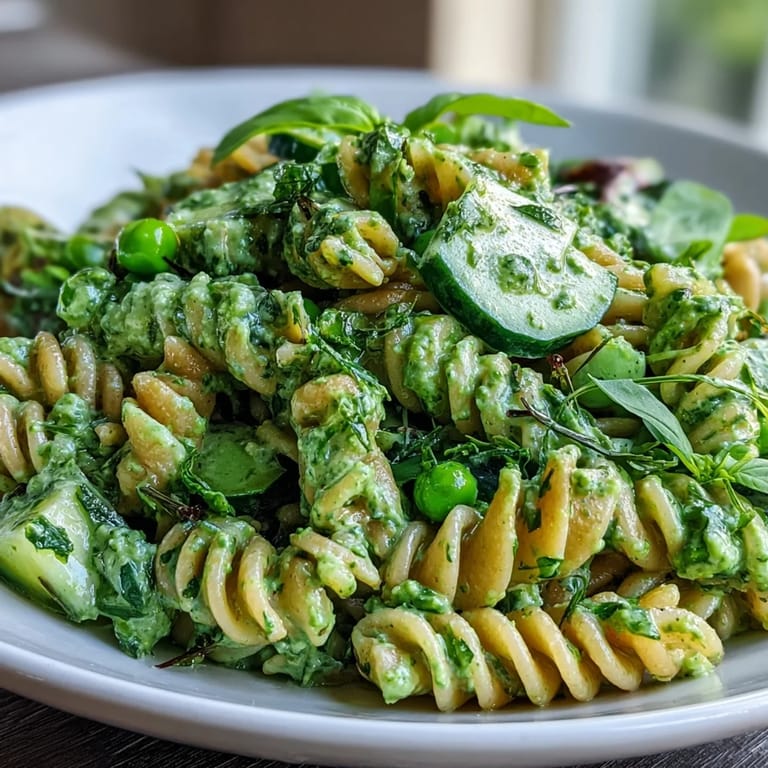
Pin My neighbor showed up at my door one afternoon with a container of something green and vibrant, insisting I taste it before she headed to a potluck. One forkful and I was asking for the recipe—that creamy, herbaceous dressing had completely won me over. It turns out she'd been experimenting with vegan versions of classic dishes, and this green goddess pasta salad became the one I begged her to make again and again. There's something about fresh herbs meeting that silky, plant-based dressing that feels both indulgent and impossibly light.
I made this for a surprise lunch with my sister last spring when she mentioned craving something fresh and nourishing. Watching her take that first bite and immediately ask for seconds reminded me why I love cooking for people—that moment when food becomes a small gift. We sat on the porch talking for hours, and somehow this simple salad turned into one of those afternoons I still think about.
Ingredients
- Short pasta (fusilli, rotini, or shells): Three hundred grams gives you enough body to hold the dressing without overwhelming the fresh vegetables, and the shapes trap that creamy goddess goodness in every bite.
- Vegan mayonnaise: This is your dressing's foundation, so choose one you actually like eating straight from the jar—it makes all the difference in the final flavor.
- Plant-based yogurt: A quarter cup keeps the dressing light and tangy while the mayo provides richness, creating a perfect balance.
- Fresh basil, parsley, chives, and tarragon: Don't skip any of these herbs or use dried as substitutes—they're the soul of this dish, and their bright, living flavors are irreplaceable.
- Frozen peas: They thaw quickly and add sweetness and texture that contrasts beautifully with the creamy dressing.
- Cucumber: Choose one that's firm and not watery, as a soggy cucumber will turn the salad mushy after a few hours.
- Baby spinach: It wilts slightly when tossed with the warm pasta and warm dressing, softening just enough to become tender.
- Radishes and scallions: These bring a peppery snap that keeps each forkful interesting and prevents the salad from feeling too creamy.
- Lemon juice: Fresh lemon is essential; bottled just won't deliver the same bright punch that brings everything alive.
- Toasted sunflower seeds: They add a delicate crunch and nutty flavor, though you can skip them entirely if you prefer.
Tired of Takeout? 🥡
Get 10 meals you can make faster than delivery arrives. Seriously.
One email. No spam. Unsubscribe anytime.
Instructions
- Boil the pasta to perfect al dente:
- Fill a large pot with salted water that tastes like the sea and bring it to a rolling boil before adding your pasta. Cook according to package directions, but start testing a minute before the suggested time—you want it tender with just a whisper of firmness in the center, not mushy. Once it's ready, drain it and rinse under cold water while running your fingers through to help it cool faster and prevent sticking.
- Blend the green goddess magic:
- While the pasta cooks, combine your vegan mayo, yogurt, all those gorgeous fresh herbs, lemon juice, olive oil, garlic, salt, and pepper in a blender or food processor. Pulse until you reach a smooth, creamy consistency—you want it thick enough to coat pasta but pourable enough to distribute evenly.
- Assemble your vegetable ensemble:
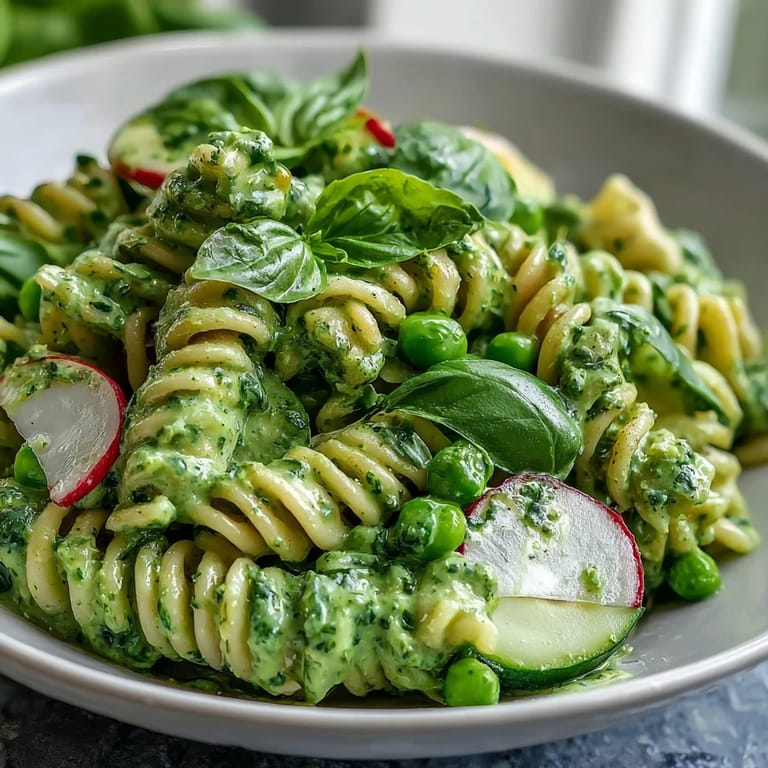
- In a large bowl, combine your cooled pasta with the thawed peas, diced cucumber, chopped spinach, sliced radishes, and scallions. Toss gently so everything mingles but nothing gets bruised.
- Marry the pasta with the dressing:
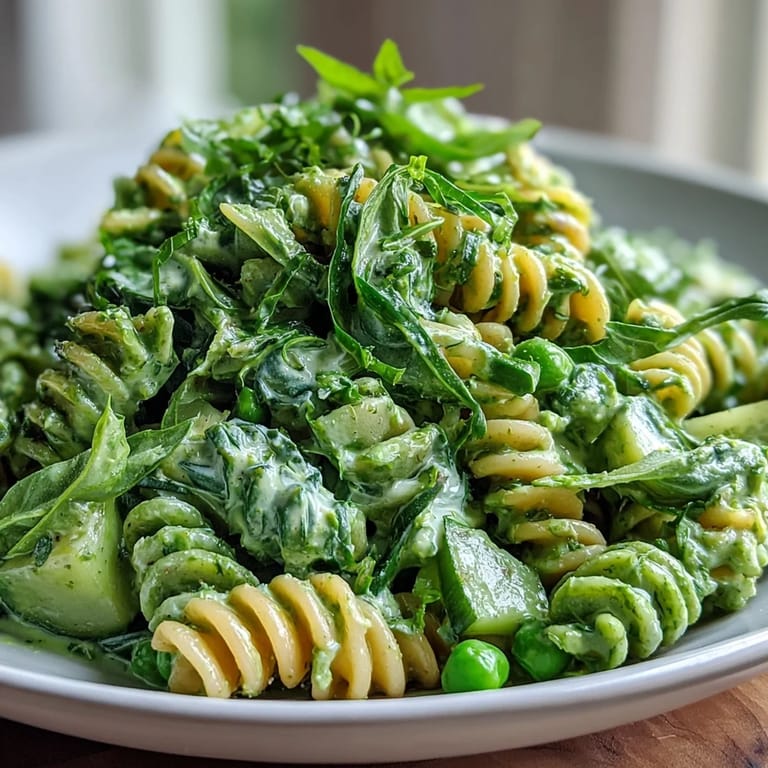
- Pour that vibrant green dressing over the salad and toss everything together with a light hand, making sure every strand gets coated. This is the moment the whole dish comes alive—you'll see the green herbs paint through the pasta.
- Taste and adjust with intention:
- Take a fork, taste a bite, and think about what you're experiencing. Does it need more brightness from lemon, more herbaceousness, or more salt to make the flavors sing?
- Plate and garnish:
- Transfer to a serving dish and shower it with fresh sliced basil and a handful of toasted sunflower seeds. The basil releases its perfume when you slice it fresh, and those seeds add the final textural contrast.
- Let it rest or serve immediately:
- You can eat it right away while the pasta is still slightly warm, or chill it for an hour or two to let the flavors deepen and meld into something even more cohesive.
 Pin
Pin There was something unexpectedly moving about creating a dish that felt celebratory and indulgent without any animal products in it. My partner, who'd been skeptical about vegan cooking, ate three helpings and asked if this could become a regular dinner rotation. That's when I realized food isn't about what you exclude—it's about the brightness and generosity you invite to the table.
Why the Herbs Matter So Much
Fresh herbs aren't just a garnish in this salad—they're the entire point. When you blend them with the mayo and yogurt, they don't just add flavor; they create this incredible color and aroma that tells your guests something special happened in your kitchen. I learned this the hard way when I once tried to use dried herbs from the back of my pantry. The salad tasted flat and sad, and I understood then why my neighbor had been so adamant about using fresh everything.
Timing and Temperature Considerations
Warm pasta meets cool dressing, and that slight temperature contrast is actually what allows the vegetables to soften just enough without becoming sad. If you add cold dressing to completely cooled pasta, everything stays too firm and separate. The warmth of the just-drained pasta helps the dressing coat it evenly and allows the spinach to wilt into silky submission while the radishes and cucumber maintain their snap.
Storing and Keeping This Fresh
This salad actually improves on the second day as the pasta absorbs more of that herbaceous flavor, but the texture starts changing after about thirty-six hours. I've found that keeping the dressing separate from the vegetables until just before serving helps everything stay fresher longer, especially if you're meal prepping. That said, there's something wonderfully convenient about having it already tossed and ready in the fridge for quick lunches.
- Store leftovers in an airtight container and plan to enjoy within two days for the best texture and flavor.
- If the salad dries out slightly when chilled, refresh it with a drizzle of lemon juice or a splash of plant-based yogurt before serving.
- You can assemble all components separately and combine them just before eating if you want everything to taste freshly made.
 Pin
Pin This salad has become my go-to when I want to feel like I'm taking care of people—it's nourishing, beautiful, and absolutely delicious. Every time I make it, I think about that afternoon at my neighbor's door and how the smallest recipes can reshape what you think is possible in a kitchen.
Recipe Q&A
- → How do I ensure the pasta doesn’t clump when cooled?
Drain the pasta and rinse under cold water immediately after cooking to stop the cooking process and remove excess starch, which helps keep the pasta separate and prevents clumping.
- → Can I use different herbs in the dressing?
Yes, fresh herbs like tarragon, chives, parsley, and basil are ideal for the creamy dressing, but you can adjust according to preference or availability.
- → What pasta shapes work best for this dish?
Short pasta like fusilli, rotini, or shells hold the dressing and mix-ins well, giving a balanced bite and texture.
- → How long can the salad be stored?
Keep refrigerated in an airtight container for up to 2 days. Flavors meld over time, but fresh herbs are best enjoyed sooner.
- → Are there suitable substitutions for sunflower seeds?
Toasted pumpkin seeds or omitted seeds work well, especially for nut-free or allergy-sensitive diets, retaining the dish’s crunch.